
Youth
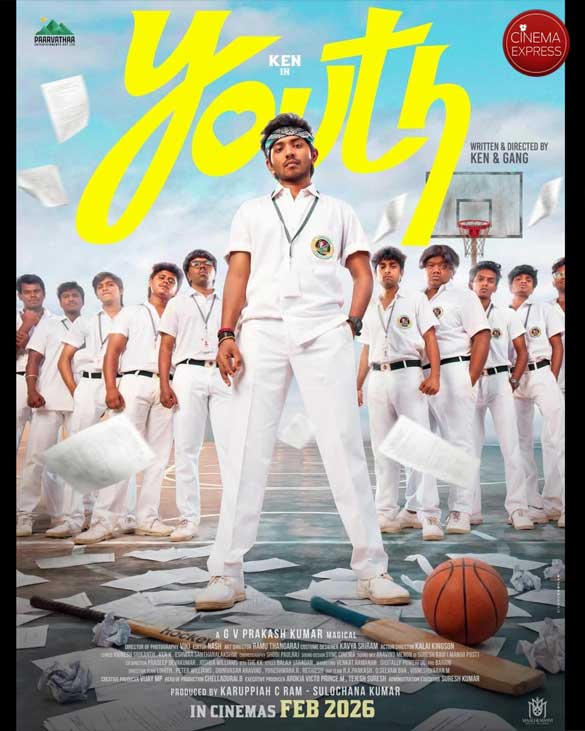
Youth 🎬 Youth — Basic Info 📌 Overview Title: Youth Release Year: 2026 Language: Tamil Genre: Coming-of-age • Romantic Drama 🎬 Youth — Cast & Crew ⭐ Main Cast Ken Karunas as Praveen Anishma Anilkumar Suraj Venjaramoodu Devadarshini Meenakshi Dinesh Priyanshi Yadav 🎥 Crew Director & Writer: Ken Karunas Producers: Karuppiah C. Ram, Sulochana Kumar Music Composer: G. V. Prakash Kumar Cinematography: Viki Editor: Nash Production: Paarvathaa Entertainments, Street Boy Studios 🎬 Quick Notes Genre: Coming-of-age • Romantic • Drama Release Date: 19 March 2026 This is Ken Karunas’ directorial debut 🎬 Movie Trailer
Dhurandhar: The Revenge

Dhurandhar: The Revenge 🎬 Dhurandhar: The Revenge(2026) — Basic Info 📌 Overview Title: Dhurandhar: The Revenge Genre: Action • Spy Thriller Language: Hindi (dubbed in Tamil, Telugu, Malayalam, Kannada) Release Date: 19 March 2026 🎬 Cast & Crew ⭐ Main Cast Ranveer Singh – Hamza Ali Mazari / Jaskirat Singh Rangi Sanjay Dutt – SP Chaudhary Aslam R. Madhavan – Ajay Sanyal Arjun Rampal – Major Iqbal Sara Arjun – Yalina Jamali Akshaye Khanna – Rehman Dakait Supporting Cast Rakesh Bedi Gaurav Gera Danish Pandor Saumya Tandon Manav Gohil Naveen Kaushik 👉 The film features a large ensemble cast continuing from the first part. 🎥 Crew Director & Writer: Aditya Dhar Producers: Aditya Dhar Jyoti Deshpande Lokesh Dhar Music Composer: Shashwat Sachdev Cinematography: Vikash Nowlakha Editor: Shivkumar V. Panicker Production Houses: Jio Studios, B62 Studios 🎬 Quick Info Genre: Action / Spy Thriller Release Date: 19 March 2026 Languages: Hindi + dubbed in Tamil, Telugu, Malayalam, Kannada 🎬 Movie Trailer
Jananayagan audio release
Jananayagan audio launch event Happened in Malaysia 📣 Audio Launch Event Happened (Malaysia) The grand audio launch of Jana Nayagan took place in Malaysia at the Bukit Jalil National Stadium. This was a massive event with tens of thousands of fans attending, making it one of the biggest audio launch events for a Tamil film. 📺 Live / Broadcast & OTT Release The audio launch program was broadcast on TV — Zee Tamil aired the event on January 4, 4:30 PM to 10:30 PM. For those who missed it live, the full audio launch event is now available to stream online on ZEE5 and also via OTTplay Premium 🎤 What Was in the Event The launch featured performances from singers and cast members, and Vijay delivered an emotional speech with his trademark style (“kutti story”). 🎬 Film Context Jana Nayagan is set to release in theaters on January 9, 2026 as Vijay’s much-anticipated final film before he focuses full-time on politics.
Oppo Reno 15C Price (Expected / Launched)
📱 Oppo Reno 15C Price (Expected / Launched) In China, the Oppo Reno 15C is priced from ¥2,899 (~₹37,000) for the 12 GB + 256 GB variant and around ¥3,199 (~₹41,000) for the 12 GB + 512 GB model. Croma+1 In India, the phone is expected to be priced around ₹37,999 for the base version. GSMArenaIndia.com 💡 These prices are early launch/expected figures — official India pricing and availability may vary once Oppo confirms it (it’s anticipated to launch soon here). Cashify 📱 Display 6.59-inch 1.5K AMOLED display 120 Hz refresh rate and up to 1200 nits peak brightness Crystal Shield Glass protection for durability Gadgets 360 ⚙️ Performance Qualcomm Snapdragon 7 Gen 4 processor Adreno 722 GPU 12 GB RAM 256 GB / 512 GB UFS 3.1 storage (no microSD slot) Gadgets 360+1 📸 Camera Rear Triple Camera Setup: 50 MP wide-angle with OIS 50 MP telephoto with OIS 8 MP ultra-wide Gadgets 360+1 Front Camera: 50 MP selfie camera Gadgets 360 📍 Both front and rear cameras support 4K video recording. FoneArena 🔋 Battery & Charging 6,500 mAh battery 80 W fast charging support Gadgets 360 🧠 Software Android 16 with ColorOS 16 on top FoneArena 🔒 Other Features In-display fingerprint sensor IP66 + IP68 + IP69 dust and water resistance NFC, stereo speakers, USB-C port Sensors: proximity, gyro, compass, infrared, etc. Gadgets 360+1 📏 Dimensions & Build Slim profile at around 7.77 mm thick Weight: ~197 g Gadgets 360
IPL 2026 Mini Auction – Live & Ongoing
The IPL 2026 player auction (mini auction) is currently underway in Abu Dhabi as franchises bid to finalise squads for the upcoming season. Hindustan Times Cameron Green has triggered a massive bidding war and is expected to go down as one of the most expensive overseas picks. Hindustan Times+1 David Miller was the first player sold, going to Delhi Capitals at his base price of ₹2 crore — a bargain buy early in the auction. The Times of India Chennai Super Kings (CSK) enter the auction with a large remaining purse (~₹43.40 cr) after releasing several big names, signalling a strategic rebuild. The Times of India Prithvi Shaw went unsold for the second straight year, a surprising development given his past prominence. The Economic Times 📍 What This Auction Is This is not the IPL 2025 mega auction — that took place in 2024 for the 2025 season — but a mini auction for the 2026 season where teams fine-tune their squads rather than rebuild completely. The Times of India The event has 77 available slots across all teams with around 350 players shortlisted (Indian & overseas), indicating strong competition for places. Reddit 📊 Key Ongoing Themes Bidding wars are a major feature, especially for high-impact all-rounders and overseas stars like Green. The Economic Times Strategic purse management is critical — teams with larger remaining budgets (e.g., KKR, CSK) are expected to make aggressive moves. The Sunday Guardian The absence of the Right To Match (RTM) card in mini auctions means teams must rely purely on bidding strategy and retained players instead of matching rival bids. The Times of India 📅 Auction Details The IPL 2026 mini auction began on 16 December 2025, with franchises bidding to complete their squads ahead of the March-May 2026 IPL season
Election Commission publishes Bengal SIR draft voter list
Over 58 Lakh Names Deleted from Bengal Draft Electoral Roll More than 58 lakh names have been removed from the draft electoral roll of West Bengal released by the Election Commission on Tuesday, according to news agency reports. Along with the draft roll, the poll panel has also published lists of deceased voters and those who could not be traced during the enumeration process. The updated data has been released booth-wise for every Assembly constituency across the state. Sources said that 128 voters’ names were deleted from booth number 127 at Mitra Institution in Bhowanipore, the constituency of Chief Minister Mamata Banerjee. In Nandigram, the constituency of Leader of Opposition Suvendu Adhikari, 11 names were removed from booth number 79 at Nandanayakbar Primary School. Voters who do not find their names in the draft electoral roll can check their status by visiting the official website of the Chief Electoral Officer, West Bengal. By selecting the Assembly constituency and booth number, voters can verify whether their or their family members’ names have been deleted. The list of deleted voters is currently available on the commission’s portal link ceowestbengal.wb.gov.in/asd_sir.
Bournemouth and Man United share spoils in eight-goal thriller
MANCHESTER, England, Dec 15 (Reuters) – Bournemouth’s Eli Junior Kroupi struck late to salvage a point for his side in a 4-4 draw with Manchester United on Monday, capping a Premier League thriller that swung wildly from start to finish. Ruben Amorim’s men squandered the chance to move level with fourth-place Chelsea in the standings, and instead are sixth on 26 points. Bournemouth are 13th on 21 points. United looked set for victory after Bruno Fernandes, with a stunning freekick, and Matheus Cunha struck two minutes apart in the second half to make it 4-3….Readmore
S&P 500 closes slightly lower as AI plays weigh on market: Live updates
The S&P 500 ended Monday slightly lower as key stocks in the artificial intelligence trade came under pressure. The broad market index lost 0.16% to settle at 6,816.51 after beginning the session in positive territory. The Dow Jones Industrial Average slipped 41.49 points, or 0.09%, to finish at 48,416.56, while the Nasdaq Composite fell 0.59% to 23,057.41. Certain AI stocks bogged down the broader market during Monday’s session, with shares of Broadcom and Oracle — two names that led a rotation away from AI last week — declining more than 5% and more than 2%, respectively. Others like Microsoft also also suffered some losses. Investors moved instead to areas more sensitive to the economy, such as consumer discretionary and industrials. They also loaded up on health-care shares….Readmore
South Korea stocks lead losses in Asia for a second day as tech sell-off continues on Wall Street
Asia-Pacific market fell across the board Tuesday, tracking Wall Street declines as investors continued to rotate out of the artificial intelligence trade in the U.S. Shares of AI plays, like Oracle and Broadcom, slipped more than 5% and 2% respectively, while Microsoft also saw some losses. Over in Asia, South Korea’s Kospi led losses in the region for a second straight day, losing 1.78%, while the small-cap Kosdaq plunged 2.12%. Shares of Korea Zinc plunged as much as 11.24% after the company reportedly agreed to sell $1.9 billion of shares to a joint venture controlled by the U.S. government and unnamed U.S.-based strategic investors, according to Reuters….Readmore
Anorexia

Anorexia What is Anorexia? Anorexia (Anorexia Nervosa) is a serious medical condition that leads to problems with eating. People having anorexia, worry a lot about how their body looks and how much they weigh. They avoid eating, taking laxatives or spend many hours exercising. Anorexia patients can die from starving themselves. Common Causes of Anorexia Frightened about getting fat Thinking that they are fat Always thinking about their weight Becoming obsessed with losing weight Fear of putting on weight Emotional problems Dieting Wanting to look like models Genes and family history An imbalance of chemicals in the brain Home Remedies for Anorexia Tips 1: This results in loss of appetite due to excessive fasting where the activity of the stomach slows down and secretion of gastric juices are reduced. Tips 2: Eat 2-3 fresh Oranges a day. Tips 3: Eat at least 1 Apple a day. Tips 4: Boil 2-3 cloves of garlic in 1 cup of water. Strain. Add the juice of ½ a lime to this and drink 2 times a day, for a week. Tips 5: Make a paste of fresh Ginger. Add a pinch of salt and a drop of lime juice to ½ a tspn of the paste. Eat this 2 times a day for 1 week.