
Punjabi Kadhi Pakora
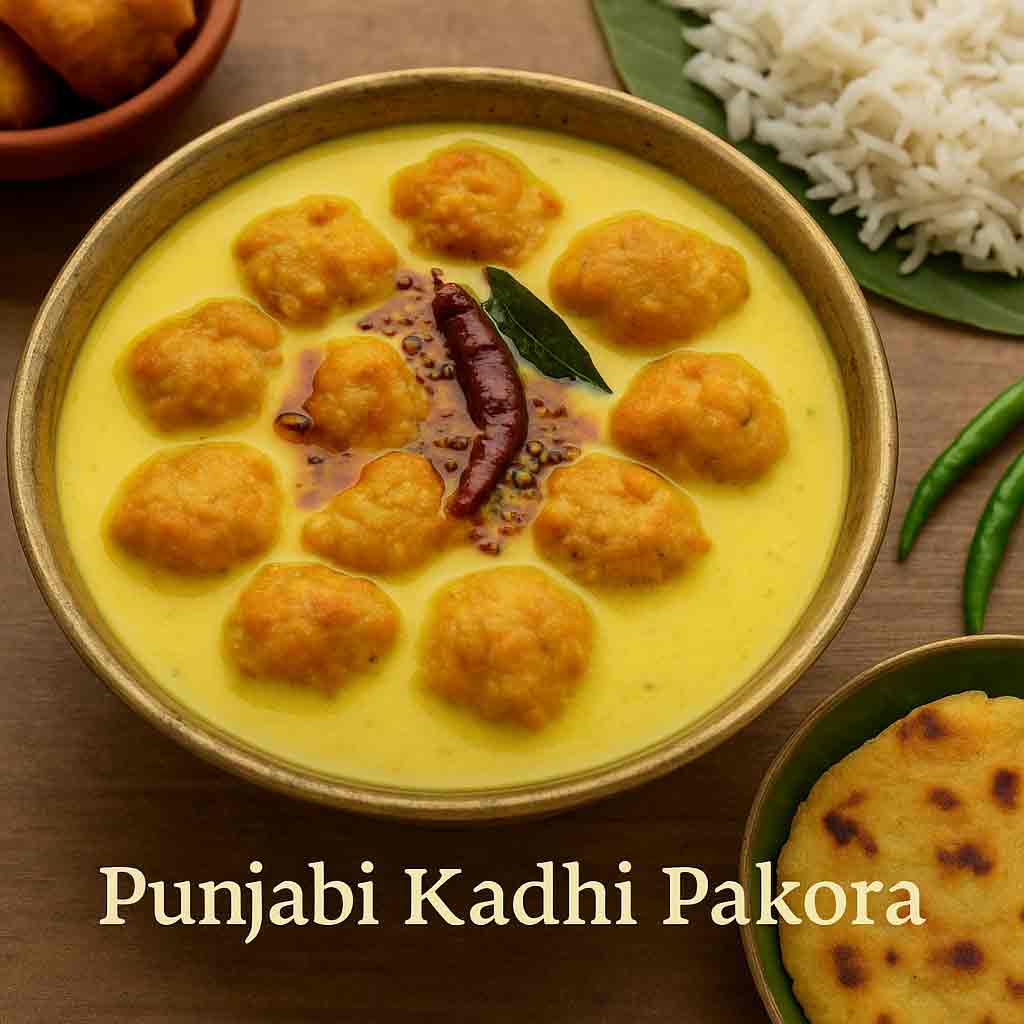
Punjabi Kadhi Pakora Here’s how to make the authentic, comforting Punjabi Kadhi Pakora (ਪੰਜਾਬੀ ਕੜੀ ਪਕੋੜਾ) — a soul-satisfying dish made with tangy yogurt, gram flour, and crispy pakoras simmered in a golden, spiced curry. 🍲💛 This beloved Punjabi classic is perfect for pairing with steamed rice or jeera rice and is a staple of North Indian home cooking — hearty, rustic, and full of flavor. 🧂 Ingredients 🌿 For the Kadhi (Yogurt-Gram Flour Curry) Sour curd (yogurt) – 1½ cups Gram flour (besan) – 4 tbsp Turmeric powder – ½ tsp Red chili powder – 1 tsp Ginger – 1-inch piece (grated) Garlic – 4 cloves (crushed) Green chilies – 2 (slit) Mustard seeds – 1 tsp Fenugreek seeds – ½ tsp Cumin seeds – ½ tsp Curry leaves – 8–10 Water – 4–5 cups (as needed for consistency) Salt – to taste Oil or ghee – 2 tbsp 🍢 For the Pakoras (Fritters) Gram flour (besan) – 1 cup Onion – 1 medium (finely chopped) Green chili – 1 (finely chopped) Coriander leaves – 2 tbsp (chopped) Red chili powder – ½ tsp Turmeric powder – ¼ tsp Carom seeds (ajwain) – ½ tsp Baking soda – a pinch (optional, for softness) Salt – to taste Water – as needed (to make a thick batter) Oil – for deep frying 🌶️ For Tadka (Tempering) Ghee – 1 tbsp Mustard seeds – ½ tsp Dried red chili – 1–2 Curry leaves – few A pinch of red chili powder 👩🍳 Preparation Steps Step 1: Prepare the Pakora Batter In a bowl, mix besan, chopped onion, chili, coriander leaves, and spices. Gradually add water to make a thick batter (not runny). Heat oil in a kadhai. Drop small spoonfuls of batter into hot oil. Fry till golden brown and crisp on medium flame. Remove and drain on paper towels. Keep aside. (Tip: Slightly under-fry if you like soft pakoras that soak up kadhi beautifully.) Step 2: Make the Kadhi Base In a large bowl, whisk together curd, besan, turmeric, red chili powder, and salt with water until smooth and lump-free. Heat 2 tbsp oil or ghee in a deep pot. Add mustard seeds, fenugreek seeds, and cumin seeds. Let them splutter. Add ginger, garlic, green chilies, and curry leaves. Sauté until fragrant. Slowly pour the whisked curd-besan mixture into the pan, stirring constantly to prevent curdling. Step 3: Simmer the Kadhi Bring the mixture to a gentle boil while stirring. Reduce heat and simmer for 30–40 minutes, stirring occasionally.The kadhi will thicken and develop a rich flavor as it cooks. Adjust salt and consistency as needed (add a little water if it thickens too much). Step 4: Add the Pakoras Just before serving, add the fried pakoras into the simmering kadhi. Let them soak for about 5–10 minutes so they become soft and flavorful. Step 5: Final Tadka (Tempering) Heat ghee in a small pan. Add mustard seeds, dry red chili, curry leaves, and a pinch of red chili powder. Pour this sizzling tadka over the kadhi. Serve immediately for the freshest aroma and taste! 🍽️ Serving Suggestions Serve Punjabi Kadhi Pakora hot with: Steamed or jeera rice (classic combo) Chapati or paratha (for a fuller meal) A side of pickle and sliced onions 💛 Tips for Authentic Punjabi Flavor Use slightly sour curd — it gives kadhi its signature tang. Slow cooking is key — the longer you simmer, the richer the flavor. Add a pinch of kasuri methi for an aromatic twist. Fry pakoras fresh and add them just before serving to retain texture. ❤️ Essence of the Dish Punjabi Kadhi Pakora is comfort in a bowl — tangy, creamy, and nostalgic.It brings together the homely warmth of yogurt, the crunch of pakoras, and the aroma of ghee and spices in one heartwarming dish.A perfect example of how simplicity, when done right, can be truly divine. 🌾✨
Punjabi Amritsari Fish Fry

Punjabi Amritsari Fish Fry Here’s how to make the famous Punjabi Amritsari Fish Fry (ਅੰਮ੍ਰਿਤਸਰੀ ਫਿਸ਼ ਫ੍ਰਾਈ) — a crispy, spicy, and flavorful dish straight from the heart of Punjab’s street food culture 🇮🇳🐟🔥 This golden, deep-fried delicacy from Amritsar is known for its tangy marinade, gram flour coating, and crunchy texture — a perfect starter or evening snack served with mint chutney and lemon wedges. 🐟 Ingredients For the Fish: Boneless fish fillets – 500 g (Singhara, Sole, or Basa work well) Lemon juice – 2 tbsp Red chili powder – 1 tsp Turmeric powder – ¼ tsp Salt – to taste For the Batter: Gram flour (besan) – ½ cup Rice flour or cornflour – 2 tbsp (for crispiness) Carom seeds (ajwain) – ½ tsp Ginger-garlic paste – 1 tbsp Kashmiri red chili powder – 1 tsp (for color) Garam masala – ½ tsp Chaat masala – ½ tsp Salt – to taste Lemon juice – 1 tbsp Water – as needed (to make a thick batter) Mustard oil (preferred) or vegetable oil – for deep frying For Serving: Lemon wedges Sliced onions Mint chutney Chaat masala – for sprinkling 👩🍳 Preparation Steps Step 1: Marinate the Fish Clean and pat dry the fish pieces. In a bowl, mix lemon juice, red chili powder, turmeric, and salt. Rub this mixture onto the fish and set aside for 15–20 minutes.(This helps remove any raw smell and adds a tangy base flavor.) Step 2: Prepare the Batter In another bowl, combine: Besan, rice flour, ajwain, ginger-garlic paste, red chili powder, garam masala, chaat masala, and salt. Add lemon juice and enough water to form a thick, smooth batter that coats the back of a spoon. Taste and adjust seasoning — it should be spicy and tangy. Step 3: Coat the Fish Add the marinated fish pieces into the batter. Mix well so each piece is evenly coated. Let it rest for about 10 minutes to absorb flavors. Step 4: Fry the Fish Heat oil in a deep kadhai or pan. When the oil is medium-hot (not smoking), gently drop the fish pieces one by one. Fry on medium flame until golden and crisp on the outside — about 4–5 minutes per batch. Remove and drain on paper towels. Step 5: Final Touch Sprinkle a pinch of chaat masala and lemon juice over the hot fish for that signature street-style zing. 🍽️ Serving Suggestion Serve Amritsari Fish Fry hot with: Mint coriander chutney Pickled onions Lemon wedgesAnd enjoy with masala chai or a glass of chilled lassi for the perfect Punjabi pairing! 🌿 Chef’s Tips for Authentic Flavor Use mustard oil for frying — it adds a distinct earthy flavor. Adding a bit of ajwain (carom seeds) aids digestion and enhances taste. For extra crunch, mix a spoon of semolina (sooji) in the batter. Fry in small batches to maintain crispiness. ❤️ Essence of the Dish Amritsari Fish Fry is Punjab on a plate — bold, rustic, and full of zest. Each bite crackles with spice, warmth, and the unmistakable tang of lemon and ajwain.Whether served at roadside dhabas or family gatherings, this golden delight embodies the spirit of Punjabi celebration and flavor.
Punjabi Butter Chicken
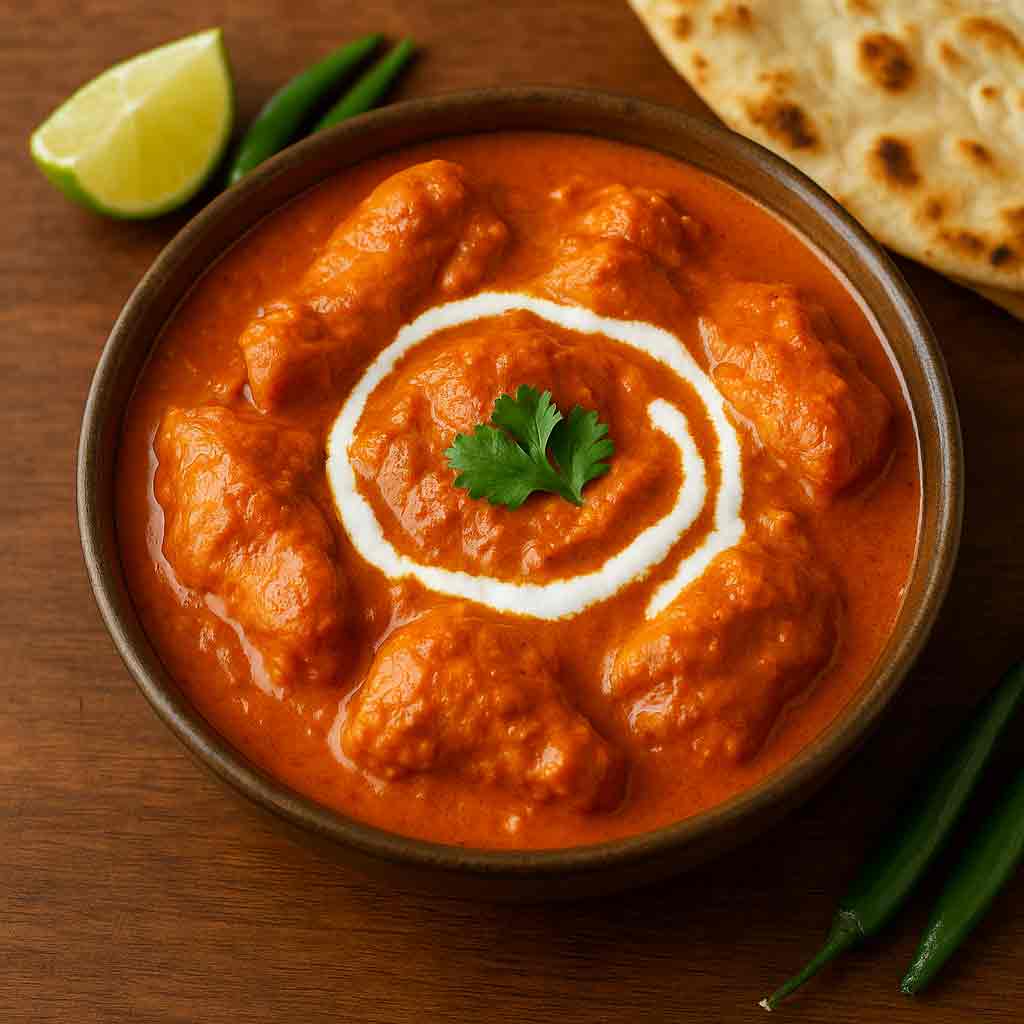
Punjabi Butter Chicken Here’s how to make the world-famous Punjabi Butter Chicken (Murgh Makhani) — rich, creamy, and full of irresistible flavor! 🧈🍗🇮🇳 🍗 Ingredients For the Chicken Marinade: Boneless chicken (or bone-in) – 500 g Thick curd (yogurt) – ½ cup Ginger-garlic paste – 1 tbsp Red chili powder – 1 tsp Turmeric – ¼ tsp Garam masala – ½ tsp Lemon juice – 1 tbsp Salt – to taste Oil or butter – 1 tbsp For the Butter Gravy: Butter – 3 tbsp Oil – 1 tbsp Onion – 1 medium (finely chopped) Tomatoes – 4 large (pureed) Ginger-garlic paste – 1 tbsp Green chili – 1 (optional) Kashmiri red chili powder – 1 tsp (for color) Coriander powder – 1 tsp Garam masala – ½ tsp Kasuri methi (dried fenugreek leaves) – 1 tsp Fresh cream – 3 tbsp Honey or sugar – 1 tsp (to balance tanginess) Salt – to taste 🔥 Preparation Steps Step 1: Marinate the Chicken Combine all the marinade ingredients in a bowl. Coat the chicken pieces evenly and let them rest for at least 1 hour (overnight refrigeration gives the best flavor). Step 2: Cook the Chicken Option 1 (Tandoor or Grill): Grill or roast the marinated chicken pieces in a preheated oven (200°C) for 15–20 minutes until slightly charred. Option 2 (Pan): Heat 1 tbsp butter in a pan and cook the marinated chicken till golden brown and cooked through.Set aside. Step 3: Make the Butter Gravy In a large pan, heat butter and oil together (to prevent burning). Add onions and sauté till translucent. Add ginger-garlic paste and cook until the raw smell disappears. Add pureed tomatoes, red chili powder, coriander powder, and salt. Cook on medium flame until the mixture thickens and the oil separates from the sides — this step gives the gravy depth. Step 4: Blend for Smoothness Turn off the heat and let the mixture cool slightly. Blend the mixture into a smooth, velvety paste. Strain it if you want that restaurant-style silky texture. Step 5: Combine Chicken and Gravy Return the blended sauce to the pan. Add the cooked chicken pieces. Stir in cream, garam masala, kasuri methi, and a teaspoon of honey. Simmer for 10–12 minutes on low heat until the flavors meld beautifully. Step 6: Garnish and Serve Top with: A swirl of fresh cream A small dollop of butter Coriander leaves for freshness Serve piping hot with naan, tandoori roti, or jeera rice. 🍴 Tips for Perfect Butter Chicken Use Kashmiri red chili powder for color without too much heat. Never skip kasuri methi — it adds the classic Punjabi aroma. Blend and strain the sauce for that smooth, restaurant-style finish. For an authentic smoky flavor, use the dhungar method: Heat a small piece of charcoal till red-hot, place it in a bowl inside the curry, add a drop of ghee, and cover for 2 minutes. ❤️ Essence of the Dish Butter Chicken embodies Punjabi hospitality — rich, comforting, and made with love and indulgence.It’s the perfect marriage of spice and cream, where charred chicken meets silky tomato gravy, all mellowed by butter and cream. One bite, and you’ll know why it’s called the King of North Indian Curries! 👑 This iconic dish from the kitchens of post-partition Delhi (created by Punjabi chefs at Moti Mahal) combines tender tandoori chicken with a buttery tomato gravy that defines North Indian indulgence.
Punjabi Sarson da Saag & Makki di Roti
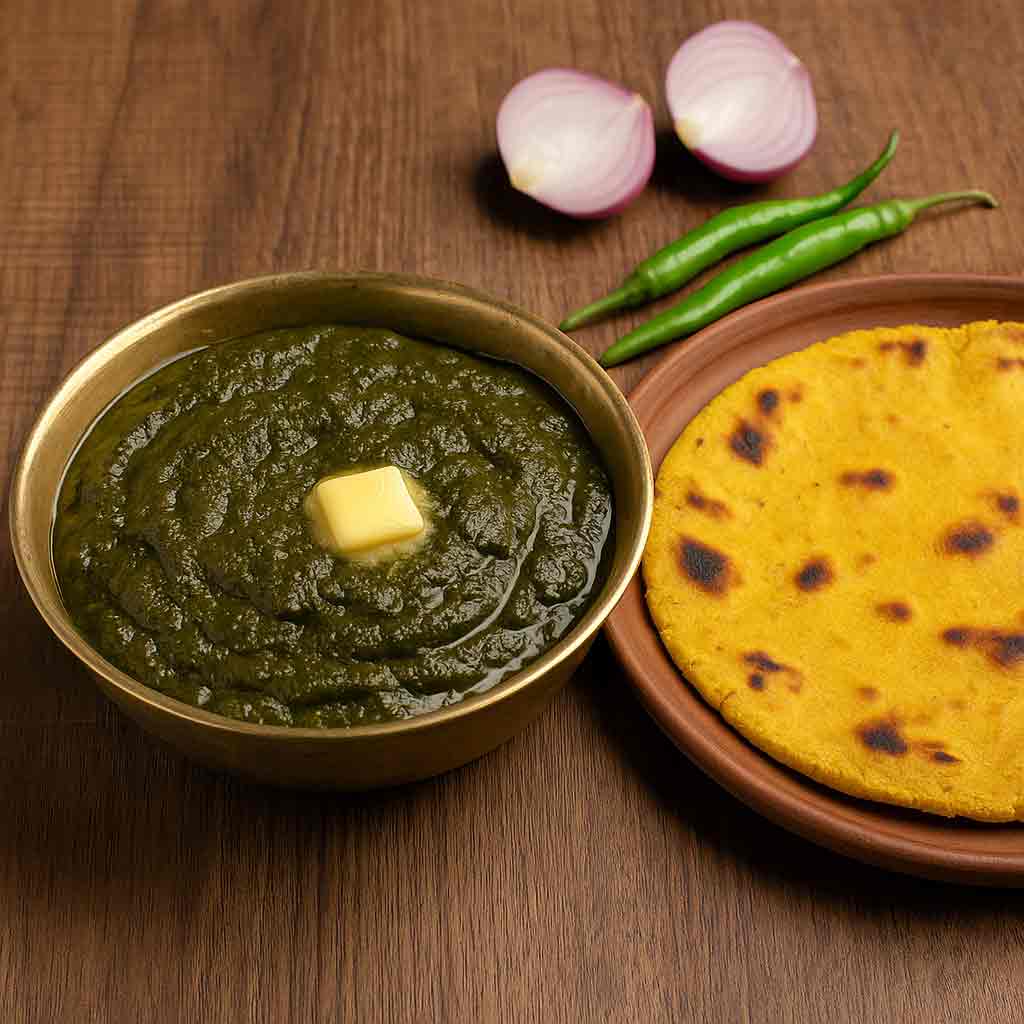
Sarson da Saag & Makki di Roti A dish that defines the warmth of Punjabi cuisine, this hearty combo celebrates local produce, simple ingredients, and rich flavors. It’s not just food — it’s a tradition served with love, ghee, and pride! 🇮🇳✨ 🌿 Part 1: Sarson da Saag (Mustard Greens Curry) 🧂 Ingredients: Mustard leaves (sarson) – 2 bunches (~500 g) Spinach (palak) – 1 bunch (~250 g) Bathua (chenopodium leaves) – 1 bunch (~250 g, optional but authentic) Green chilies – 3–4 Ginger – 1½ inch piece Garlic – 6 cloves Onion – 1 large (finely chopped) Tomato – 2 medium (chopped) Makki ka atta (cornmeal flour) – 2 tbsp (for thickening) Ghee – 2–3 tbsp Salt – to taste Red chili powder – ½ tsp (optional) Water – as needed 👩🍳 Preparation Steps: Step 1: Clean and Boil the Greens Wash the mustard, spinach, and bathua leaves thoroughly in running water. Roughly chop them and place them in a deep pot or pressure cooker. Add green chilies, ginger, garlic, and about 1½ cups of water. Cook for 15–20 minutes (or 2–3 whistles in a pressure cooker) until the greens soften completely. Step 2: Mash the Saag Once cooked, mash the greens using a hand masher or blender until coarse — not too smooth. Mix in 2 tbsp makki ka atta to help thicken the saag and give it that signature rustic texture. Simmer on low flame for another 10–15 minutes, stirring occasionally. Step 3: Prepare the Tadka (Tempering) Heat ghee in a pan. Add chopped onions and sauté till golden brown. Add chopped tomatoes and cook till soft and pulpy. Mix in chili powder and salt. Pour this tadka into the cooked saag and mix well. Let it simmer for 5–10 minutes to absorb all the flavors.Finally, top with a dollop of white butter or desi ghee. 🧈 🌾 Part 2: Makki di Roti (Cornmeal Flatbread) 🧂 Ingredients: Makki ka atta (maize flour) – 2 cups Warm water – as needed Salt – ½ tsp Ghee or butter – for roasting 👩🍳 Preparation Steps: In a large bowl, mix makki ka atta and salt. Gradually add warm water and knead gently into a soft dough.(Cornmeal dough is fragile — handle it carefully.) Take a small portion and shape it into a ball. Place it between two sheets of plastic or banana leaves and flatten gently into a thick round roti. Heat a tawa (griddle) and roast on medium flame till golden brown spots appear on both sides. Apply ghee or butter on top before serving. 🍽️ Serving Suggestion: Serve Sarson da Saag hot with Makki di Roti, a spoonful of white butter, jaggery, and onion slices or green chilies on the side.Traditionally enjoyed with lassi for a truly Punjabi feast! 🥛 💛 Chef’s Tips for Authentic Flavor: Use bathua (chenopodium) — it balances the pungency of mustard. Always cook the saag on a slow flame for deep earthy flavor. A generous dollop of homemade butter or ghee enhances aroma and taste. For a smoky twist, add a little charred garlic ghee (dhungar method) at the end. ❤️ Essence of the Dish Sarson da Saag and Makki di Roti is the pride of Punjabi winters — a meal that nourishes body and soul.With its vibrant green saag, golden roti, and rich ghee, it’s not just food — it’s an emotion, a symbol of Punjab’s simplicity, generosity, and love for hearty meals. 🌾
Marathi Bharli Vangi (Stuffed Brinjal Curry)
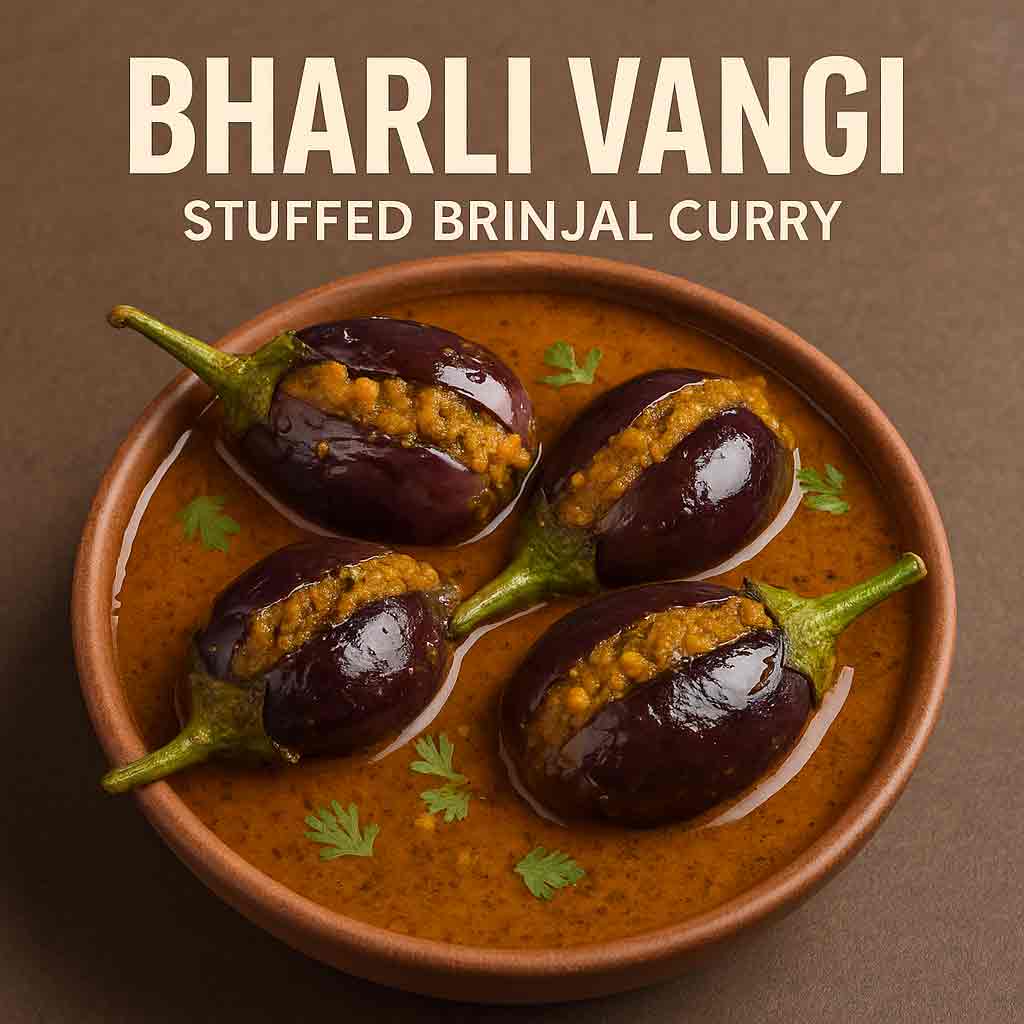
Marathi Bharli Vangi (Stuffed Brinjal Curry) Marathi Bharli Vangi (Stuffed Brinjal Curry) — a traditional and flavorful Maharashtrian dish known for its nutty, tangy, and mildly sweet gravy filled with the goodness of roasted peanuts and coconut. 🍆🌿 🍆 Ingredients For the Brinjals: Small purple brinjals – 8 to 10 (fresh and tender) Oil – 3 tbsp Water – as needed Salt – to taste For the Stuffing: Grated coconut (dry or fresh) – 3 tbsp Roasted peanuts – 2 tbsp (coarsely ground) Onion – 1 medium (finely chopped) Tamarind pulp – 1 tbsp (or small lemon-sized soaked tamarind) Jaggery – 1 tsp (optional but traditional) Red chili powder – 1 tsp Coriander powder – 1 tsp Turmeric powder – ¼ tsp Goda masala – 1½ tsp (or garam masala as substitute) Salt – to taste For Tempering: Oil – 2 tbsp Mustard seeds – 1 tsp Asafoetida – a pinch Curry leaves – 8 to 10 Water – 1 cup 👩🍳 Preparation Steps Step 1: Prepare the Brinjals Wash and pat dry the brinjals. Slit each brinjal crosswise from the base towards the stem, keeping the stem intact so it holds together. Soak them in salted water for 10 minutes to prevent discoloration. Step 2: Make the Stuffing In a bowl, mix together: Ground peanuts Coconut Finely chopped onion Tamarind pulp Jaggery Chili powder, turmeric, coriander powder, and goda masala Salt to taste Mix well — it should form a slightly moist, aromatic masala. Stuff this masala into each brinjal carefully using your fingers or a small spoon. Keep any leftover masala aside for the curry base. Step 3: Tempering Heat oil in a deep pan or kadhai. Add mustard seeds and let them splutter. Add asafoetida and curry leaves. Add finely chopped onion (optional) and sauté till translucent. Step 4: Cooking the Curry Add the leftover masala mixture to the pan and sauté for 2–3 minutes until fragrant. Arrange the stuffed brinjals gently in the pan. Add about 1 cup of water — just enough to create a thick gravy. Cover and cook on medium-low heat for 20–25 minutes, stirring gently every few minutes so the brinjals cook evenly and don’t break. Step 5: Finishing Touch Once the brinjals are soft and the oil separates from the sides, turn off the heat.Garnish with fresh coriander leaves. 🍽️ Serving Suggestions Serve Bharli Vangi hot with: Jowar or Bajra Bhakri (for a rustic village-style meal) Steamed rice or chapati A side of curd or solkadhi for balance 🌿 Tips for Authentic Taste Goda Masala is the soul of Maharashtrian curries — don’t skip it! Adjust the sweetness and tanginess by balancing jaggery and tamarind to your liking. For a richer gravy, add 1 tbsp sesame seeds or a few cashews while roasting. Kolhapuri style Bharli Vangi uses more chili and coconut; Pune style is milder and slightly sweet. 💛 Essence of the Dish Bharli Vangi embodies the warmth of home-style Marathi cooking — the smoky aroma of roasted coconut, the nutty richness of peanuts, and the perfect interplay of spicy, sweet, and tangy flavors. Each bite melts in your mouth, reminding you why this dish remains a festive favorite across Maharashtra.
Marathi Bhakri and Thecha
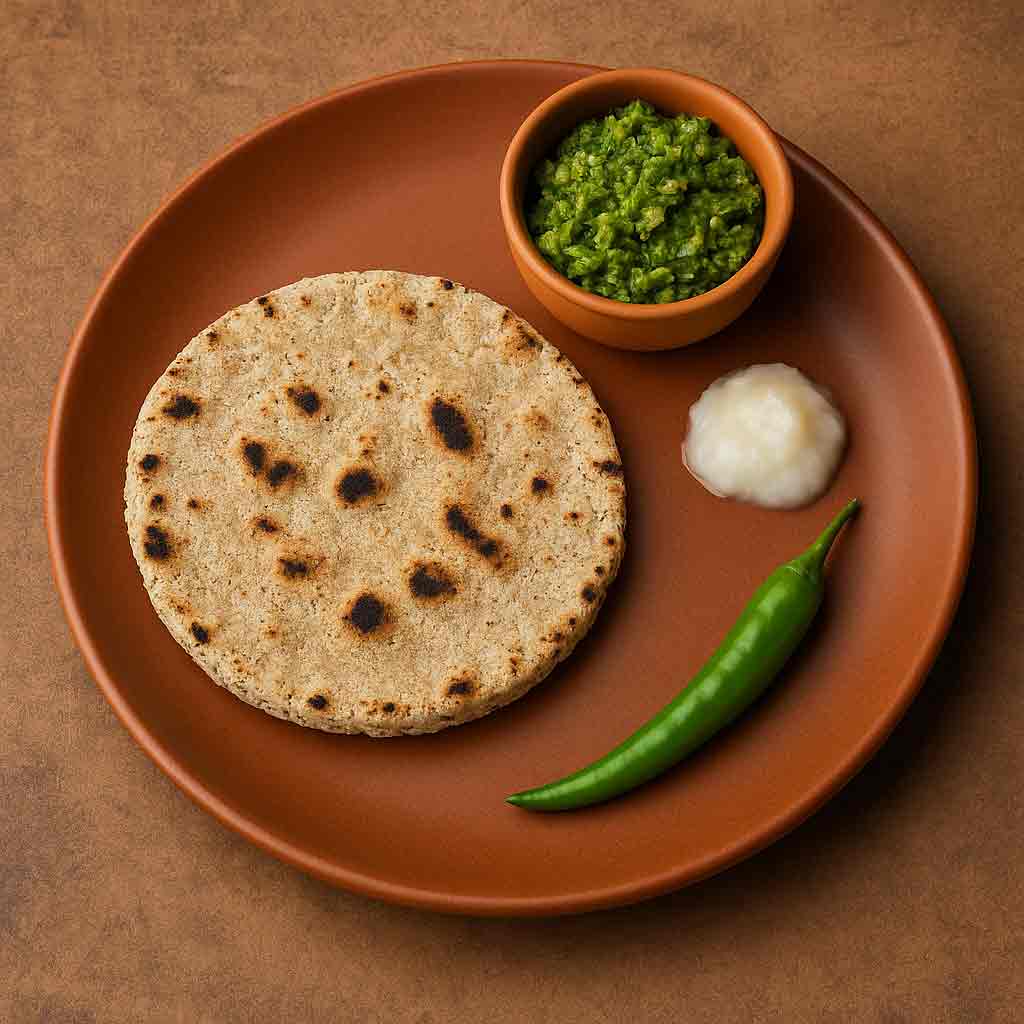
Marathi Bhakri and Thecha A staple of rural Maharashtra, this simple yet bold meal celebrates earthy flavors, coarse grains, and fiery spice — comfort food at its purest. 🫓 Part 1: Bhakri (Millet Flatbread) 🧂 Ingredients: Jowar (Sorghum) flour – 1 cup(You can also use Bajra (Pearl Millet) or Nachni (Ragi) flour for variation) Hot water – about ¾ cup Salt – ¼ tsp (optional) Ghee or butter – for serving 👩🍳 Preparation: Boil water: Heat water till it starts bubbling, then switch off the flame. Make dough: Add salt and gradually mix in jowar flour using a spoon (as water is hot). Once it cools slightly, knead into a soft dough while it’s still warm. Shape the bhakri: Take a small ball of dough. Flatten it using your palms on a flat surface, lightly dusted with dry flour. Gently press and spread it into a round disc about 6–7 inches wide. Cook: Heat a tawa (griddle). Place the bhakri and cook one side until small bubbles appear. Flip and cook the other side, pressing gently with a cloth or spatula until light brown spots appear. Optionally, puff it directly on the flame for 5–10 seconds. Serve hot with a dollop of ghee or butter on top. 🌶️ Part 2: Thecha (Spicy Green Chili Garlic Chutney) 🧂 Ingredients: Green chilies – 10–12 (adjust spice level to taste) Garlic cloves – 6–8 Peanuts (optional) – 2 tbsp Coriander leaves – a small handful Salt – to taste Oil – 1 tbsp (preferably groundnut or sesame oil) 👩🍳 Preparation: Roast the chilies:Heat oil in a small pan. Add green chilies and garlic. Sauté until blistered and aromatic.(You can also roast them on open flame for smoky flavor.) Add peanuts:Toast lightly till golden, if using. Grind:Using a mortar and pestle (traditional method), crush all ingredients coarsely.You can also use a mixer grinder — pulse briefly, don’t make it smooth. Add coriander and salt:Mix well. Adjust seasoning as per taste. Thecha should be coarse, spicy, and punchy — the true Marathi way! 🍽️ Serving Suggestion: Serve hot Bhakri with Thecha, a dollop of curd or white butter, and sometimes with a side of onion slices or dry peanut chutney.This combination pairs beautifully with: Pithla (Gram flour curry) Zunka (dry chickpea flour stir-fry) Matki usal (sprouted beans curry) 🌾 Pro Tips for Authentic Flavor: Use earthen or cast-iron tawa for the perfect texture. For variation, make garlic-red chili thecha by replacing green chilies with dry red ones. Don’t over-grind thecha — its chunky texture is its identity.
Marathi Misal Pav
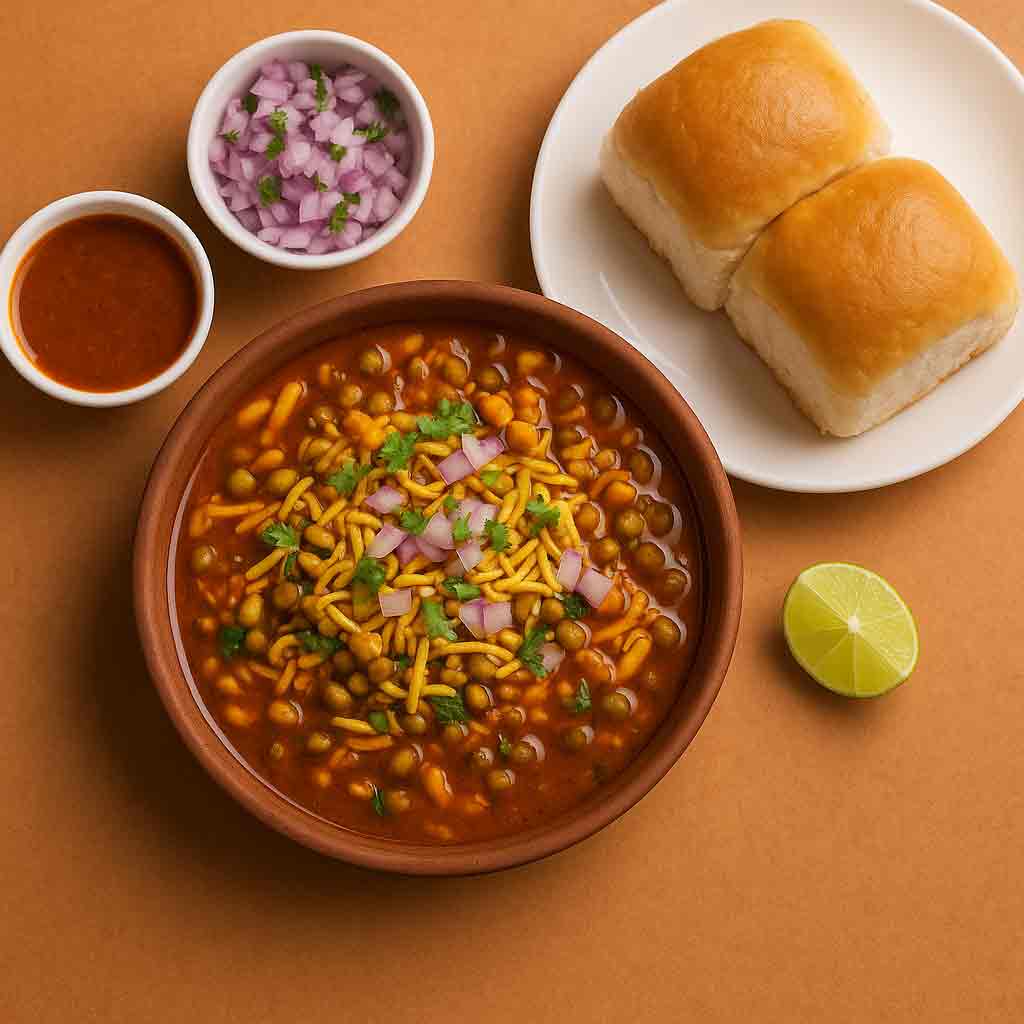
Marathi Misal Pav Misal Pav combines misal (a spicy curry made from sprouted beans) with pav (soft bread rolls) and a variety of toppings like farsan, onions, and lemon. It’s a complete meal bursting with flavor, texture, and aroma. 🫘 Ingredients For the Usal (Sprout Curry) Moth beans (matki) – 1 cup (sprouted) Onion – 1 medium (finely chopped) Tomato – 1 medium (chopped) Ginger-garlic paste – 1 tsp Green chili – 1 (chopped) Mustard seeds – ½ tsp Cumin seeds – ½ tsp Curry leaves – 8–10 Turmeric powder – ¼ tsp Red chili powder – 1½ tsp Coriander powder – 1 tsp Goda masala (or garam masala) – 1 tsp Salt – to taste Oil – 2 tbsp Water – 1½ cups For the Kat / Tarri (Spicy Red Curry) This gives Misal its fiery punch 🔥 Onion – 1 large (chopped) Tomato – 1 large (chopped) Dry red chilies – 3 Garlic cloves – 4 Ginger – 1 inch Grated coconut – 2 tbsp (optional but authentic) Red chili powder – 2 tsp Goda masala – 1 tsp Oil – 3 tbsp Salt – to taste For Serving Pav (soft bread rolls) – 8 pieces Farsan (mixture/sev) – 1 cup Chopped onion – 1 cup Chopped coriander leaves – ½ cup Lemon wedges – to serve 👩🍳 Preparation Steps 🌱 Step 1: Sprouting the Beans Soak moth beans overnight. Drain, wrap in a damp cloth, and keep in a warm place for 8–10 hours to sprout. 🍛 Step 2: Make the Usal Heat oil in a pan. Add mustard seeds and cumin seeds; let them splutter. Add curry leaves, onions, and green chili. Sauté until golden. Add ginger-garlic paste and fry till the raw smell disappears. Add tomatoes, turmeric, chili powder, coriander powder, and goda masala. Add sprouted moth beans and salt. Stir well. Pour water, cover, and cook for 10–15 minutes till the beans soften and the curry thickens slightly. 🌶️ Step 3: Prepare the Kat / Tarri (Spicy Gravy) Heat oil in another pan. Sauté onions until dark brown. Add garlic, ginger, and dry red chilies; fry well. Add tomatoes and cook until soft. Add coconut, chili powder, and goda masala; sauté until oil separates. Blend this mixture into a smooth paste using little water. Return it to the pan, add salt and water as needed, and simmer for 5 minutes.This forms the bright red, spicy layer that floats over the misal. 🍽️ Step 4: Assemble Misal Pav In a serving bowl, add a portion of usal (sprouts curry). Pour a ladle of kat/tarri over it for that signature spice. Top with chopped onion, farsan, and coriander. Squeeze fresh lemon juice on top. Serve hot with toasted pav on the side. 🧡 Optional Additions Add a dollop of curd for a milder flavor. Serve with buttermilk or solkadhi to balance the heat. Some regions (like Kolhapur) serve an extra bowl of tarri on the side for spice lovers. 🌟 Tips for Authentic Marathi Flavor Use Kolhapuri Masala for extra punch if available. Goda masala adds depth — don’t skip it. The tarri should float on top — that’s how true Kolhapuri Misal is served. 🧂 Serving Style Traditionally, Misal Pav is served in two layers — the base of sprouts (usal) topped with a fiery tarri — garnished generously with farsan, onion, and coriander. The pav is lightly buttered and toasted before serving.
Kerala Malabar Biryani
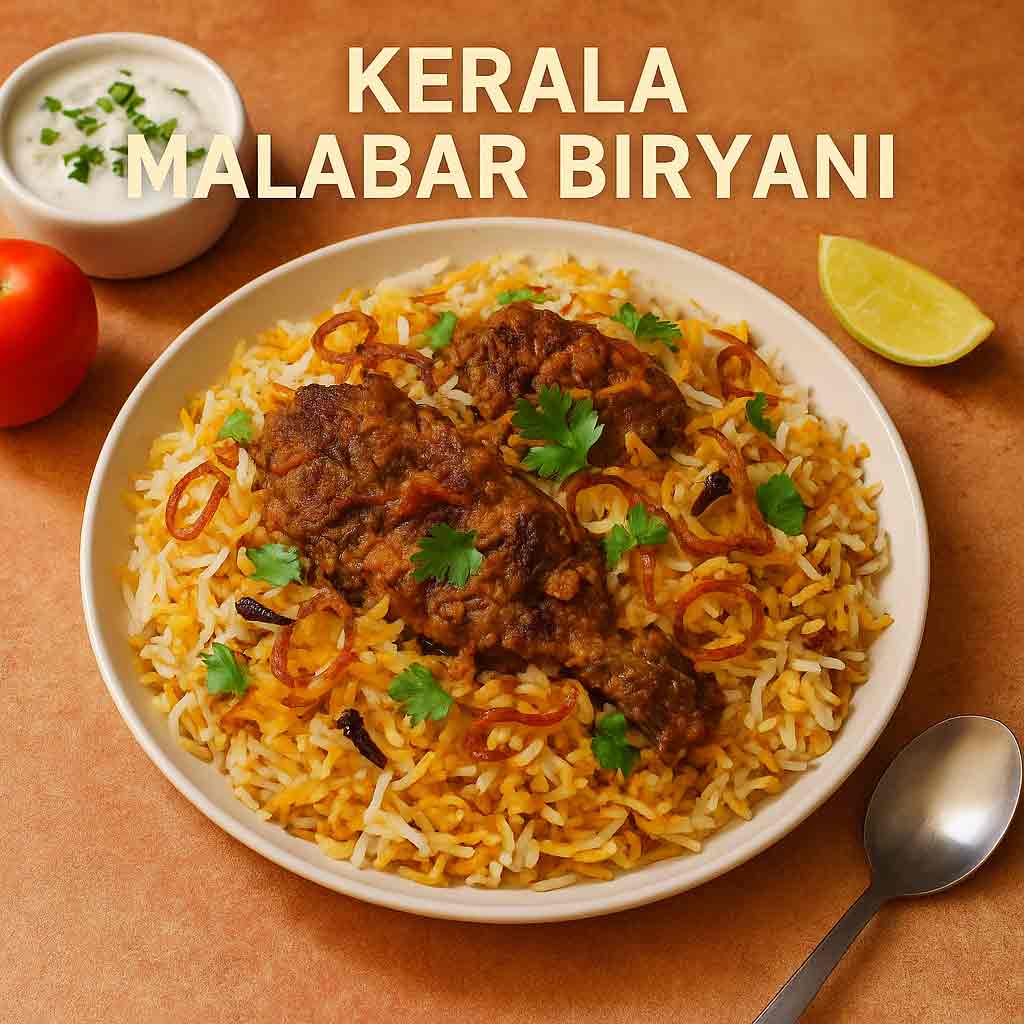
Kerala Malabar Biryani 🫕 Ingredients For the Rice: Jeerakasala rice (short-grain fragrant rice) – 2 cups(If unavailable, use basmati rice but reduce cooking time slightly) Ghee – 2 tbsp Whole spices – 4 cloves, 2 cardamoms, 1-inch cinnamon, 1 bay leaf Water – 3 cups Salt – as needed For the Chicken Masala: Chicken – 1 kg (bone-in, cleaned and cut) Onions – 3 large (thinly sliced) Tomatoes – 2 medium (chopped) Ginger-garlic paste – 2 tbsp Green chilies – 3 (slit) Yogurt – 3 tbsp Fresh coriander leaves – ½ cup (chopped) Fresh mint leaves – ½ cup (chopped) Cashew nuts – 10 (optional, for richness) Ghee / coconut oil – 4 tbsp Spices: Turmeric powder – ¼ tsp Red chili powder – 1½ tsp Coriander powder – 2 tsp Garam masala – 1 tsp Pepper powder – ½ tsp Salt – to taste For Garnish: Fried onions – 1 cup Fried cashews and raisins – 2 tbsp each Fresh coriander and mint leaves – a handful Ghee – 2 tbsp (for final drizzle) 🔪 Preparation Steps Step 1: Cook the Rice Wash and soak the rice for 20 minutes, then drain. Heat ghee in a large pan, add the whole spices, and sauté until aromatic. Add rice and fry gently for 2 minutes. Pour hot water and salt, cover, and cook until the rice is 90% done. Fluff gently and set aside. Step 2: Prepare the Chicken Masala Heat ghee or coconut oil in a thick-bottomed pan. Add onions and sauté until golden brown (this is key for deep flavor). Add ginger-garlic paste and green chilies; sauté till raw smell fades. Add tomatoes, chili powder, coriander powder, turmeric, pepper, and salt. Once oil separates, add chicken pieces and mix well. Add yogurt, mint, and coriander leaves. Cover and cook on medium flame until chicken is tender and masala thickens.Tip: The masala should be slightly dry — not watery. Step 3: Layer the Biryani In a heavy-bottomed pot, spread a thin layer of rice at the bottom. Add a layer of chicken masala. Repeat until all rice and masala are used, ending with rice on top. Sprinkle fried onions, mint, coriander, cashews, raisins, and a drizzle of ghee. Step 4: Dum (Steaming) Option 1: Stovetop Method Seal the pot with wheat dough or a tight lid. Place it on low flame for 15–20 minutes. Option 2: Oven Method Bake covered at 180°C (350°F) for 20 minutes. Let it rest for 10 minutes before opening. Step 5: Serve and Enjoy! Gently mix before serving, ensuring each portion has rice and chicken.Serve with: Raita (onion and cucumber yogurt mix) Pickle and papadam Sweet coconut halwa or banana chips (optional, for festive touch) 🌿 Chef’s Tips for Authentic Flavor Always use Jeerakasala rice for that distinct Malabar aroma. Fried onions (Birista) give depth and sweetness — don’t skip! Coconut oil can be mixed with ghee for that coastal essence. A few drops of kewra water or rose essence at the end can lift the aroma.
Kerala Karimeen Pollichathu
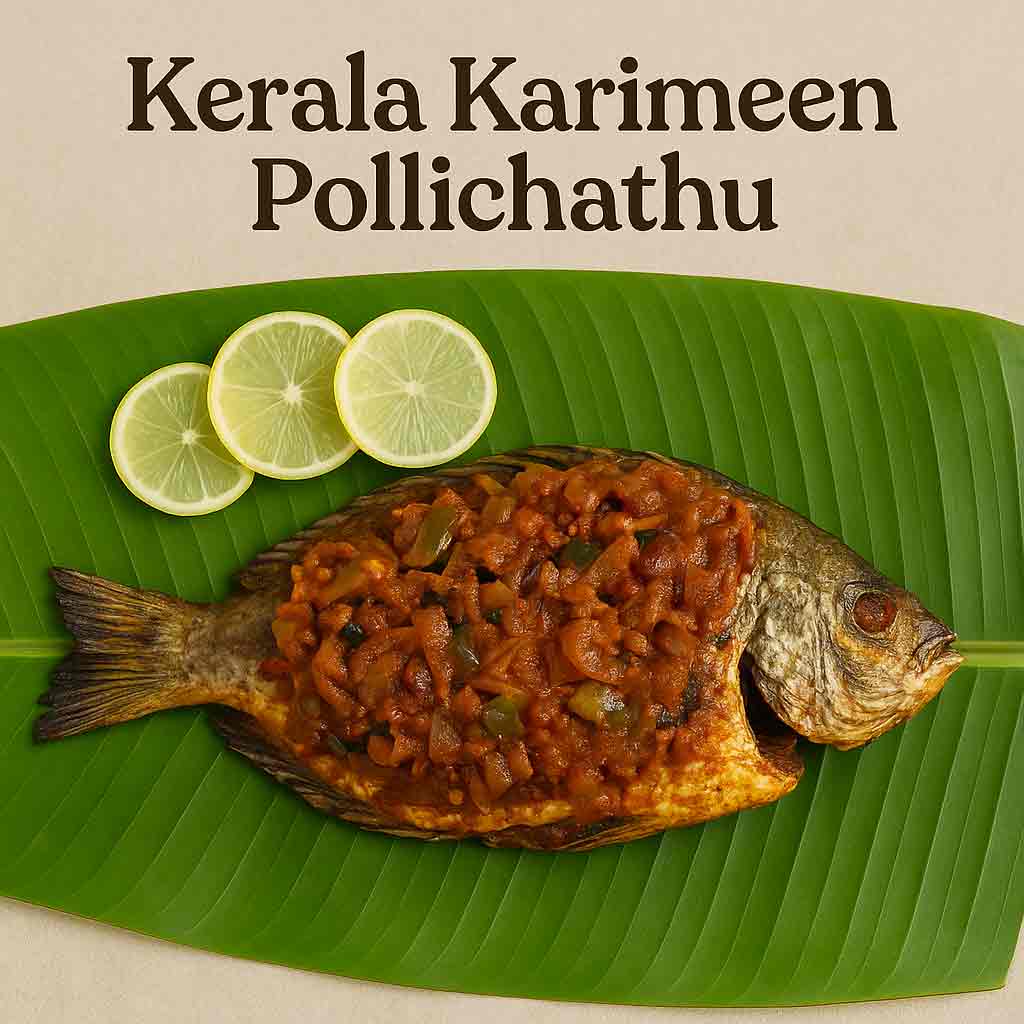
Kerala Karimeen Pollichathu 🐟 Ingredients For the Fish: Karimeen (Pearl Spot fish) – 2 medium-sized (cleaned and scaled) Lemon juice – 1 tbsp Turmeric powder – ¼ tsp Red chili powder – 1 tsp Salt – to taste Coconut oil – 2 tbsp (for shallow frying) For the Masala Filling: Onion – 2 large (finely chopped) Tomato – 2 medium (chopped) Green chilies – 2 (slit) Ginger-garlic paste – 1 tbsp Curry leaves – 10–12 Coconut oil – 2 tbsp Spices: Red chili powder – 1 tsp Coriander powder – 2 tsp Turmeric powder – ¼ tsp Pepper powder – ½ tsp Garam masala – ½ tsp Salt – to taste Other Ingredients: Tamarind pulp – 1 tbsp (or 2 small pieces soaked in warm water) Banana leaves – 2 large (wilted over a flame to make them pliable) 🔪 Preparation Steps Step 1: Marinate the Fish Clean and wash the Karimeen thoroughly. Make a few diagonal cuts on both sides of the fish. Rub a mix of lemon juice, chili powder, turmeric, and salt all over. Let it rest for 30 minutes to absorb the flavors. Step 2: Prepare the Masala Heat coconut oil in a pan. Add curry leaves, followed by onions and green chilies. Sauté until golden brown. Add ginger-garlic paste and sauté till the raw smell disappears. Add chili powder, coriander powder, turmeric, pepper, and garam masala. Add tomatoes and cook until the mixture turns thick and oil starts separating. Add tamarind pulp and salt. Simmer for 2–3 minutes till the masala becomes rich and glossy. Tip: The masala should be slightly tangy and spicy — adjust to taste. Step 3: Shallow Fry the Fish Heat coconut oil in a pan. Shallow fry the marinated fish for about 2 minutes on each side until it’s lightly golden — don’t overcook. Remove and place aside. Step 4: Assemble in Banana Leaf Place a banana leaf on a clean surface. Spread a layer of masala in the center. Place the fish on top and cover it fully with the remaining masala. Fold the banana leaf into a neat parcel and tie it with a banana fiber string or thread. Step 5: Steam or Pan-Roast Option 1 (Steaming): Steam the wrapped fish for 10–15 minutes. Option 2 (Pan-roast): Place the wrapped fish on a tawa, cover with a lid, and cook on low flame for 8–10 minutes each side until you smell the beautiful roasted aroma. Step 6: Serve Hot Unwrap carefully and serve the fish hot, straight from the leaf!The masala will be rich, smoky, and bursting with Kerala flavors. 🍋 Serving Suggestions Serve with steamed rice, kappa (tapioca), or Kerala parotta. Garnish with lemon wedges and curry leaves.
Kerala Sadya
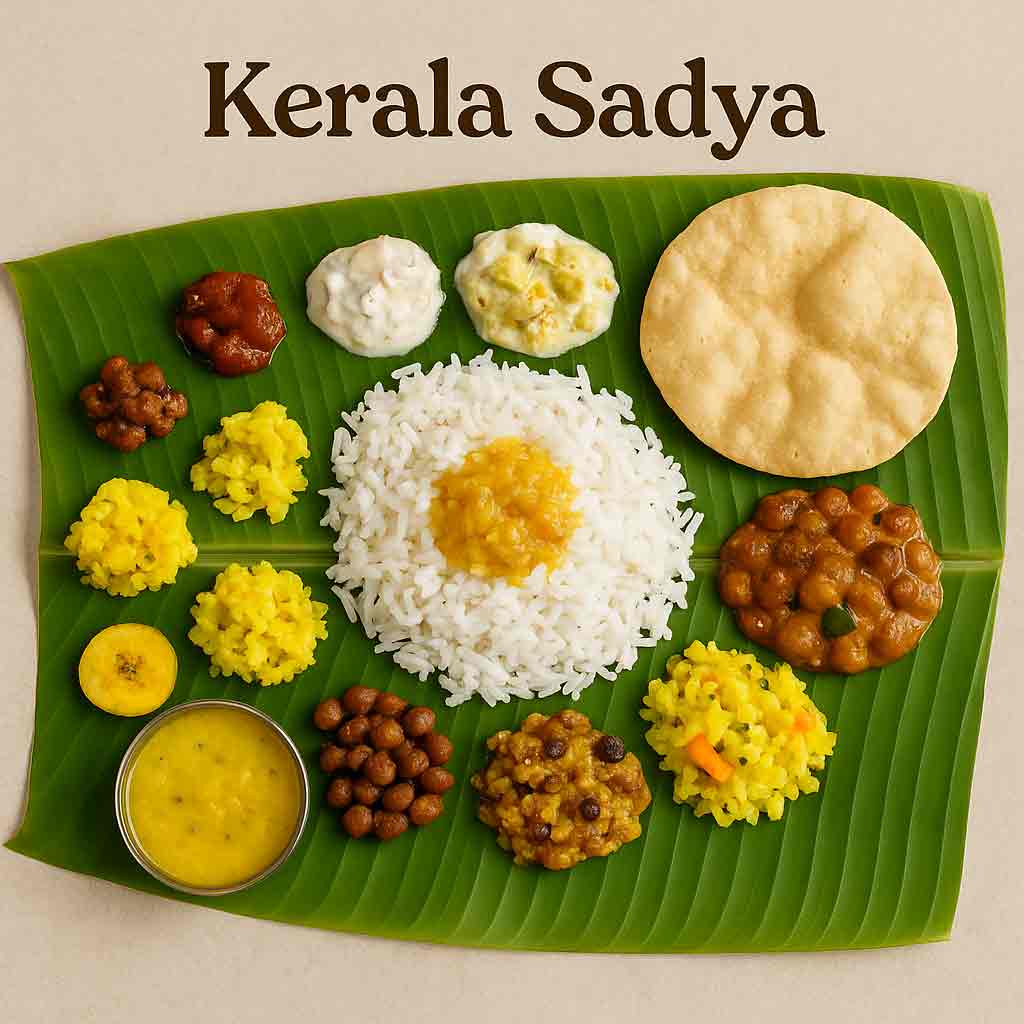
Kerala Sadya 🌼 What is a Sadya? A Sadya is a traditional Kerala vegetarian meal served on a banana leaf, typically featuring 20 to 30 dishes. It represents the state’s culinary richness — a perfect balance of flavors: sweet, sour, salty, bitter, and spicy. 🍌 Banana Leaf Arrangement (Traditional Order) Sadya is always served on a banana leaf, with each dish placed in a specific spot.From the top left to right, you’ll find: Upper left: Pickles, banana chips, pappadam Center: Rice with curries (sambar, rasam, etc.) Bottom left: Banana or payasam (dessert) 🫕 Key Dishes in a Traditional Kerala Sadya 1. Matta Rice (Red Parboiled Rice) The base of Sadya — cooked soft and fluffy. To prepare: Wash and cook Kerala matta rice with water (1:3 ratio) until tender. Drain excess water if needed. 2. Sambar (Vegetable Lentil Curry) A thick, tangy curry made with toor dal, tamarind, and mixed vegetables like drumstick, pumpkin, and okra. To make: Cook toor dal till soft. Add boiled vegetables, sambar powder, tamarind pulp, salt. Simmer and finish with a mustard seed, curry leaf, and dry red chili tempering in coconut oil. 3. Avial (Mixed Vegetable Coconut Curry) A signature dish of Sadya — mildly spiced, coconut-based mixed vegetable curry. To make: Cook vegetables (raw banana, yam, beans, carrot) with salt and a bit of turmeric. Grind coconut, green chili, and cumin into a coarse paste. Mix with vegetables, add curd, and drizzle with coconut oil and curry leaves. 4. Olan (Ash Gourd and Black-eyed Beans Curry) A light, fragrant dish cooked in coconut milk. To make: Cook ash gourd and cowpeas until soft. Add thin coconut milk, salt, and green chilies. Finish with thick coconut milk and coconut oil. 5. Thoran (Vegetable Stir-Fry with Coconut) Dry dish — cabbage, beans, or carrot sautéed with grated coconut. To make: Stir-fry chopped veggies with mustard seeds, curry leaves, and green chilies. Add grated coconut and turmeric; cook till dry. 6. Kaalan (Yam and Raw Banana Curry with Yogurt) A tangy, thick curry made with curd, coconut, and pepper. To make: Cook yam and raw banana in water with turmeric and pepper. Add ground coconut-cumin paste and thick curd. Simmer till thick; temper with mustard, methi seeds, and curry leaves. 7. Erissery (Pumpkin and Black-eyed Pea Curry) Sweet-spicy dish — pumpkin mashed with beans and coconut paste. 8. Rasam (Spiced Tamarind Soup) A thin, spicy broth made with tamarind, tomatoes, and rasam powder — served toward the end for digestion. 9. Kichadi & Pachadi Yogurt-based side dishes: Pineapple Pachadi – sweet and tangy with grated coconut. Cucumber or Beetroot Kichadi – cooling yogurt side with mustard seasoning. 10. Payasam (Dessert) Every Sadya ends on a sweet note — often with two types: Palada Payasam – made with milk, ada (rice flakes), and sugar. Parippu Payasam – made with moong dal, jaggery, and coconut milk. 11. Accompaniments Pappadam – crispy fried lentil wafers Upperi (Banana chips) – sweet and salty versions Inji Puli (Ginger Tamarind Pickle) – spicy-sweet Kaalan / Moru Curry – yogurt curry poured over rice Banana – eaten at the end or with payasam 🍽️ Serving Order Serve all side dishes first on the banana leaf. Then add rice in the center. Pour parippu curry first, followed by sambar, and later rasam. End with payasam and a small banana. 🌿 Tips for Authentic Kerala Sadya Use fresh coconut for all dishes. Cook in coconut oil only. Serve on banana leaves with the narrow end pointing to the left. Sadya is traditionally eaten by hand, sitting cross-legged on the floor.