
Lohri
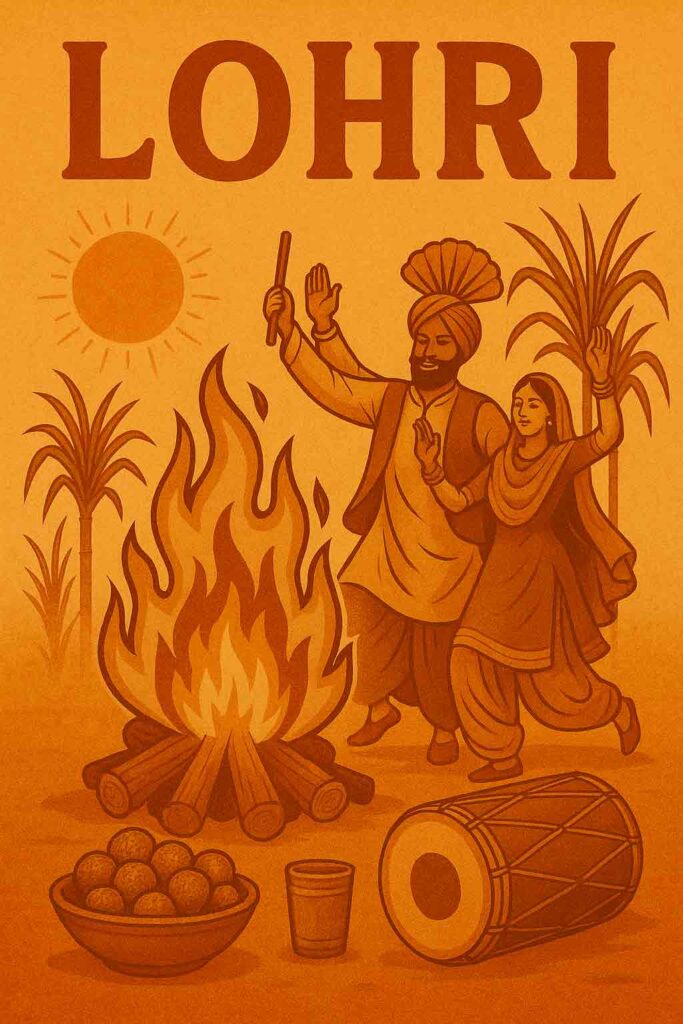
Lohri (January 13) Winter harvest festival, especially in Punjab. Lohri is one of the most vibrant and joyful festivals celebrated primarily in the northern regions of India, especially in Punjab, Haryana, Himachal Pradesh, and parts of Delhi. It marks the end of winter and the beginning of the harvest season, coinciding with the sun’s transition into the zodiac sign of Capricorn — an event known as Makar Sankranti. Celebrated every year on January 13th, Lohri holds deep cultural, seasonal, and social significance. Traditionally associated with the harvest of rabi crops, particularly sugarcane and wheat, the festival is also seen as a time to express gratitude for nature’s bounty and to pray for prosperity and happiness in the coming year. The origins of Lohri are deeply rooted in agrarian life. In ancient times, the festival was a way for farmers to celebrate the completion of the winter sowing season and to look forward to a prosperous harvest. It is believed that Lohri derives its name from “Loi,” the wife of the saint Kabir, or from “til” (sesame) and “rorhi” (jaggery), which are traditional foods enjoyed during the celebration. Symbolically, these ingredients represent warmth and energy — vital during the cold winter nights. Another popular legend associates Lohri with Dulla Bhatti, a Punjabi folk hero similar to Robin Hood, who rebelled against Mughal rule and rescued young girls from being sold into slavery. His bravery and generosity are celebrated in traditional Lohri songs sung around the bonfire. The bonfire is the central element of the Lohri celebration. As dusk falls, families and communities gather outdoors, often in open fields or courtyards, to light a large fire made of wood and dried cow dung cakes. The fire symbolizes the return of longer days and the passing of winter’s chill. People circle the bonfire, offering til (sesame seeds), gur (jaggery), popcorn, peanuts, and rewri (sugar-coated sesame) to the flames as a mark of respect and gratitude to the Sun God for warmth and energy. This ritual is accompanied by lively singing and dancing to the beats of the dhol, as men perform the energetic bhangra and women join in with graceful giddha dances. The air resonates with traditional folk songs such as “Sundar Mundriye ho!” which recounts the heroic deeds of Dulla Bhatti and add a festive rhythm to the evening. For newlyweds and newborns, Lohri holds special importance. In Punjabi culture, the first Lohri after marriage or the birth of a child is celebrated with great enthusiasm, symbolizing new beginnings and blessings for the family. Friends and relatives gather to offer gifts, sweets, and blessings, turning the event into a grand social occasion. People dress in colorful traditional attire, exchange greetings, and share festive foods like makki di roti (cornflat bread) and sarson da saag (mustard greens), which are considered seasonal delicacies. Lohri also fosters a strong sense of community and togetherness. It transcends religious boundaries, bringing people from different backgrounds together to celebrate the spirit of unity, gratitude, and joy. In urban areas, the festival is often marked by community gatherings in housing societies, schools, and offices, where cultural programs and bonfires recreate the charm of the traditional Punjabi celebration. The festival also has an environmental undertone, emphasizing respect for nature’s cycles and sustainable living, as it celebrates the Earth’s renewal and the interdependence between humans and the environment. Beyond its cultural and agricultural roots, Lohri carries a deeper message of hope and renewal. The fire that burns through the night symbolizes the dispelling of darkness and negativity and the welcoming of new energy, optimism, and light. It is a time to let go of the past, forgive, and look forward to the future with faith and enthusiasm. In many ways, Lohri is not just a harvest festival—it is a celebration of life itself, expressing gratitude for the warmth of relationships, the blessings of nature, and the joy of community spirit. Today, Lohri continues to be celebrated with the same fervor and excitement, not only in India but also among Punjabi communities worldwide. Whether in rural villages or bustling cities, the sight of glowing bonfires, rhythmic drumbeats, and joyous dances captures the essence of this beautiful festival — a timeless reminder that warmth, generosity, and togetherness can light up even the coldest nights.
Navaratri
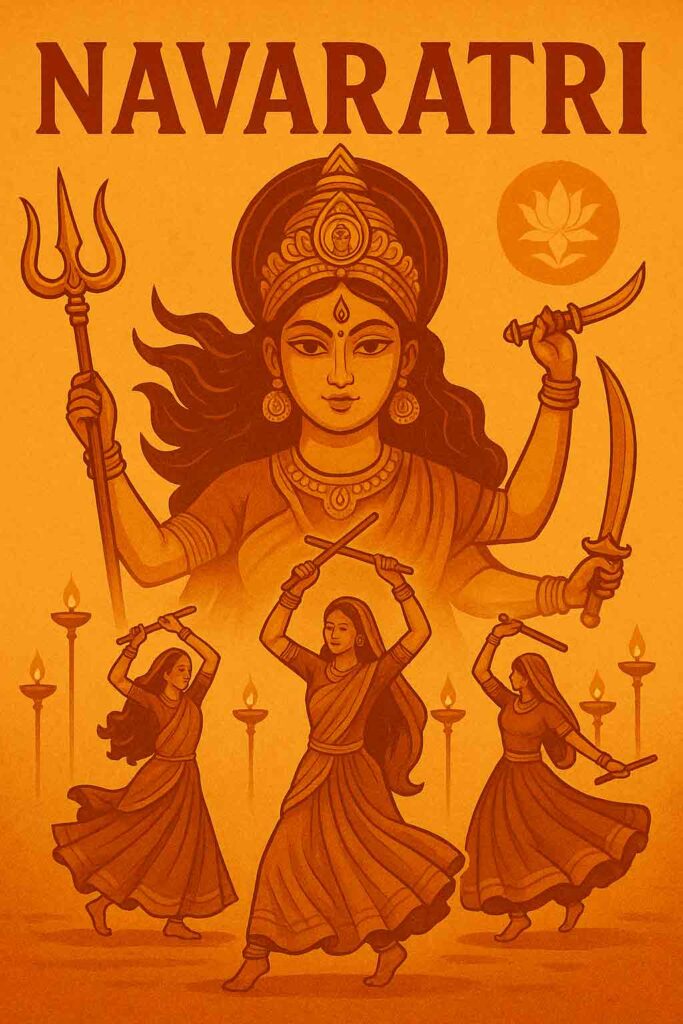
Navaratri (Twice a year-Chaitra & Sharad Navratri) Nine nights dedicated to the worship of Goddess Durga in her nine forms. Navaratri, meaning “nine nights” in Sanskrit, is one of the most celebrated and spiritually significant Hindu festivals in India. It is dedicated to the worship of Goddess Durga and her nine divine forms, each symbolizing different aspects of power, purity, and feminine energy. Observed for nine nights and ten days, Navaratri signifies the victory of good over evil, light over darkness, and knowledge over ignorance. The festival usually falls in the Hindu month of Ashwin (September–October) and culminates in Dussehra or Vijayadashami, marking Lord Rama’s triumph over Ravana and Goddess Durga’s victory over the demon Mahishasura. Though celebrated across India, each region observes it with its own traditions, rituals, and cultural expressions, reflecting the rich diversity of the country. The essence of Navaratri lies in the worship of the Divine Feminine, known as Shakti. According to Hindu mythology, when the demon Mahishasura became invincible after being granted a boon that no man could kill him, the gods combined their energies to create a powerful goddess—Durga. Mounted on a lion and armed with divine weapons, she fought a fierce battle against Mahishasura for nine days and nights. On the tenth day, she defeated him, symbolizing the triumph of righteousness over evil. Hence, Navaratri celebrates not just the power of the goddess but also the inner strength within every human being to overcome negativity, ego, and ignorance. Each of the nine days of Navaratri is dedicated to one of the nine forms of Goddess Durga—Shailaputri, Brahmacharini, Chandraghanta, Kushmanda, Skandamata, Katyayani, Kalaratri, Mahagauri, and Siddhidatri. Devotees observe fasting, prayers, and meditation, seeking blessings for health, prosperity, and spiritual growth. The festival also encourages self-discipline, purification, and reflection, as devotees abstain from certain foods and focus on spiritual upliftment. Homes and temples are beautifully decorated, and the air is filled with devotional songs, the sound of bells, and the fragrance of incense. Navaratri’s cultural expressions vary widely across India. In North India, especially in states like Uttar Pradesh, Delhi, and Punjab, Ramlila performances depict episodes from the Ramayana, culminating in the burning of Ravana’s effigy on Dussehra, signifying the destruction of evil. In West Bengal, Durga Puja is the highlight, where beautifully crafted idols of Goddess Durga are installed in elaborately decorated pandals. The final day, known as Vijaya Dashami, sees the immersion of the idols in water bodies amidst music, dancing, and chanting. In Gujarat and Maharashtra, the festival is synonymous with vibrant Garba and Dandiya Raas dances, where men and women dressed in colorful traditional attire gather every night to dance in circles around the symbolic representation of the goddess. In South India, Navaratri is marked by the display of Bommai Kolu or Golu, an artistic arrangement of dolls representing gods, goddesses, and mythological scenes. Families visit each other’s homes, exchange gifts, and sing devotional songs. In Tamil Nadu, Andhra Pradesh, and Karnataka, the festival also honors Saraswati, the goddess of learning, and young girls are worshipped as embodiments of divine energy. Beyond its religious significance, Navaratri embodies the spirit of unity, joy, and renewal. It serves as a reminder of the cyclical nature of life—where struggle, perseverance, and eventual victory are constant themes. The festival unites people from all backgrounds in celebration, reflecting India’s deep cultural and spiritual diversity. Economically, Navaratri also stimulates local economies, with artisans, craftsmen, and performers contributing to the festive atmosphere through art, dance, music, and food. At its core, Navaratri is a celebration of Shakti, the universal energy that sustains creation and transforms destruction into rebirth. It teaches that true victory is achieved through inner strength, devotion, and righteousness. Whether through fasting, prayer, dance, or community gatherings, the festival inspires self-purification and the pursuit of truth. As the nine nights unfold, they symbolize a spiritual journey—from darkness to light, from ignorance to wisdom, and from human limitation to divine realization. In this way, Navaratri transcends time and geography, continuing to illuminate hearts and homes with faith, color, and divine grace.
Tyagaraja Aradhana
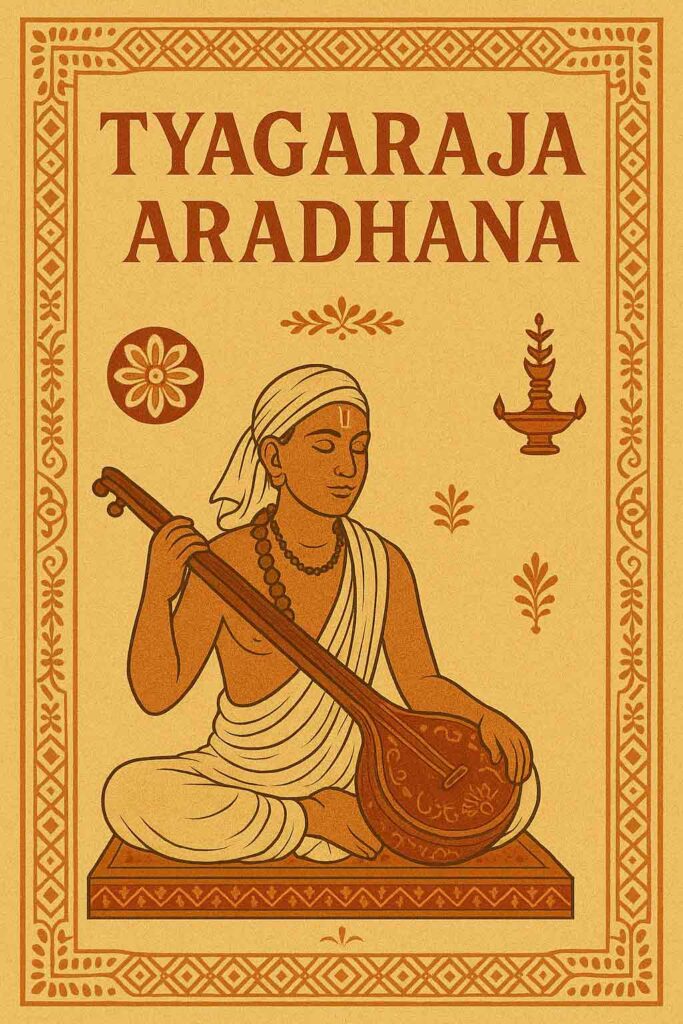
Tyagaraja Aradhana (January) A Divine Celebration of Music, Devotion, and Legacy Tyagaraja Aradhana is one of the most revered and soulful festivals in the world of Indian classical music, celebrated annually in honor of Saint Tyagaraja, one of the greatest composers of Carnatic music. The festival, held in the town of Thiruvaiyaru in Tamil Nadu, commemorates the life and musical genius of this saint-composer, whose compositions continue to inspire countless musicians and devotees even after more than two centuries. Tyagaraja Aradhana is not merely a musical event—it is a spiritual gathering where devotion, melody, and tradition merge to pay homage to a man who dedicated his entire life to music as a form of prayer to Lord Rama. Saint Tyagaraja (1767–1847) was born in Tiruvarur, Tamil Nadu, and from a young age displayed an extraordinary talent for music. A devout follower of Lord Rama, Tyagaraja believed that music was a path to attain divine bliss. He composed over 700 kritis (devotional compositions) in Telugu, each rich in melody, lyrical beauty, and spiritual depth. His songs reflect his unwavering devotion, humility, and philosophical insight into the human soul’s relationship with the divine. Tyagaraja, along with Muthuswami Dikshitar and Syama Sastri, forms the revered “Trinity of Carnatic Music,” whose contributions laid the foundation for modern South Indian classical music. The Aradhana—meaning ‘act of worship’—is observed on the Pushya Bahula Panchami day (January or February), believed to be the day Tyagaraja attained samadhi (liberation). The festival takes place at the Tyagaraja Samadhi (memorial) on the banks of the sacred River Kaveri in Thiruvaiyaru, where the saint spent most of his life composing and teaching music. What began as a small, intimate remembrance by his disciples in the 19th century has now grown into an international festival that attracts thousands of musicians, scholars, and devotees from all over the world. The central highlight of Tyagaraja Aradhana is the Pancharatna Kritis (Five Gems) group singing. These five compositions—Jagadanandakaraka, Dudukugala, Sadhinchene, Kanakana Ruchira, and Endaro Mahanubhavulu—are considered masterpieces, embodying Tyagaraja’s musical brilliance and spiritual devotion. On the day of the Aradhana, hundreds of musicians, both seasoned maestros and young learners, gather around the saint’s samadhi and render these kritis in unison. The sight and sound of voices blending together in perfect harmony create an atmosphere of divine serenity and emotional transcendence. The collective singing symbolizes unity, humility, and the timeless nature of music as a form of worship. The festival extends over several days, featuring concerts, lectures, and performances by eminent Carnatic musicians. Renowned vocalists, instrumentalists, and percussionists take the stage to present Tyagaraja’s compositions and other classical works. The performances are not mere displays of musical skill but heartfelt tributes infused with devotion and reverence. For many artists, performing at Thiruvaiyaru is considered one of the highest honors in their musical journey—a spiritual offering rather than a professional achievement. Beyond its musical splendor, Tyagaraja Aradhana serves as a cultural and spiritual pilgrimage. It brings together people from all walks of life, transcending boundaries of age, region, and language. The festival emphasizes values that Tyagaraja himself cherished—simplicity, devotion, selflessness, and the belief that true music arises from the soul. Even in the modern era, the Aradhana has retained its purity, with the focus remaining on the music and message of Tyagaraja rather than on material grandeur. In recent decades, Tyagaraja Aradhana has gained global recognition, with parallel celebrations held in cities such as Chennai, Bangalore, Hyderabad, and even abroad in the United States, the United Kingdom, and Singapore. Carnatic music enthusiasts across the world gather to sing the Pancharatna Kritis simultaneously, keeping alive the tradition and spirit of the saint. These events reinforce the universality of Tyagaraja’s music, which transcends time and geography to touch hearts with its divine resonance. Tyagaraja Aradhana is thus a living testament to the enduring power of music as a medium of spiritual expression. It reminds us that music, when born out of devotion, can elevate human consciousness and bring people closer to the divine. In every note sung and every melody rendered, the essence of Tyagaraja’s life—his faith, humility, and love for Lord Rama—resonates deeply. The festival stands as a luminous bridge between art and spirituality, echoing the truth that music, at its purest, is indeed a form of prayer.
Pongal
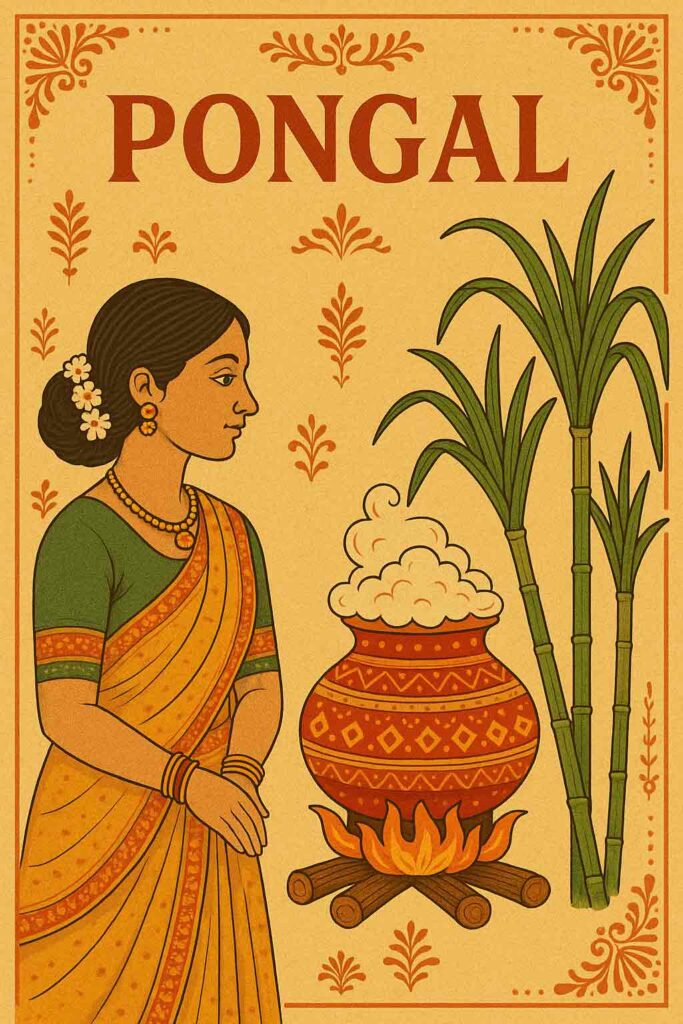
Pongal Festival (January 14–17) A Harvest Celebration of Gratitude and Prosperity Pongal is one of the most cherished and vibrant festivals celebrated in South India, particularly in Tamil Nadu, marking the season of harvest and thanksgiving. Falling in mid-January, usually between the 14th and 17th, Pongal coincides with the sun’s northward journey—Uttarayanam—and the beginning of the Tamil month Thai. It is a festival dedicated to the Sun God, Surya, who is revered as the source of energy, life, and abundance. Farmers express their gratitude for a bountiful harvest, the cattle that help them till the land, and nature’s generosity. The word “Pongal” itself means “to overflow,” symbolizing prosperity and the abundance of crops, wealth, and happiness in life. The celebration of Pongal extends over four days, each carrying a distinct significance and set of rituals that blend devotion, joy, and community spirit. The first day, Bhogi Pongal, is dedicated to Lord Indra, the god of rain and clouds. On this day, old household items are discarded, symbolizing the clearing away of negativity and the welcoming of new beginnings. People clean and decorate their homes, light bonfires to burn old possessions, and prepare to embrace a fresh start filled with hope and optimism. The second day, known as Surya Pongal, is the main day of the festival and is dedicated to the Sun God. Early in the morning, people decorate the entrances of their homes with colorful kolams (rangoli designs) made of rice flour, symbolizing prosperity and warding off evil. The traditional dish “Pongal” is prepared by boiling freshly harvested rice with milk and jaggery in a clay pot, allowing it to overflow as a sign of abundance and prosperity. As the pot boils, family members joyfully shout “Pongalo Pongal!” offering thanks to Surya for his blessings. The dish is then offered to the Sun God along with sugarcane, bananas, and coconuts before being shared among family and friends. The third day, Mattu Pongal, honors cattle, especially cows and bulls, which are vital to agricultural life. Farmers bathe and decorate their cattle with flowers, paint their horns, and feed them with special treats. The festival recognizes the animals’ hard work in plowing fields and producing dairy, embodying the spirit of gratitude and coexistence with nature. In some villages, traditional bull-taming sports like Jallikattu are organized, showcasing strength, courage, and local traditions. The final day, Kaanum Pongal, is a day of socializing, family reunions, and community bonding. People visit friends and relatives, exchange gifts, and enjoy festive meals together. Women perform rituals to bless their brothers and families for prosperity and happiness. The day reflects love, unity, and the joy of togetherness that lies at the heart of Pongal. Beyond its rituals, Pongal carries profound symbolic and cultural meanings. It celebrates the harmony between humans, animals, and nature—emphasizing gratitude and sustainability. The festival also marks the beginning of new agricultural and astrological cycles, aligning human life with natural rhythms. The act of cooking Pongal under the open sky signifies openness to divine blessings, while the overflowing pot represents the overflowing of joy and prosperity in life. Pongal is not just a festival for farmers but for everyone who wishes to express thanks for life’s abundance. Cities and villages alike come alive with traditional music, folk dances like Kummi and Kolattam, and vibrant decorations. The festive atmosphere is marked by warmth, generosity, and deep cultural pride. Over time, Pongal has transcended regional boundaries, celebrated by Tamil communities across the world, keeping alive the spirit of gratitude, unity, and prosperity. At its core, Pongal is a reminder that life thrives when we live in harmony with nature and appreciate its gifts. It teaches the timeless values of thankfulness, renewal, and community spirit. As the new harvest fills granaries and hearts overflow with joy, Pongal becomes a true celebration of life, abundance, and the divine bond between humankind and the earth.
Gangaur
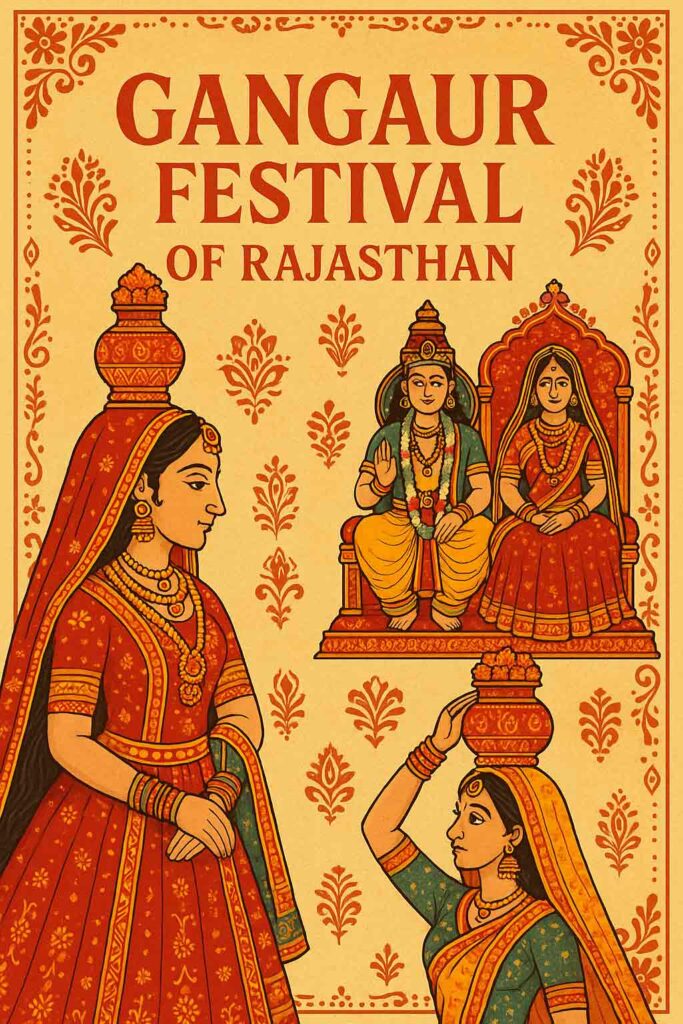
Gangaur Festival (February–March) A Celebration of Love, Devotion, and Spring Gangaur is one of the most vibrant and culturally rich festivals celebrated primarily in the Indian state of Rajasthan, though its influence and spirit extend to parts of Gujarat, Madhya Pradesh, and West Bengal. The festival is dedicated to Goddess Gauri, an incarnation of Goddess Parvati, who symbolizes marital bliss, love, and fertility. The name “Gangaur” is derived from two words—“Gana,” another name for Lord Shiva, and “Gaur,” referring to Goddess Gauri or Parvati. Thus, Gangaur is essentially a celebration of the divine union of Shiva and Parvati and represents the ideals of love, fidelity, and devotion between husband and wife. Celebrated with great enthusiasm and grandeur, Gangaur begins the day after Holi and continues for eighteen days, culminating with elaborate processions, rituals, and festivities. It marks the arrival of spring and harvest time, a period of renewal and prosperity. For women, Gangaur is a festival of immense personal significance. Married women worship Goddess Gauri for the long life, health, and happiness of their husbands, while unmarried girls pray to the goddess for a suitable life partner. The festival, therefore, intertwines social, spiritual, and emotional dimensions, reflecting the deep-rooted cultural traditions of Rajasthan. The rituals of Gangaur are a beautiful blend of devotion and artistry. Women, adorned in their finest traditional attire and jewelry, observe fasts, sing folk songs, and decorate their hands with intricate mehndi (henna) designs. Clay idols of Gauri and Isar (Shiva) are crafted and decorated with colorful attire and ornaments. These idols are worshipped daily, and offerings of wheat, barley, and flowers are made. In rural areas, unmarried girls carry small earthen pots called “ghudlias,” adorned with lamps, through the streets while singing traditional songs, symbolizing light, prosperity, and hope. As the festival progresses, the rituals intensify, leading to the final two days that are marked by spectacular celebrations. On the penultimate day, the idols of Isar and Gauri are placed on decorated wooden platforms or on the heads of women, and grand processions move through the towns and villages. Accompanied by traditional music, dancing, and folk performances, these processions are a feast for the eyes and a true representation of Rajasthan’s colorful culture. The festival reaches its climax when the idols are immersed in water bodies, symbolizing the return of Gauri to her husband’s abode. Jaipur, the capital city of Rajasthan, is particularly famous for its grand Gangaur celebrations. The royal family often participates, and beautifully decorated elephants, camels, and horses lead the traditional procession from the City Palace through the streets of the Pink City. Locals and tourists alike gather in large numbers to witness the spectacle, making it one of the most photographed and cherished events in Rajasthan’s cultural calendar. Udaipur, Jodhpur, and Bikaner also host equally magnificent celebrations, each adding its regional flavor to the festival. Beyond the rituals and festivities, Gangaur carries profound symbolic meanings. It represents the essence of womanhood, devotion, and the sacred bond of marriage. The festival also acknowledges the cycles of nature, the importance of fertility, and the harmony between human life and the environment. For young girls, it serves as an initiation into traditional customs and values, while for the older generation, it is an opportunity to pass on cultural heritage and familial wisdom. In today’s times, while lifestyles have modernized, Gangaur continues to hold its charm and relevance. It stands as a reminder of India’s cultural diversity, the strength of traditions, and the enduring power of faith and love. Whether celebrated in the courtyards of small villages or on the grand streets of Rajasthan’s royal cities, Gangaur unites people through devotion, beauty, and the eternal rhythm of life and nature.
Rath Yathra
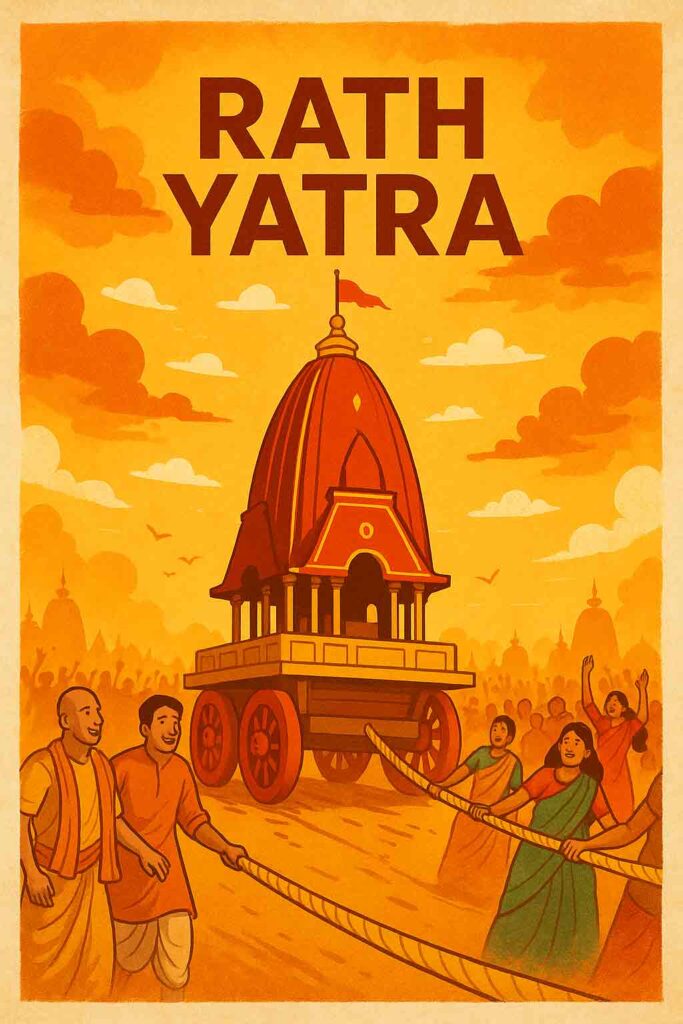
Rath Yatra (June–July) Chariot festival of Lord Jagannath Rath Yatra, also known as the Chariot Festival, is one of the grandest and most celebrated Hindu festivals in India, dedicated to Lord Jagannath (a form of Lord Vishnu), his brother Balabhadra, and sister Subhadra. The festival, held annually in the sacred city of Puri in Odisha, attracts millions of devotees from across India and the world. The word “Rath Yatra” literally translates to “Chariot Journey”, symbolizing the divine journey of the deities from their main temple to another temple, signifying the Lord’s visit to his devotees. This festival, marked by devotion, color, music, and enthusiasm, reflects the deep spiritual bond between the divine and humanity and celebrates inclusivity, unity, and faith. The central event of the Rath Yatra is the grand procession of the three majestic chariots carrying the idols of Lord Jagannath, Lord Balabhadra, and Devi Subhadra from the Jagannath Temple to the Gundicha Temple, about three kilometers away. Each deity has a beautifully crafted wooden chariot made anew every year using sacred neem wood, following centuries-old traditions. The chariots are massive structures, towering up to 45 feet high, adorned with bright colors, intricate designs, and canopies of red, yellow, green, and blue. The chariot of Lord Jagannath, called Nandighosa, has 16 wheels; Balabhadra’s chariot, Taladhwaja, has 14 wheels; and Subhadra’s chariot, Darpadalana, has 12 wheels. Thousands of devotees, regardless of caste, creed, or social status, gather to pull the ropes of these chariots, as it is believed that pulling the chariot grants immense spiritual merit and the blessings of Lord Jagannath himself. The Rath Yatra holds immense religious significance. It is believed that Lord Jagannath, along with his siblings, travels to the Gundicha Temple, which is considered to be the home of their aunt. The journey symbolizes the Lord’s desire to come out of the temple to bless all devotees, including those who cannot enter the sanctum sanctorum due to traditional restrictions. This act of accessibility makes the festival a symbol of equality and inclusiveness in Hindu spirituality. After spending nine days at the Gundicha Temple, the deities make their return journey, known as the Bahuda Yatra. The return procession is equally festive, filled with chants, drumbeats, dancing, and joyous devotion. The festival’s origins are deeply rooted in mythology and tradition. It is said that the practice of Rath Yatra dates back thousands of years and is mentioned in ancient Puranas like the Skanda Purana, Padma Purana, and Brahma Purana. According to one popular legend, the divine siblings longed to visit their birthplace, Gundicha Temple, which represents their maternal home, and thus began the annual chariot journey. Another belief associates the festival with Lord Krishna’s return to Vrindavan, symbolizing his eternal bond with his devotees. The rituals associated with Rath Yatra start much earlier with Snana Purnima (the bathing festival), followed by a fortnight-long period known as Anasara, during which the deities are believed to fall ill and remain in seclusion before appearing again in public during the Yatra. Apart from Puri, Rath Yatras are celebrated in many parts of India and abroad, especially in places with large Jagannath temples such as Ahmedabad, Kolkata, and Delhi. The International Society for Krishna Consciousness (ISKCON) has popularized the festival globally, and today, Rath Yatras are held in major cities like London, New York, Sydney, and Singapore, drawing devotees from all backgrounds. The atmosphere during the festival is electrifying—streets are filled with devotees singing devotional hymns, chanting “Jai Jagannath!”, and dancing in divine ecstasy. Vendors sell traditional sweets like khaja and poda pitha, while temples and homes are decorated with flowers and lights, enhancing the festive spirit. Beyond its religious fervor, the Rath Yatra embodies profound philosophical meaning. It represents the journey of the soul toward liberation (moksha), guided by divine will and devotion. The pulling of the chariot symbolizes the effort one must make to move closer to the divine by overcoming worldly attachments. The festival teaches humility, service, and unity, reminding devotees that the divine resides not only in temples but within every heart that seeks with love and sincerity. Rath Yatra thus transcends mere ritual—it is a celebration of faith, devotion, and the eternal bond between God and humanity.
Makar Sankranti
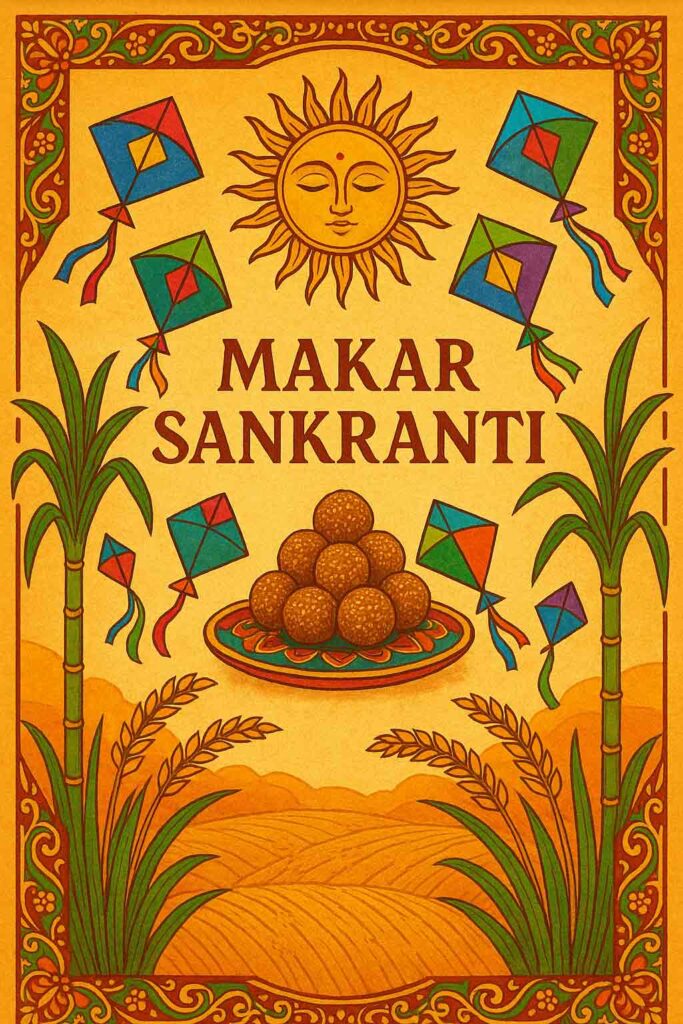
Makar Sankranti (January 14) The Festival of Sun, Harvest, and New Beginnings Makar Sankranti, one of India’s most ancient and widely celebrated festivals, marks the transition of the Sun into the zodiac sign of Makara (Capricorn) and signifies the end of the winter solstice. This celestial event, usually occurring on January 14th each year, heralds longer and warmer days, symbolizing hope, prosperity, and the renewal of life. It is among the few Indian festivals that follow the solar calendar, which is why its date remains constant, unlike other festivals that shift according to the lunar calendar. Across the country, Makar Sankranti is celebrated with different names, customs, and traditions, but its underlying spirit—gratitude for nature’s bounty and the celebration of the harvest—remains universal. The festival holds deep agricultural significance. It marks the time when farmers rejoice after months of hard work during the harvest season. The granaries are full, and the land, having yielded its produce, becomes a symbol of abundance and sustenance. People express their gratitude to the Sun God (Surya Dev), whose warmth and light are essential for growth and life. In rural India, Makar Sankranti is closely tied to nature’s rhythms; it is a day when farmers rest, celebrate, and pray for good harvests in the coming year. Offerings of the first crops—especially newly harvested grains, sugarcane, sesame (til), and jaggery (gur)—are made in rituals, highlighting the deep bond between human life and the natural world. Each region in India celebrates Makar Sankranti with its own distinctive flavor and traditions. In North India, particularly in Punjab and Haryana, it coincides with Lohri, a festival of bonfires, dance, and song. People gather around the fire, throwing puffed rice, popcorn, and sesame into the flames as offerings, symbolizing the burning away of the old and the welcoming of new beginnings. In Gujarat and Rajasthan, the sky becomes a canvas of vibrant colors as people engage in kite flying, a hallmark of the festival. The kites, soaring high against the blue sky, represent freedom, joy, and human aspirations reaching toward the heavens. The International Kite Festival in Ahmedabad is a spectacular sight, attracting participants from across the globe. In Maharashtra, Makar Sankranti is marked by the exchange of sweets made of sesame seeds and jaggery, accompanied by the saying, “Tilgul ghya, goad goad bola,” which means “Accept this sweet and speak sweetly.” This gesture symbolizes the need to forget past grievances and embrace kindness and harmony in relationships. In Tamil Nadu, the festival is celebrated as Pongal, a four-day thanksgiving festival dedicated to the Sun God, cattle, and the Earth. Homes are decorated with kolams (rangoli designs), and rice is cooked in earthen pots until it overflows—a ritual that signifies abundance and prosperity. In Assam, it takes the form of Bhogali Bihu, characterized by feasting, traditional games, and community bonfires, while in Bengal, devotees take holy dips in the Ganges and offer prayers to the rising sun during Gangasagar Mela. The symbolism of Makar Sankranti extends beyond harvest and celestial transitions; it embodies themes of renewal, light, and self-reflection. As the sun begins its northward journey (Uttarayan), the festival encourages people to turn toward positivity, learning, and growth. The movement from darkness to light mirrors the inner spiritual journey—rising above ignorance and embracing knowledge and wisdom. Traditionally, taking a holy dip in rivers like the Ganga, Yamuna, or Godavari is believed to cleanse sins and purify the soul. The act of charity (daan), especially of food, clothes, and money to the poor, is also an essential part of the celebration, signifying compassion and social responsibility. Makar Sankranti thus serves as a reminder of the timeless connection between humans and the cosmos, between effort and reward, and between gratitude and generosity. It brings families and communities together in joy, reflection, and thanksgiving. The sight of colorful kites dancing in the sky, the warmth of sesame sweets, the rhythm of folk songs, and the laughter that fills the air all echo a single message—the end of darkness and the dawn of light. Beyond rituals and traditions, Makar Sankranti inspires us to rise higher, stay grounded in gratitude, and celebrate life’s simple yet profound cycles with a heart full of hope and positivity.
Ugadi
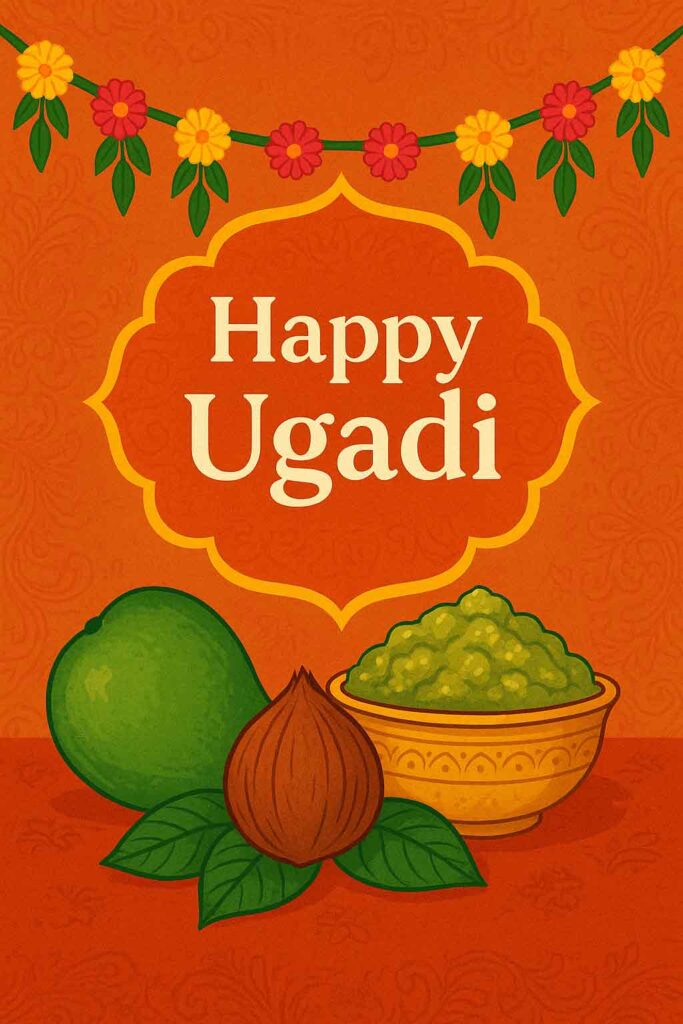
Ugadi (March–April) The Joyous Beginning of a New Year Ugadi, also known as Yugadi, is one of the most important and joyous festivals celebrated in the southern states of India, particularly Andhra Pradesh, Telangana, Karnataka, and parts of Maharashtra. The word “Ugadi” is derived from two Sanskrit words—Yuga meaning “age” and Adi meaning “beginning.” Thus, Ugadi signifies the beginning of a new age or era. It marks the New Year as per the lunisolar Hindu calendar, usually falling in March or April. The festival heralds the arrival of spring and the onset of the new harvest season, bringing with it a sense of renewal, hope, and prosperity. It is a time for new beginnings, reflection, and gratitude, when people welcome the future with positivity and celebrate the abundance of life. The significance of Ugadi goes beyond being just a New Year celebration; it is deeply rooted in cosmic, agricultural, and spiritual symbolism. According to Hindu mythology, it is believed that Lord Brahma, the creator of the universe, began his work of creation on the day of Ugadi. Therefore, it is considered an auspicious time to start new ventures, make important decisions, and set goals for the coming year. Ugadi also coincides with the time when nature undergoes renewal—the trees sprout fresh leaves, flowers bloom, and the fields begin to flourish. This natural rejuvenation mirrors the inner transformation that people seek during the festival, as they let go of the past and embrace a new cycle of life with optimism and faith. The celebrations of Ugadi begin early in the morning, as devotees rise before sunrise and take a ritualistic oil bath, considered a symbolic cleansing of both body and mind. Homes are cleaned thoroughly and decorated with muggu (rangoli) designs at the entrance, and fresh mango leaves are tied to doorways as a symbol of auspiciousness and prosperity. People wear new clothes and gather with family members to perform traditional prayers. One of the central rituals of the day is the preparation and consumption of the famous Ugadi Pachadi, a special dish that embodies the essence of life itself. Ugadi Pachadi is made from six ingredients—neem flowers (bitter), jaggery (sweet), tamarind (sour), raw mango (tangy), salt (salty), and green chili (spicy). Each flavor represents different emotions and experiences of life: happiness, sadness, anger, fear, surprise, and disgust. The mixture serves as a philosophical reminder that life is a blend of varied experiences, and one must accept them all with equanimity. It teaches an important lesson of balance, resilience, and acceptance—a reflection of the true spirit of the festival. Apart from the rituals at home, temples are beautifully decorated, and special prayers are conducted to seek divine blessings for health, wealth, and peace in the year ahead. Astrologers prepare the Panchanga Shravanam—the traditional reading of the Hindu almanac—that forecasts events and fortunes for the coming year. This reading is an integral part of Ugadi celebrations, guiding people on what to expect and how to prepare spiritually and mentally for the future. The festive atmosphere extends beyond homes into communities and towns. Cultural programs, music, dance, and traditional performances mark the celebrations. People exchange greetings, gifts, and sweets with neighbors and relatives, spreading joy and unity. For farmers, Ugadi holds special importance as it signals the beginning of the agricultural season. They offer prayers for good rains and bountiful harvests, thanking Mother Earth for her generosity. Ugadi is not merely a festival of rituals—it is a celebration of renewal and inner awakening. It inspires individuals to reflect upon their actions, make positive resolutions, and strengthen their relationships. It is a day to forgive, forget, and move forward with hope. The festival reminds everyone that like the cycles of nature, life too is ever-changing and full of new possibilities. As the sun rises on Ugadi, lighting up the sky with brilliance, people are reminded that every dawn is an opportunity to begin again—to create, to grow, and to live meaningfully. Ugadi thus stands as a beautiful symbol of life’s eternal rhythm—a time to rejoice in the present, honor the past, and embrace the future with renewed spirit and gratitude.
Onam
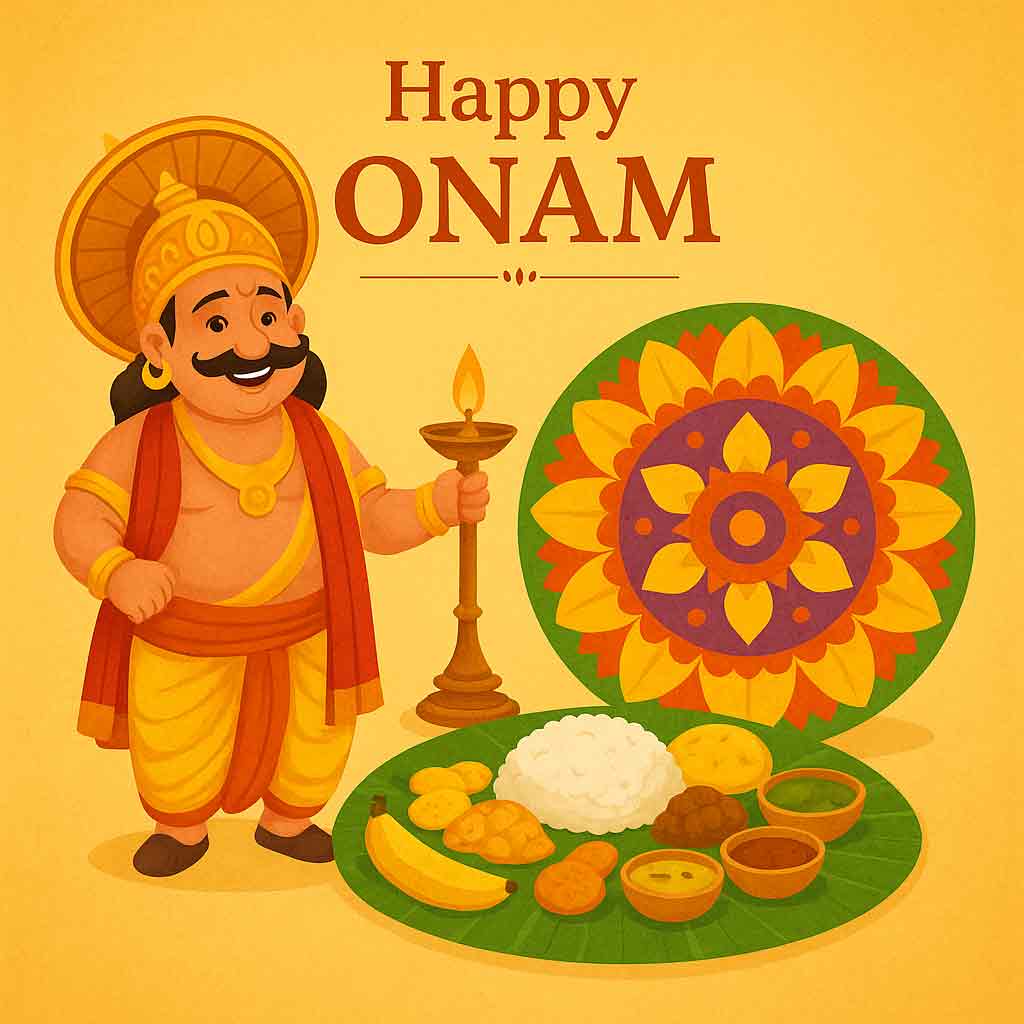
Onam (August–September) The Festival of Harvest, Harmony, and Heritage Onam is one of the most vibrant and cherished festivals of Kerala, celebrated with immense enthusiasm, cultural splendour, and unity among people of all communities. It marks the annual homecoming of the mythical King Mahabali, whose reign is remembered as a golden age of prosperity, equality, and happiness. The festival, which usually falls in the Malayalam month of Chingam (August–September), is Kerala’s official state festival and symbolizes the spirit of togetherness, harmony, and gratitude for nature’s bounty. Onam is not just a festival — it is a cultural experience that reflects the very essence of Kerala’s traditions, arts, and community life. The legend behind Onam is rooted in Hindu mythology. King Mahabali, an Asura (demon) king, was known for his generosity, justice, and devotion to his people. His reign brought prosperity and peace to the land, and everyone lived happily without discrimination or sorrow. However, the gods grew concerned that Mahabali’s fame and power were surpassing theirs. To humble him and restore cosmic balance, Lord Vishnu took his fifth avatar as Vamana, a dwarf Brahmin. When Mahabali offered him a gift, Vamana asked for three paces of land. With two steps, he covered the earth and the heavens, leaving no space for the third. The noble Mahabali then offered his head for the final step, and Vishnu sent him to the netherworld (Patala). Impressed by his devotion and humility, Lord Vishnu granted Mahabali permission to visit his people once every year. Onam commemorates this annual visit, celebrating the time when the beloved king returns to see his prosperous and joyful kingdom. The ten-day festival of Onam begins with Atham and concludes with Thiruvonam, the most auspicious day. The celebrations are marked by elaborate rituals, traditional games, cultural performances, feasts, and decorations. One of the most iconic symbols of Onam is the Pookalam, a beautiful floral carpet designed in intricate patterns at the entrances of homes. Each day, fresh flowers are added, creating a colourful and fragrant welcome for King Mahabali. The Pookalam symbolizes harmony, creativity, and the community’s collective joy. Another highlight of Onam is the grand Onam Sadya, a traditional vegetarian feast served on a banana leaf. It includes a variety of delicious dishes — from avial, sambar, olan, and thoran to crispy pappadam and sweet payasam. The Sadya represents abundance and gratitude for nature’s harvest and is enjoyed with family and friends, reinforcing the values of sharing and togetherness. The festival also showcases Kerala’s rich cultural heritage through music, dance, and sports. Traditional art forms such as Kathakali, Thiruvathirakali, Pulikali (the tiger dance), and Vallamkali (the famous snake boat race) are performed across the state. Vallamkali, in particular, captures the spirit of Onam — hundreds of oarsmen row their long, decorated boats in perfect rhythm to the beat of drums, cheered on by thousands of spectators. These events are not merely entertainment; they are expressions of Kerala’s communal harmony, teamwork, and cultural pride. Onam also has a deep philosophical meaning that transcends religion. It celebrates the virtues of humility, generosity, and righteousness as embodied by King Mahabali. The festival reminds people that true prosperity lies not in wealth but in kindness, unity, and mutual respect. It is a time when people forget social differences and come together as one community, decorating their homes, exchanging gifts, and rejoicing in the spirit of equality. In modern times, Onam has evolved into a global celebration of Malayali culture. People of Kerala, wherever they live — across India or abroad — observe the festival with the same devotion and joy. Onam bridges generations and geographies, keeping alive the values of harmony and gratitude that define Kerala’s identity. Ultimately, Onam is a celebration of life — of good harvests, moral virtue, and cultural pride. It reminds everyone of a utopian time under a noble ruler when happiness, fairness, and prosperity prevailed. As the lamps glow, the Pookalams bloom, and the aroma of Onam Sadya fills the air, every heart in Kerala and beyond welcomes King Mahabali with love and says, “Maveli naadu vaneedum kaalam, manusharellarum onnu pole” — “When Mahabali ruled the land, all people lived as equals.”
Raksha Bandhan
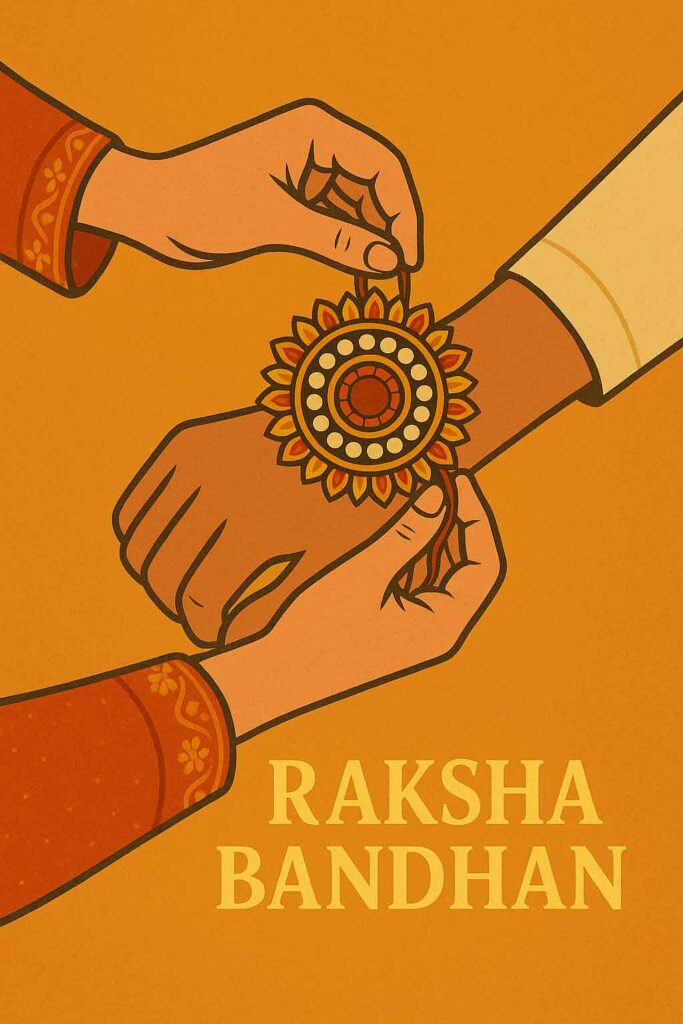
Raksha Bandhan (July–August) The Sacred Bond of Love and Protection Raksha Bandhan, also known as Rakhi, is one of the most cherished festivals in India, symbolizing the pure and affectionate bond between brothers and sisters. The term “Raksha Bandhan” literally means “the bond of protection,” derived from the Sanskrit words Raksha (protection) and Bandhan (bond). Celebrated on the full moon day (Purnima) of the Hindu month of Shravan (July–August), this festival holds immense emotional and cultural significance. On this day, sisters tie a sacred thread called rakhi around their brothers’ wrists, praying for their health, happiness, and long life. In return, brothers promise to protect their sisters from harm and stand by them in times of need. This simple yet profound ritual celebrates not only familial love but also the timeless values of trust, care, and mutual respect. The origins of Raksha Bandhan can be traced back to ancient Indian mythology and history. Several legends narrate how the festival came into being. One of the most popular stories is that of Lord Krishna and Draupadi. When Krishna injured his finger, Draupadi tore a piece of her saree and tied it around his wound to stop the bleeding. Deeply touched by her gesture, Krishna vowed to protect her always, a promise he fulfilled during the infamous disrobing scene in the Mahabharata. Another story tells of Queen Karnavati of Mewar, who sent a rakhi to Emperor Humayun, seeking his protection when her kingdom was threatened by Bahadur Shah. Honoring the bond, Humayun immediately came to her aid, showcasing that Raksha Bandhan transcends religion and caste, representing universal brotherhood and compassion. The festival also finds mention in various Puranas and historical texts. According to another legend, when Lord Indra, the king of the gods, was losing a battle against demons, his wife Indrani tied a sacred thread around his wrist, empowering him with divine strength to emerge victorious. Over time, Raksha Bandhan evolved into a social and family festival, celebrating the affectionate ties between siblings and loved ones. The celebration of Raksha Bandhan varies across regions but carries the same essence of love and protection. Preparations begin days in advance, with markets filled with colorful rakhis, sweets, and gifts. On the day of the festival, families gather for rituals. Sisters perform an aarti of their brothers, apply a tilak (vermilion mark) on their forehead, and tie the rakhi while chanting mantras that invoke divine blessings. The brother then offers gifts or money as a token of love and gratitude. Traditional sweets like ladoos, barfis, and kaju katli are shared, filling homes with joy and warmth. In modern times, the festival has also embraced digital forms—sisters send e-rakhis or courier rakhis to brothers living far away, ensuring that physical distance does not weaken emotional bonds. Beyond the rituals, Raksha Bandhan carries a deeper social and cultural message. It reinforces the importance of familial relationships, love, and responsibility. In contemporary society, the festival’s meaning has broadened—people tie rakhis to friends, neighbors, and even soldiers as a gesture of solidarity and gratitude. Many women tie rakhis to the soldiers of the Indian Armed Forces, acknowledging their role as protectors of the nation. This extension of the festival reflects its universal message of peace, unity, and brotherhood. Raksha Bandhan is also a reminder of India’s rich cultural heritage that celebrates human emotions and relationships. It promotes the idea of coexistence, equality, and care for one another. For children, it is a joyful day filled with laughter, sweets, and excitement, while for elders, it rekindles family ties and cherished memories. The sacred thread of rakhi thus becomes more than just a decorative band—it becomes a symbol of faith, commitment, and eternal love. In essence, Raksha Bandhan stands as a celebration of human connection in its purest form. It teaches that protection and love are not bound by gender, religion, or distance but are universal values that unite all. As sisters tie the rakhi and brothers pledge to protect, the festival renews the spirit of care and mutual respect that strengthens families and communities. Every Raksha Bandhan reminds us that while threads may fade with time, the bond of love and protection they signify remains eternal, woven deep within the heart of every sibling relationship.