
Maha Shivratri
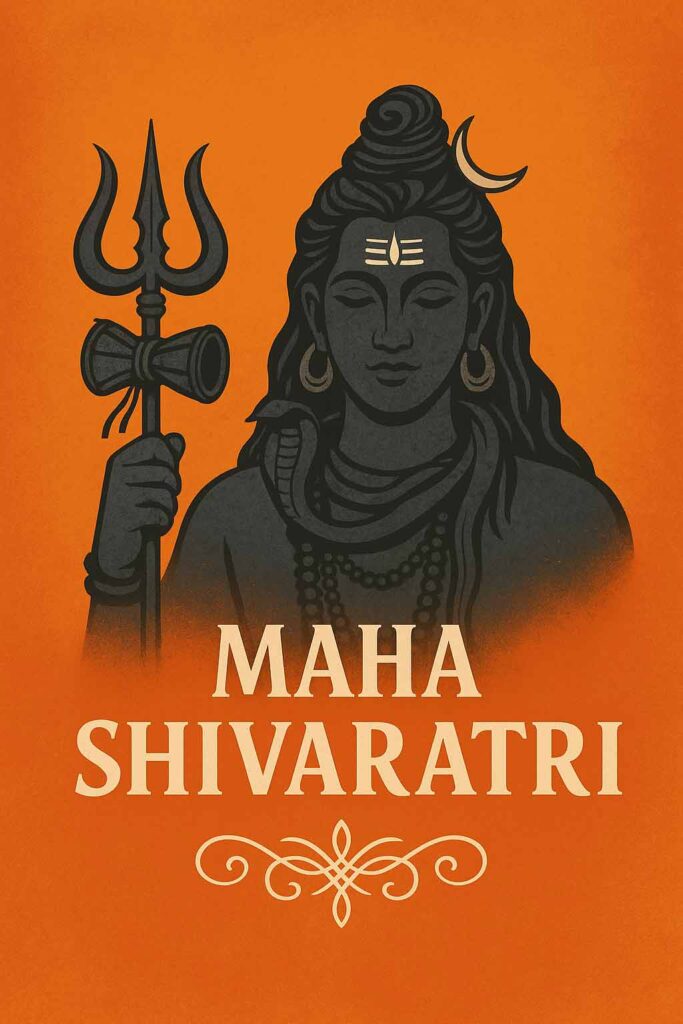
Maha Shivratri (February–March) The Night of Lord Shiva’s Cosmic Dance Maha Shivratri, one of the most sacred festivals in Hinduism, is a grand celebration dedicated to Lord Shiva, the destroyer and transformer in the holy trinity of Brahma, Vishnu, and Mahesh (Shiva). The term “Maha Shivratri” means “The Great Night of Shiva,” and it falls on the 14th night of the dark fortnight in the Hindu month of Phalguna or Maagha (February–March). On this auspicious night, devotees stay awake in reverence and devotion to Lord Shiva, observing fasts, performing rituals, and meditating deeply to attain spiritual growth and divine blessings. Maha Shivratri symbolizes the convergence of Shiva and Shakti—the masculine and feminine cosmic energies that sustain the universe. It is believed to be the night when Lord Shiva performed the Tandava, the cosmic dance of creation, preservation, and destruction, marking the eternal rhythm of life and the universe. The festival holds deep philosophical, spiritual, and mythological significance. According to one legend, Maha Shivratri marks the day when Lord Shiva married Goddess Parvati. Their divine union represents the balance between strength and compassion, austerity and grace. Another belief states that it was on this night that Lord Shiva consumed the deadly poison Halahala that emerged during the churning of the ocean (Samudra Manthan) to save the universe from destruction. The poison turned his throat blue, earning him the name Neelkanth—the blue-throated one. For ascetics and yogis, Maha Shivratri is not merely a festival but a spiritual opportunity to overcome ignorance, conquer desires, and experience inner peace through meditation and devotion to Lord Shiva, the Mahadeva—the great god who resides in Mount Kailash in deep meditation. Across India and in many parts of the world, Maha Shivratri is celebrated with immense enthusiasm and devotion. Temples dedicated to Lord Shiva are beautifully decorated, and devotees throng from early morning to offer their prayers. The day begins with ritualistic bathing of Shiva Lingams—symbols of the formless divine energy—with milk, honey, water, ghee, sugar, and curd, known collectively as the Panchamrit Abhishek. Offerings of bael (bilva) leaves, dhatura flowers, fruits, and incense are made to please the Lord. Chanting of the Mahamrityunjaya Mantra and “Om Namah Shivaya” echoes through temples and homes, filling the atmosphere with spiritual vibrations. Many devotees observe strict fasts—some abstaining from food and water entirely—while others partake only in fruits and milk. The night-long vigil, known as Jagaran, is marked by devotional songs, bhajans, and recitations of Shiva scriptures like the Shiva Purana. The four prahars (quarters) of the night each carry specific rituals, representing different stages of human consciousness leading to ultimate awakening. Maha Shivratri also carries a profound yogic and scientific significance. According to yogic traditions, on this night, the natural energy of the planet rises to its peak. It is said that keeping the spine erect during meditation or vigil allows this energy to flow upward, promoting inner balance and spiritual awakening. This is why devotees stay awake all night, chanting and meditating, aligning their energies with the cosmic vibrations of Shiva. The night symbolizes the triumph of light over darkness and ignorance, guiding devotees toward self-realization and unity with the divine. Beyond its religious dimension, Maha Shivratri is a festival that unites people across communities. It teaches detachment, humility, and faith in divine order. It reminds humanity that life is transient and that true liberation lies in surrendering one’s ego to the higher self. As dawn breaks after the night of fasting and devotion, devotees feel renewed—a sense of calm, purity, and divine connection fills their hearts. The fragrance of incense, the resonant sound of conch shells, and the rhythmic chants of “Har Har Mahadev” echo through temples and homes, symbolizing the presence of Shiva in every particle of creation. Maha Shivratri thus stands as a timeless reminder of Lord Shiva’s cosmic dance—an eternal rhythm that sustains the cycle of life, death, and rebirth—and inspires devotees to seek truth, discipline, and ultimate freedom.
Durga Puja
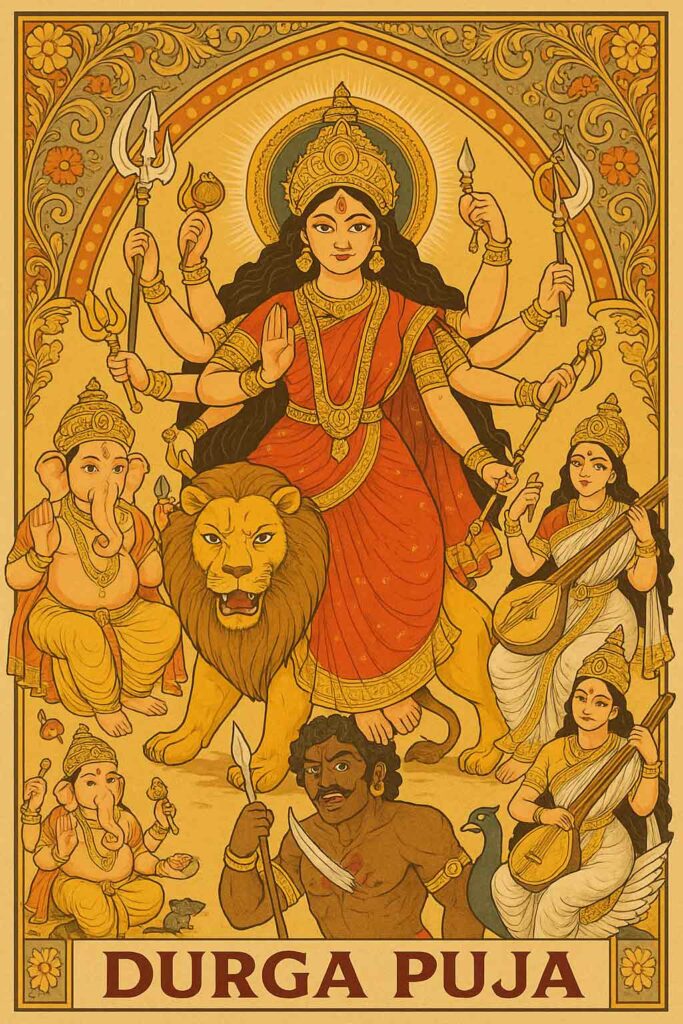
Durga Puja (September–October) Honors Goddess Durga’s victory over Mahishasura. Durga Puja, one of the grandest and most cherished festivals in India, especially in West Bengal, is a magnificent celebration of the goddess Durga’s victory over the demon Mahishasura. It symbolizes the triumph of good over evil and the divine feminine power that protects and nurtures the world. Celebrated with unmatched fervour, artistic splendour, and spiritual devotion, Durga Puja is not merely a religious festival — it is a cultural phenomenon that unites communities, inspires creativity, and fills the atmosphere with joy, devotion, and festivity. According to Hindu mythology, Mahishasura, a powerful demon, gained immense strength through a boon that made him invincible against men and gods. Drunk with power, he unleashed terror across the heavens and the earth. To restore balance, the gods combined their energies to create Goddess Durga, a divine embodiment of Shakti — the supreme feminine power. Armed with weapons given by different deities and riding a majestic lion, Durga fought Mahishasura for nine days and nights, finally defeating him on the tenth day, celebrated as Vijayadashami or Dussehra. This epic battle represents the victory of truth, righteousness, and justice over tyranny and evil. Durga Puja is observed during the lunar month of Ashwin (September–October) and coincides with the last five days of Navratri. The celebrations begin with Mahalaya, which marks the invocation of the goddess. On this day, devotees wake up early to listen to the recitation of “Chandi Path” — verses from the Devi Mahatmyam — that narrate the story of Durga’s creation and her victory. The air fills with devotion as traditional songs, such as “Mahishasura Mardini,” echo across homes and temples, heralding the arrival of the goddess. The heart of Durga Puja lies in the magnificent pandals — temporary structures erected to house elaborately crafted idols of Goddess Durga and her children — Lakshmi, Saraswati, Kartikeya, and Ganesha. Each idol portrays Durga in her majestic form, slaying Mahishasura, symbolizing the triumph of divine energy. Artists and craftsmen spend months creating these idols and pandals, often turning them into breathtaking works of art that reflect themes from mythology, history, or even contemporary social issues. The creativity and artistry showcased during Durga Puja have made it one of the most spectacular cultural events in the world. For five days — Shashthi, Saptami, Ashtami, Navami, and Dashami — the cities and towns of Bengal come alive with lights, decorations, and festive music. People, dressed in their finest attire, visit pandals to offer prayers, socialize, and enjoy cultural programs. Traditional rituals such as Pushpanjali (offering flowers), Sandhi Puja (performed at the junction of Ashtami and Navami), and Dhuno Porano (offering incense to the goddess) are performed with devotion. One of the most powerful moments of the festival is the Dhak — the rhythmic drumming that fills the air and ignites the spirit of celebration. Food is another vital aspect of Durga Puja. Festive delicacies such as khichuri, luchi, cholar dal, beguni, sandesh, and rosogolla are shared among family and friends. Bhog — the sacred offering to the goddess — is distributed to devotees, symbolizing divine blessings. The festival is not just about worship but also about togetherness, joy, and cultural pride. On the final day, Vijayadashami, devotees bid farewell to the goddess with the ritual of Visarjan — the immersion of the idol in a river or sea. Women perform Sindoor Khela, smearing vermilion on each other in a joyous celebration of womanhood and prosperity. Though the immersion marks the physical departure of the goddess, it signifies the spiritual message that her divine energy remains within every devotee. Durga Puja transcends religious boundaries — it is a celebration of art, community, and the strength of good over evil. It reminds people of the power of righteousness, courage, and unity. In every beat of the dhak, in every lamp that glows, and in every smile that shines during the Puja, the spirit of Goddess Durga lives on — fierce, compassionate, and eternal — reminding humanity that light will always conquer darkness.
Dusserhra
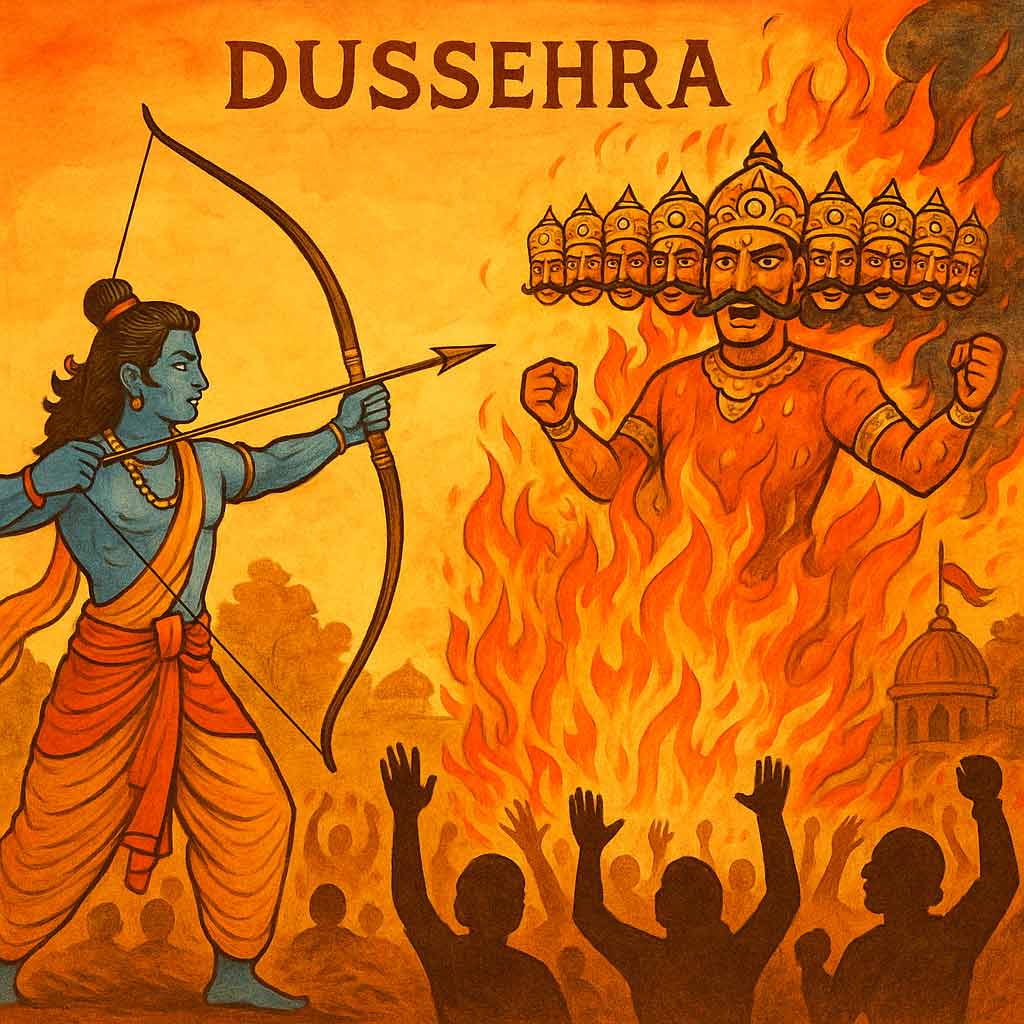
Dussehra(September–October) The Triumph of Good over Evil Dussehra, also known as Vijayadashami, is one of the most significant Hindu festivals celebrated across India with great enthusiasm and spiritual fervour. It marks the victory of good over evil and righteousness over wickedness. Falling on the tenth day of the lunar month of Ashwin (September–October), it comes right after the nine days of Navratri and carries deep cultural, moral, and spiritual meanings. The word Dussehra is derived from two Sanskrit words — Dasha meaning “ten” and Hara meaning “defeat” — signifying the defeat of the ten-headed demon king Ravana by Lord Rama, as narrated in the epic Ramayana. The story of Dussehra varies slightly across regions, but the central theme remains the same — the triumph of virtue over vice. In northern India, Dussehra commemorates Lord Rama’s victory over Ravana, who had abducted his wife Sita. It is said that after a fierce battle lasting ten days, Rama killed Ravana and rescued Sita, symbolizing the triumph of truth and dharma. In many parts of the country, effigies of Ravana, his brother Kumbhakarna, and his son Meghnath are burned in open grounds to celebrate this victory. The burning effigies, accompanied by the thunderous sound of firecrackers, signify the destruction of arrogance, lust, and evil tendencies that reside within human beings. The festival teaches that even the mightiest power cannot stand against truth and righteousness. In the eastern and southern states of India, Dussehra coincides with the conclusion of Durga Puja, a grand celebration that honours Goddess Durga’s victory over the buffalo demon Mahishasura. According to Hindu mythology, Mahishasura was a powerful demon who had gained immense strength and created havoc in the heavens and on earth. The gods combined their energies to create Goddess Durga, who fought Mahishasura for nine days and nights and finally defeated him on the tenth day — celebrated as Vijayadashami, the day of victory. Thus, while northern India celebrates Dussehra as Rama’s victory, eastern and southern India celebrate it as the triumph of the Goddess over demonic forces. Both stories, however, convey the same eternal message — the ultimate triumph of good over evil. The festival also carries immense cultural and social significance. In many towns and villages, theatrical enactments of the Ramayana known as Ramlila are performed in open-air stages. These performances not only entertain but also serve as moral education, reminding people of the values of truth, honour, and sacrifice. The effigy-burning ceremonies bring together people from all walks of life, reinforcing a sense of community and shared celebration. In the south, devotees mark the day by beginning new ventures, buying new tools, books, or vehicles, as it is considered an auspicious time for new beginnings. The tradition of worshipping tools and instruments, known as Ayudha Puja, signifies respect for one’s profession and work. Beyond mythology and ritual, Dussehra also holds philosophical depth. It is a reminder that evil is not merely external — represented by Ravana or Mahishasura — but also resides within us in the form of ego, greed, anger, jealousy, and deceit. The burning of Ravana’s effigy symbolizes the burning of these inner vices. Every year, the festival encourages individuals to introspect and strive to conquer their personal demons. Dussehra’s universal appeal lies in its message of moral victory and renewal. It inspires courage, righteousness, and the confidence that truth will always prevail, no matter how powerful evil may appear. In a modern world often filled with conflict, inequality, and moral confusion, Dussehra serves as a timeless reminder that ethical living, compassion, and self-discipline form the foundation of a just and harmonious society. In essence, Dussehra is not just a festival; it is a celebration of human values — courage, truth, justice, and devotion. It teaches that no matter how many challenges or injustices one faces, righteousness and goodness will ultimately triumph. As the flames of Ravana’s effigy rise high into the night sky, they illuminate not only the end of evil but also the dawn of hope, virtue, and moral awakening — a lesson that remains as relevant today as it was thousands of years ago.
Deepavali
Diwali (October–November) The Festival of Lights, Joy, and New Beginnings Diwali, also known as Deepavali, is one of the most celebrated and cherished festivals in India, symbolizing the victory of light over darkness, good over evil, and knowledge over ignorance. The word Deepavali comes from the Sanskrit words deepa (lamp) and avali (row), meaning a “row of lights.” This radiant festival illuminates homes, streets, and hearts with its glow, spreading warmth, happiness, and hope. Falling in the Hindu month of Kartika (October or November), Diwali is celebrated with grandeur and devotion across India and by Indian communities worldwide. The festival typically spans five days, each carrying unique spiritual significance, and is observed by people of various faiths, including Hindus, Jains, Sikhs, and Buddhists, each interpreting it through their own cultural and religious lens. The origin and legends of Diwali are as diverse as India itself, with different regions celebrating the festival for different reasons. In northern India, Diwali marks the return of Lord Rama to Ayodhya after a 14-year exile and his victory over the demon king Ravana. To celebrate his return, the people of Ayodhya lit rows of oil lamps, symbolizing the triumph of righteousness and the dispelling of darkness. In southern India, the festival commemorates Lord Krishna’s victory over the demon Narakasura, representing the victory of divine truth over arrogance and evil. In western India, particularly Gujarat, Diwali also marks the start of a new financial year, when businesses close old accounts and open new ledgers, praying to Goddess Lakshmi for wealth and prosperity. For Jains, Diwali marks the day when Lord Mahavira attained nirvana, while Sikhs celebrate it as Bandi Chhor Divas, the day Guru Hargobind Ji was released from imprisonment. Despite these diverse stories, the core message of Diwali remains the same—renewal, hope, and the triumph of light. The preparations for Diwali begin weeks in advance. Homes and workplaces are thoroughly cleaned, painted, and decorated to welcome prosperity and positivity. People adorn their homes with colorful rangoli designs, diyas (oil lamps), and string lights, creating an enchanting sight after sunset. The fragrance of freshly prepared sweets like laddus, barfis, and halwas fills the air, while markets bustle with people shopping for new clothes, gifts, and festive delicacies. The lighting of diyas is not only a visual delight but also a spiritual act—signifying the removal of ignorance and the awakening of inner wisdom. Families come together to perform Lakshmi Puja on the main day of Diwali, offering prayers to Goddess Lakshmi, the deity of wealth and prosperity, and Lord Ganesha, the remover of obstacles, for peace and success in the year ahead. Diwali is also a time for sharing and giving, fostering social harmony and compassion. People visit friends and relatives to exchange sweets and gifts, reinforcing bonds of love and friendship. In many parts of India, fireworks light up the night sky, adding color and sparkle to the celebrations. However, in recent years, there has been a growing awareness about the environmental and health effects of excessive fireworks, leading to campaigns promoting a “Green Diwali.” Many communities now celebrate with eco-friendly diyas, natural decorations, and minimal noise, embracing the true spirit of the festival—joy without harm. Beyond its external beauty, Diwali carries a deep philosophical and spiritual message. The lighting of lamps signifies the illumination of the mind and soul, urging individuals to replace ignorance with wisdom, hatred with love, and despair with hope. It reminds people that darkness is temporary and can be overcome by perseverance and positivity. The festival also encourages introspection and gratitude—thanking the divine for blessings received and seeking strength to overcome life’s challenges. In this sense, Diwali is not just an external celebration but an inner awakening. In modern times, Diwali has become a global festival, celebrated in cities like London, New York, Singapore, and Sydney, where landmarks are lit up to honor the occasion. It brings together people of all backgrounds to celebrate unity, harmony, and cultural richness. The festival’s universal themes of renewal, hope, and light resonate across cultures and faiths, making it one of the most beloved celebrations in the world. Ultimately, Diwali is more than a festival—it is a way of life. It reminds us to nurture the light within ourselves, to spread kindness, and to overcome adversity with courage and faith. As the flickering lamps illuminate homes and hearts, Diwali inspires everyone to embrace new beginnings, celebrate togetherness, and keep the flame of goodness burning bright. Whether celebrated with grandeur in bustling cities or with simplicity in small villages, the spirit of Diwali unites millions in a shared message of joy, peace, and love—a reminder that light, in all its forms, will always conquer darkness.
Maha Kumbha Mela
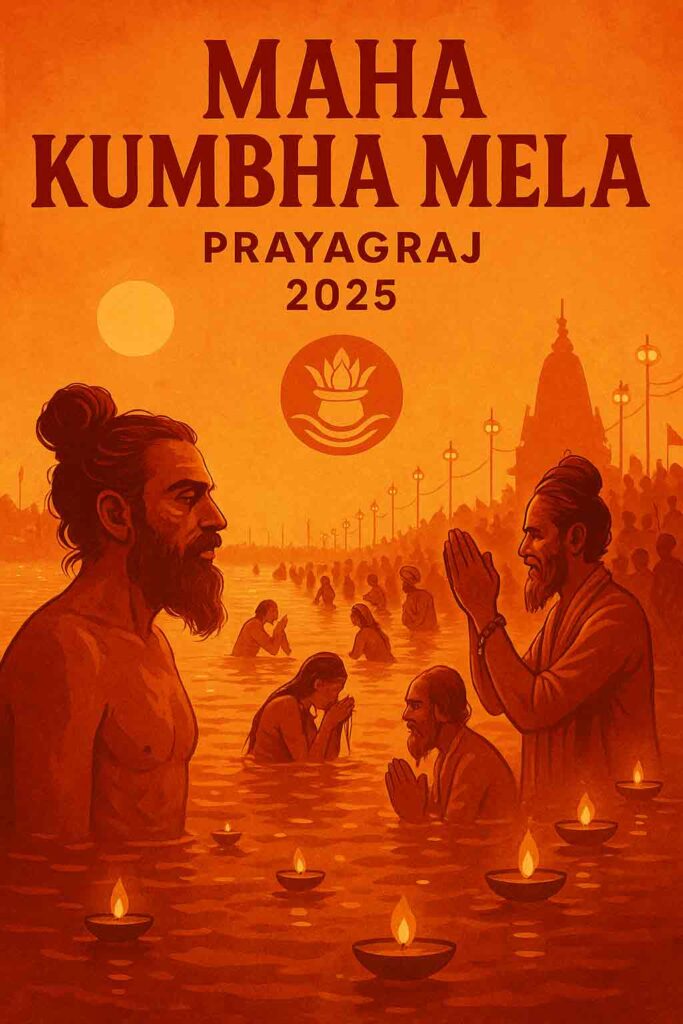
Maha Kumbha Mela (Every 12 years) A grand Hindu pilgrimage and ritual bathing at sacred rivers. The Maha Kumbh Mela is one of the world’s largest and most spiritually significant religious gatherings, deeply rooted in the ancient traditions of Hinduism. Held once every twelve years, it takes place at one of four sacred locations in India — Prayagraj (Allahabad), Haridwar, Ujjain, and Nashik — which are situated along the banks of the holy rivers Ganga, Yamuna, Godavari, and Shipra respectively. Among these, the Maha Kumbh at Prayagraj is considered the most auspicious, as it marks the confluence of three sacred rivers: the Ganga, Yamuna, and the mythical Saraswati. The scale, devotion, and faith witnessed at the Maha Kumbh Mela have earned it global recognition, even being listed by UNESCO as an Intangible Cultural Heritage of Humanity. The origins of the Kumbh Mela are steeped in mythology. According to Hindu belief, during the churning of the cosmic ocean, known as the Samudra Manthan, gods and demons struggled for the divine nectar of immortality, or amrit. As the story goes, drops of this nectar fell at four earthly locations — the present-day sites of the Kumbh Melas. Thus, these places became sanctified, and bathing in their holy rivers during the auspicious period of the Mela is believed to cleanse devotees of their sins and lead them toward moksha, or liberation from the cycle of rebirth. The word “Kumbh” itself means a pitcher or pot, symbolizing the vessel that carried the nectar of immortality. The Maha Kumbh Mela is not just a religious festival; it is a grand spectacle of faith, devotion, and humanity. Millions of pilgrims, saints, and ascetics—some living in remote Himalayan caves—descend upon the sacred site to participate in rituals, prayers, and spiritual discussions. The most significant ritual is the Shahi Snan or Royal Bath, when sadhus and devotees take a holy dip in the river at specific auspicious times determined by planetary alignments. The sight of Naga Sadhus—ash-smeared ascetics clad in little or no clothing, their bodies symbolizing renunciation of the material world—marching in vibrant processions is one of the most iconic images of the Mela. Alongside, thousands of saints and spiritual leaders set up akharas (religious camps), where they deliver sermons, engage in philosophical debates, and offer blessings to pilgrims. Beyond its spiritual essence, the Maha Kumbh Mela also serves as a living example of India’s cultural and social unity. People from all walks of life, regardless of caste, creed, gender, or social status, come together in a spirit of equality and shared devotion. The temporary city that arises during the event is a marvel of organization and planning. Spread across thousands of hectares, it includes tent accommodations, sanitation facilities, hospitals, police stations, and food distribution centers. Despite the challenges of managing such vast crowds—often exceeding 50 million people in a single day—the event typically runs smoothly, a testament to India’s capacity for coordination and collective discipline rooted in faith. In modern times, the Maha Kumbh Mela has also attracted international attention. Scholars, photographers, and tourists from around the world visit to witness this extraordinary convergence of spirituality and humanity. Governments and technology companies have introduced innovations like digital crowd management, drone surveillance, mobile apps, and online registration systems to enhance safety and accessibility. The event thus stands as a unique blend of ancient tradition and modern governance. Ultimately, the Maha Kumbh Mela transcends its physical dimensions to become a profound spiritual experience. It symbolizes the eternal quest of humankind for purity, truth, and liberation. For the devout Hindu, a single dip in the sacred waters during the Mela holds the promise of salvation. But even for the observer, it offers a glimpse into the soul of India—its resilience, faith, and timeless philosophy that views life as a journey toward the divine. The Maha Kumbh Mela, therefore, is not merely a festival; it is a celebration of life, faith, and the eternal rhythm of the cosmos.
Ganesha Chaturthi
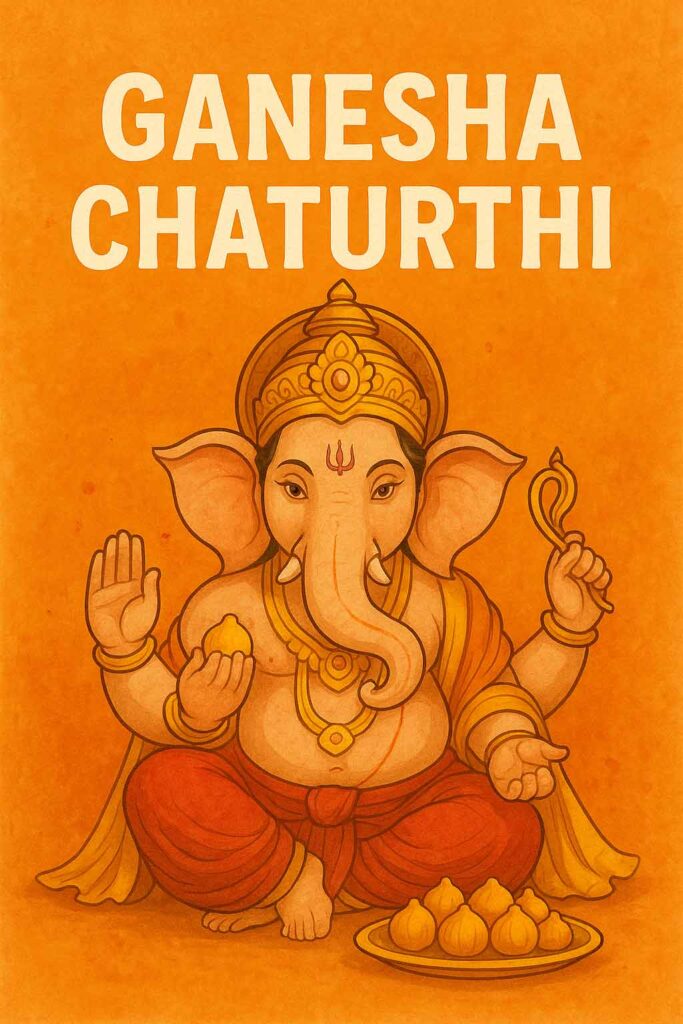
Ganesh Chaturthi (August–September) Birth of Lord Ganesha, remover of obstacles. Ganesh Chaturthi:The Festival of Lord Ganesha Vinayaka Chaturthi, also widely known as Vinayaka Chaturthi, is one of the most celebrated Hindu festivals in India, honoring the birth of Lord Ganesha, the beloved elephant-headed deity who symbolizes wisdom, prosperity, and the removal of obstacles. The festival typically falls in the Hindu month of Bhadrapada (August–September), beginning on the fourth day of the waxing moon (Shukla Paksha Chaturthi). It is celebrated with immense devotion, enthusiasm, and grandeur across India, especially in states like Maharashtra, Karnataka, Andhra Pradesh, Tamil Nadu, and Goa. The joyous energy of Vinayaka Chaturthi spreads far beyond temples and homes, bringing communities together in a vibrant display of faith and festivity. According to Hindu mythology, the origin of Lord Ganesha’s birth is both divine and symbolic. Goddess Parvati, the consort of Lord Shiva, created Ganesha from sandalwood paste to guard her while she bathed. When Lord Shiva returned and found the young boy blocking his path, unaware that he was Parvati’s creation, he became enraged and beheaded him. Upon seeing Parvati’s grief, Shiva promised to restore the boy’s life and replaced his head with that of an elephant. From that moment, Lord Ganesha became revered as the God of Wisdom, Intellect, and Prosperity, and was blessed to be worshipped first before any major undertaking or ceremony. This myth conveys profound spiritual lessons about humility, forgiveness, and the importance of balance in life. The celebration of Vinayaka Chaturthi was initially a private household affair but took on a grand public form in the late 19th century, thanks to the visionary leadership of Lokmanya Bal Gangadhar Tilak. During India’s freedom movement, Tilak transformed Ganesha Chaturthi into a community festival to unite people across social and religious divides. He recognized that the worship of Lord Ganesha—an all-embracing deity—could bring people together in solidarity against colonial rule. Since then, the festival has evolved into a magnificent blend of devotion, culture, art, and social unity. Preparations for Vinayaka Chaturthi begin weeks in advance. Skilled artisans craft intricate Ganesha idols in various sizes, often from clay or eco-friendly materials. The idols are beautifully decorated and installed in homes, temples, and large community pandals (temporary shrines) amid chanting of Vedic hymns and mantras. The atmosphere fills with devotion as families and communities perform Ganapati Puja, offering flowers, coconut, durva grass, and the famous sweet modak, which is considered Lord Ganesha’s favorite. The rituals include daily prayers, bhajans (devotional songs), and aarti (ceremonial worship with lamps), creating an aura of positivity and spiritual joy. Cultural programs, traditional dances, plays, and social gatherings further enrich the celebrations. Each day of the festival carries deep spiritual meaning. Devotees believe that praying to Lord Ganesha during this period removes negativity and brings success, harmony, and inner peace. On the final day, known as Anant Chaturdashi, devotees perform the Ganesh Visarjan, a grand farewell procession in which the idols are immersed in rivers, lakes, or seas. This ritual represents the cycle of creation and dissolution, reminding people of the impermanence of life. The procession, filled with music, dancing, and chants of “Ganpati Bappa Morya, Pudhchya Varshi Lavkar Ya” (O Lord Ganesha, come again soon next year), is both joyous and emotional, marking the culmination of the festival. In recent years, there has been a growing emphasis on eco-friendly celebrations. Awareness about the environmental damage caused by plaster-of-Paris idols and chemical paints has led many communities to switch to natural clay idols and organic colors. Additionally, artificial immersion tanks and sustainable decorations are being promoted to preserve water bodies. This shift reflects the festival’s timeless message—respecting nature and living in harmony with creation. Beyond its religious significance, Vinayaka Chaturthi holds immense cultural and social value. It fosters unity, compassion, and collective responsibility. People from diverse backgrounds come together to organize and participate in events, reinforcing the spirit of inclusivity and devotion. The festival also inspires creativity—through art, music, and community service—making it not just a religious occasion but also a celebration of life itself. In essence, Vinayaka Chaturthi is more than a festival—it is a celebration of beginnings, wisdom, and renewal. Lord Ganesha’s presence reminds devotees to approach life with clarity, humility, and faith. As the rhythmic beats of drums echo through streets and chants fill the air, the message of Ganesha endures: remove obstacles with patience, seek knowledge with humility, and embrace every challenge with courage and positivity. Whether celebrated in a grand public pandal or a humble home altar, Vinayaka Chaturthi continues to unite hearts, uplift spirits, and spread joy across generations.
Holi
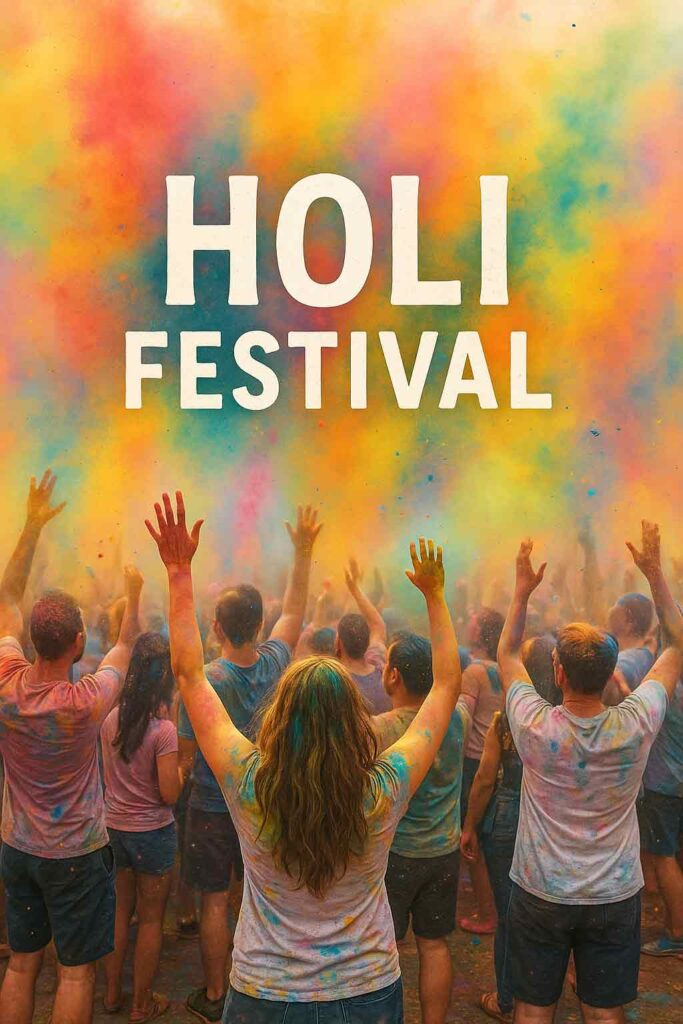
Holi Festival (February–March) Festival of colors; celebrates the victory of good over evil and arrival of spring. Holi, one of the most vibrant and joyous festivals of India, is celebrated with immense enthusiasm across the country and among Indian communities worldwide. Known as the Festival of Colors, Holi marks the arrival of spring and the victory of good over evil, bringing together people from all walks of life in a spectacular celebration of love, renewal, and unity. The festival usually falls in March, on the full moon day of the Hindu month Phalguna, and is celebrated over two days—Holika Dahan (the bonfire night) and Rangwali Holi (the day of colors). Holi transcends social barriers, as people joyfully come together to smear colors, dance to festive music, and share sweets, symbolizing the spirit of equality and togetherness. The origin of Holi is deeply rooted in ancient Hindu mythology and carries profound moral and spiritual lessons. The most popular legend associated with Holi is that of Prahlada and Holika, which signifies the triumph of devotion and righteousness over arrogance and evil. According to the story, the demon king Hiranyakashipu demanded that everyone worship him instead of Lord Vishnu. His son Prahlada, however, remained a devout follower of Vishnu. To punish Prahlada, Hiranyakashipu sought the help of his sister Holika, who had a magical shawl that protected her from fire. She sat in a blazing fire with Prahlada on her lap, but divine intervention saved Prahlada while Holika was burnt to ashes. This event is commemorated as Holika Dahan, where people light bonfires on the eve of Holi to symbolize the destruction of evil and the power of faith and truth The next day, known as Rangwali Holi or Dhulandi, is when the real festivity unfolds. Streets, temples, and open spaces turn into vibrant canvases of color as people joyfully throw gulal (colored powders), spray water, and exchange greetings. The colors used during Holi carry symbolic meanings—red for love and energy, green for new beginnings, blue for divinity, and yellow for happiness and health. Traditional songs, dhol (drum) beats, and dancing create an atmosphere of pure joy and celebration. Friends, families, and even strangers come together, forgetting past grievances and embracing the spirit of forgiveness and friendship. The festive foods, such as gujiya, thandai, and puran poli, add sweetness to the day, making it not just a visual delight but also a culinary one. While Holi has strong religious and cultural significance, it also celebrates the arrival of spring, marking the end of winter and the beginning of the harvest season. Farmers see it as a time of joy and gratitude for the bounty of nature. Beyond India, Holi has gained immense popularity globally, with events and color festivals organized in countries like the USA, UK, Australia, and Singapore, where people of all backgrounds join in to experience the magic of colors and togetherness. The festival’s universal message of love, equality, and happiness resonates across cultures, reminding us that human connection transcends all boundaries. In recent years, there has been a growing awareness about celebrating Holi responsibly and sustainably. With concerns about water wastage and the harmful effects of chemical-based colors, many communities now promote eco-friendly Holi by using natural, herbal colors made from flowers, turmeric, henna, and sandalwood. Additionally, initiatives such as “dry Holi” celebrations and the use of organic dyes reflect the evolving consciousness towards protecting the environment while preserving the joy of the festival. Ultimately, Holi is more than just a festival of colors—it is a celebration of life itself. It teaches the timeless values of forgiveness, friendship, renewal, and joy. The splashes of color represent not only the changing season but also the diversity of human emotions and experiences that make life beautiful. Whether it’s the warmth of family gatherings, the laughter shared with friends, or the vibrant hues that fill the sky, Holi embodies the essence of happiness and unity. As the colors wash away differences and bring smiles to countless faces, Holi continues to remind the world that love and compassion are the true colors of humanity.