
Kerala Malabar Biryani
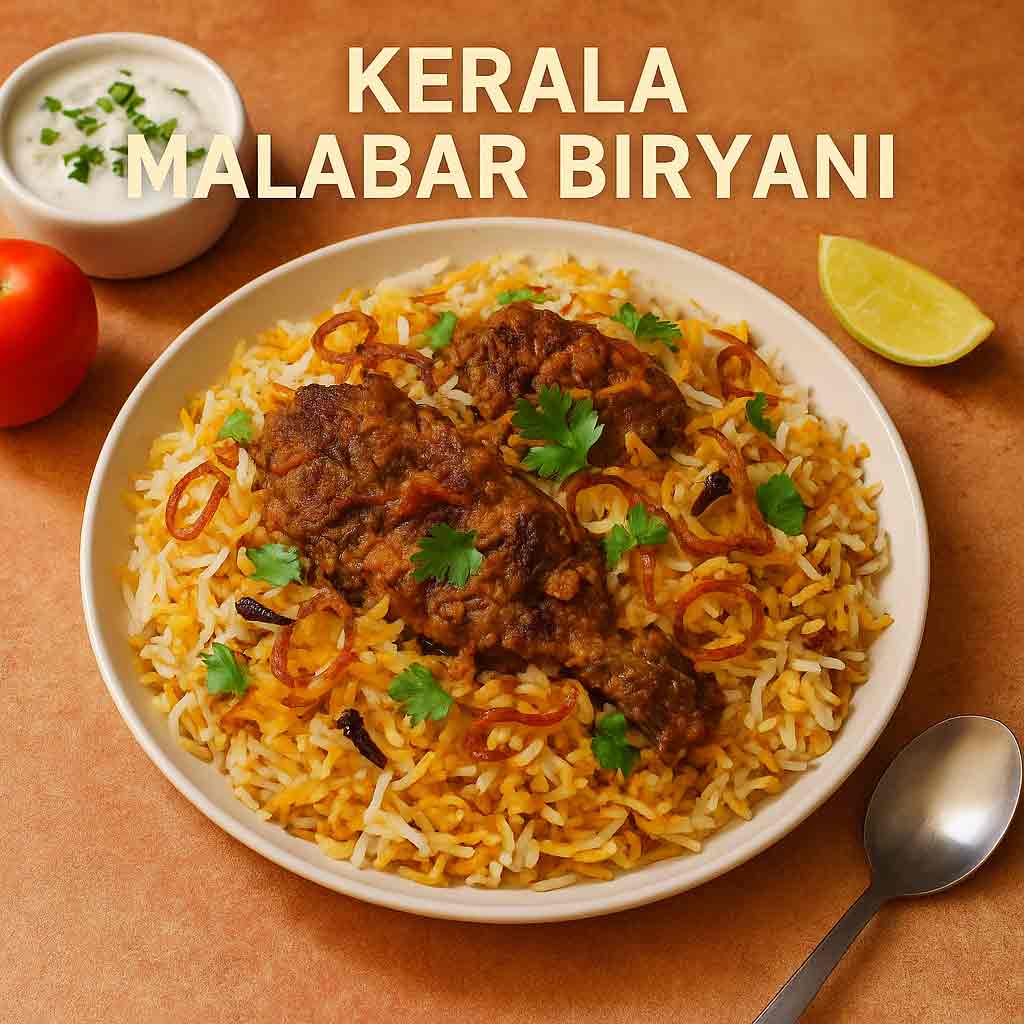
Kerala Malabar Biryani 🫕 Ingredients For the Rice: Jeerakasala rice (short-grain fragrant rice) – 2 cups(If unavailable, use basmati rice but reduce cooking time slightly) Ghee – 2 tbsp Whole spices – 4 cloves, 2 cardamoms, 1-inch cinnamon, 1 bay leaf Water – 3 cups Salt – as needed For the Chicken Masala: Chicken – 1 kg (bone-in, cleaned and cut) Onions – 3 large (thinly sliced) Tomatoes – 2 medium (chopped) Ginger-garlic paste – 2 tbsp Green chilies – 3 (slit) Yogurt – 3 tbsp Fresh coriander leaves – ½ cup (chopped) Fresh mint leaves – ½ cup (chopped) Cashew nuts – 10 (optional, for richness) Ghee / coconut oil – 4 tbsp Spices: Turmeric powder – ¼ tsp Red chili powder – 1½ tsp Coriander powder – 2 tsp Garam masala – 1 tsp Pepper powder – ½ tsp Salt – to taste For Garnish: Fried onions – 1 cup Fried cashews and raisins – 2 tbsp each Fresh coriander and mint leaves – a handful Ghee – 2 tbsp (for final drizzle) 🔪 Preparation Steps Step 1: Cook the Rice Wash and soak the rice for 20 minutes, then drain. Heat ghee in a large pan, add the whole spices, and sauté until aromatic. Add rice and fry gently for 2 minutes. Pour hot water and salt, cover, and cook until the rice is 90% done. Fluff gently and set aside. Step 2: Prepare the Chicken Masala Heat ghee or coconut oil in a thick-bottomed pan. Add onions and sauté until golden brown (this is key for deep flavor). Add ginger-garlic paste and green chilies; sauté till raw smell fades. Add tomatoes, chili powder, coriander powder, turmeric, pepper, and salt. Once oil separates, add chicken pieces and mix well. Add yogurt, mint, and coriander leaves. Cover and cook on medium flame until chicken is tender and masala thickens.Tip: The masala should be slightly dry — not watery. Step 3: Layer the Biryani In a heavy-bottomed pot, spread a thin layer of rice at the bottom. Add a layer of chicken masala. Repeat until all rice and masala are used, ending with rice on top. Sprinkle fried onions, mint, coriander, cashews, raisins, and a drizzle of ghee. Step 4: Dum (Steaming) Option 1: Stovetop Method Seal the pot with wheat dough or a tight lid. Place it on low flame for 15–20 minutes. Option 2: Oven Method Bake covered at 180°C (350°F) for 20 minutes. Let it rest for 10 minutes before opening. Step 5: Serve and Enjoy! Gently mix before serving, ensuring each portion has rice and chicken.Serve with: Raita (onion and cucumber yogurt mix) Pickle and papadam Sweet coconut halwa or banana chips (optional, for festive touch) 🌿 Chef’s Tips for Authentic Flavor Always use Jeerakasala rice for that distinct Malabar aroma. Fried onions (Birista) give depth and sweetness — don’t skip! Coconut oil can be mixed with ghee for that coastal essence. A few drops of kewra water or rose essence at the end can lift the aroma.
Kerala Karimeen Pollichathu
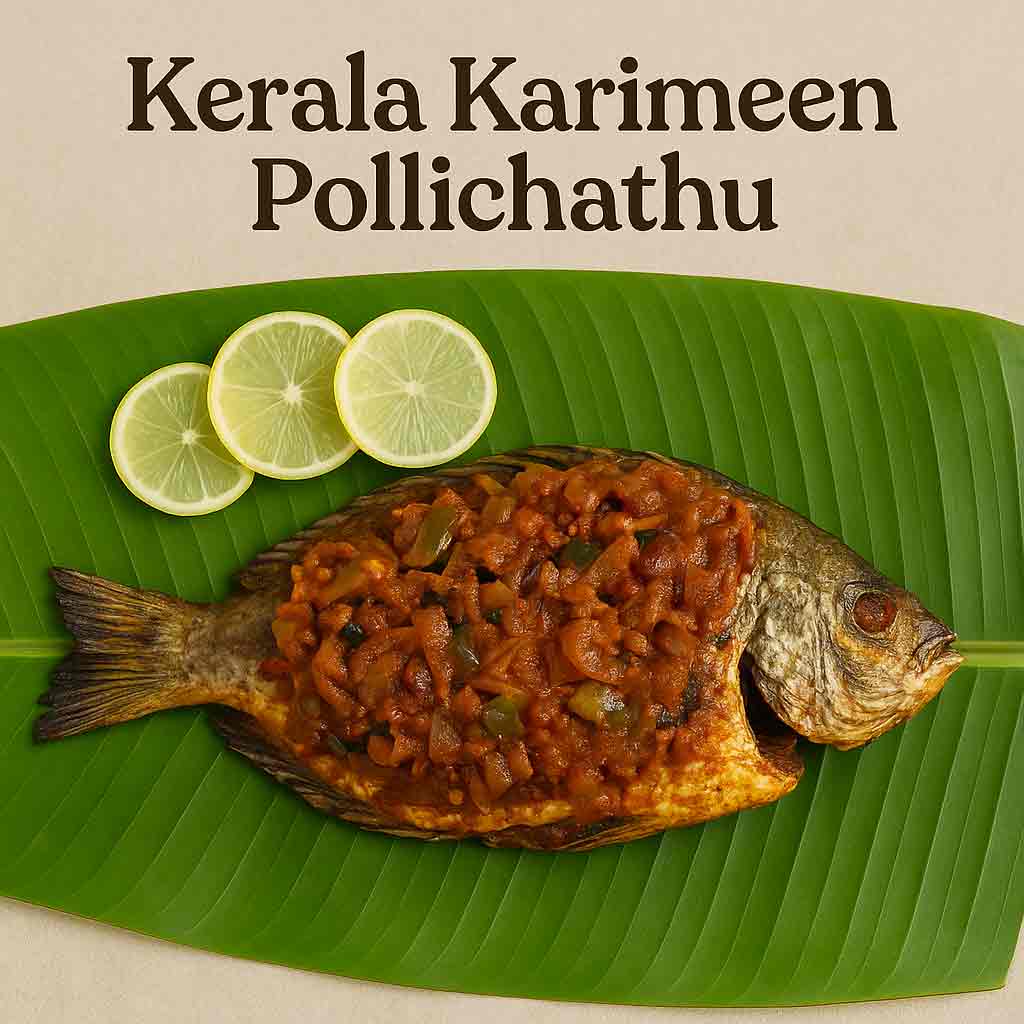
Kerala Karimeen Pollichathu 🐟 Ingredients For the Fish: Karimeen (Pearl Spot fish) – 2 medium-sized (cleaned and scaled) Lemon juice – 1 tbsp Turmeric powder – ¼ tsp Red chili powder – 1 tsp Salt – to taste Coconut oil – 2 tbsp (for shallow frying) For the Masala Filling: Onion – 2 large (finely chopped) Tomato – 2 medium (chopped) Green chilies – 2 (slit) Ginger-garlic paste – 1 tbsp Curry leaves – 10–12 Coconut oil – 2 tbsp Spices: Red chili powder – 1 tsp Coriander powder – 2 tsp Turmeric powder – ¼ tsp Pepper powder – ½ tsp Garam masala – ½ tsp Salt – to taste Other Ingredients: Tamarind pulp – 1 tbsp (or 2 small pieces soaked in warm water) Banana leaves – 2 large (wilted over a flame to make them pliable) 🔪 Preparation Steps Step 1: Marinate the Fish Clean and wash the Karimeen thoroughly. Make a few diagonal cuts on both sides of the fish. Rub a mix of lemon juice, chili powder, turmeric, and salt all over. Let it rest for 30 minutes to absorb the flavors. Step 2: Prepare the Masala Heat coconut oil in a pan. Add curry leaves, followed by onions and green chilies. Sauté until golden brown. Add ginger-garlic paste and sauté till the raw smell disappears. Add chili powder, coriander powder, turmeric, pepper, and garam masala. Add tomatoes and cook until the mixture turns thick and oil starts separating. Add tamarind pulp and salt. Simmer for 2–3 minutes till the masala becomes rich and glossy. Tip: The masala should be slightly tangy and spicy — adjust to taste. Step 3: Shallow Fry the Fish Heat coconut oil in a pan. Shallow fry the marinated fish for about 2 minutes on each side until it’s lightly golden — don’t overcook. Remove and place aside. Step 4: Assemble in Banana Leaf Place a banana leaf on a clean surface. Spread a layer of masala in the center. Place the fish on top and cover it fully with the remaining masala. Fold the banana leaf into a neat parcel and tie it with a banana fiber string or thread. Step 5: Steam or Pan-Roast Option 1 (Steaming): Steam the wrapped fish for 10–15 minutes. Option 2 (Pan-roast): Place the wrapped fish on a tawa, cover with a lid, and cook on low flame for 8–10 minutes each side until you smell the beautiful roasted aroma. Step 6: Serve Hot Unwrap carefully and serve the fish hot, straight from the leaf!The masala will be rich, smoky, and bursting with Kerala flavors. 🍋 Serving Suggestions Serve with steamed rice, kappa (tapioca), or Kerala parotta. Garnish with lemon wedges and curry leaves.
Kerala Sadya
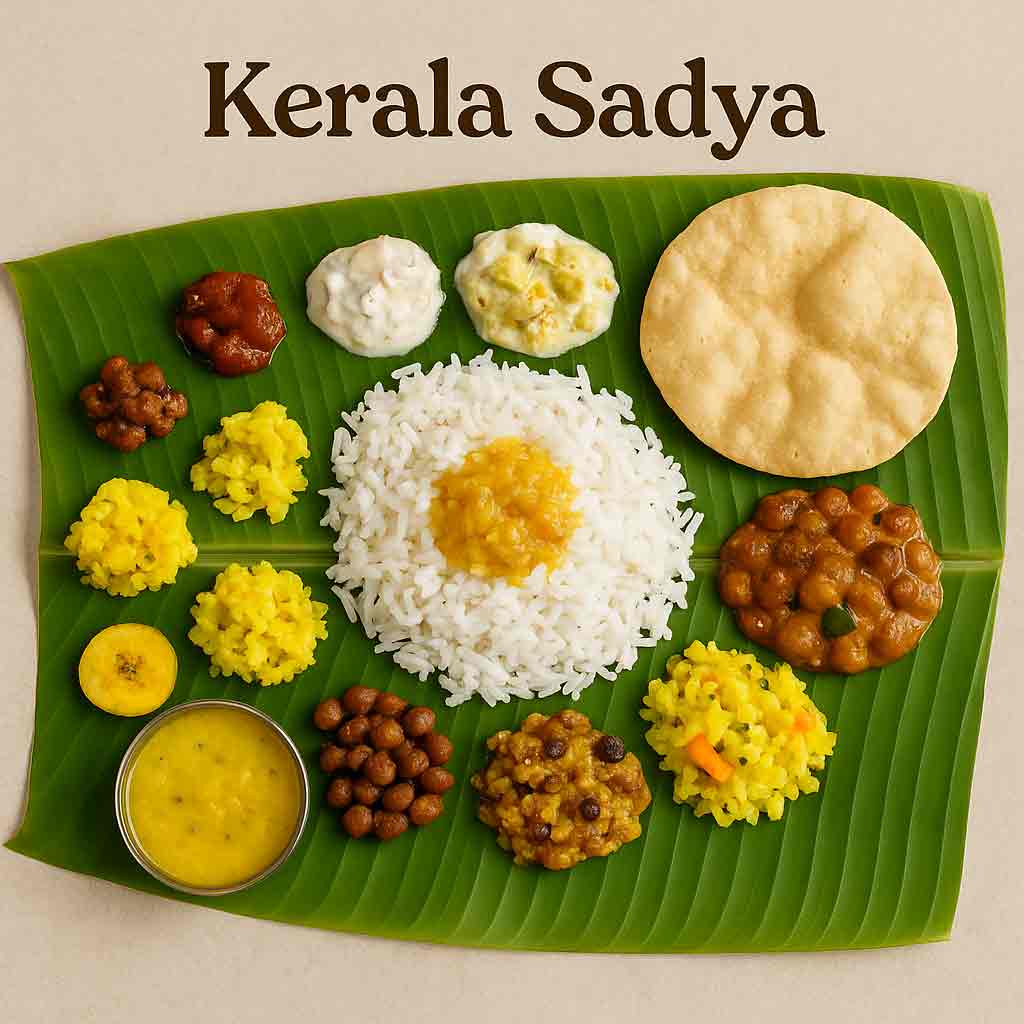
Kerala Sadya 🌼 What is a Sadya? A Sadya is a traditional Kerala vegetarian meal served on a banana leaf, typically featuring 20 to 30 dishes. It represents the state’s culinary richness — a perfect balance of flavors: sweet, sour, salty, bitter, and spicy. 🍌 Banana Leaf Arrangement (Traditional Order) Sadya is always served on a banana leaf, with each dish placed in a specific spot.From the top left to right, you’ll find: Upper left: Pickles, banana chips, pappadam Center: Rice with curries (sambar, rasam, etc.) Bottom left: Banana or payasam (dessert) 🫕 Key Dishes in a Traditional Kerala Sadya 1. Matta Rice (Red Parboiled Rice) The base of Sadya — cooked soft and fluffy. To prepare: Wash and cook Kerala matta rice with water (1:3 ratio) until tender. Drain excess water if needed. 2. Sambar (Vegetable Lentil Curry) A thick, tangy curry made with toor dal, tamarind, and mixed vegetables like drumstick, pumpkin, and okra. To make: Cook toor dal till soft. Add boiled vegetables, sambar powder, tamarind pulp, salt. Simmer and finish with a mustard seed, curry leaf, and dry red chili tempering in coconut oil. 3. Avial (Mixed Vegetable Coconut Curry) A signature dish of Sadya — mildly spiced, coconut-based mixed vegetable curry. To make: Cook vegetables (raw banana, yam, beans, carrot) with salt and a bit of turmeric. Grind coconut, green chili, and cumin into a coarse paste. Mix with vegetables, add curd, and drizzle with coconut oil and curry leaves. 4. Olan (Ash Gourd and Black-eyed Beans Curry) A light, fragrant dish cooked in coconut milk. To make: Cook ash gourd and cowpeas until soft. Add thin coconut milk, salt, and green chilies. Finish with thick coconut milk and coconut oil. 5. Thoran (Vegetable Stir-Fry with Coconut) Dry dish — cabbage, beans, or carrot sautéed with grated coconut. To make: Stir-fry chopped veggies with mustard seeds, curry leaves, and green chilies. Add grated coconut and turmeric; cook till dry. 6. Kaalan (Yam and Raw Banana Curry with Yogurt) A tangy, thick curry made with curd, coconut, and pepper. To make: Cook yam and raw banana in water with turmeric and pepper. Add ground coconut-cumin paste and thick curd. Simmer till thick; temper with mustard, methi seeds, and curry leaves. 7. Erissery (Pumpkin and Black-eyed Pea Curry) Sweet-spicy dish — pumpkin mashed with beans and coconut paste. 8. Rasam (Spiced Tamarind Soup) A thin, spicy broth made with tamarind, tomatoes, and rasam powder — served toward the end for digestion. 9. Kichadi & Pachadi Yogurt-based side dishes: Pineapple Pachadi – sweet and tangy with grated coconut. Cucumber or Beetroot Kichadi – cooling yogurt side with mustard seasoning. 10. Payasam (Dessert) Every Sadya ends on a sweet note — often with two types: Palada Payasam – made with milk, ada (rice flakes), and sugar. Parippu Payasam – made with moong dal, jaggery, and coconut milk. 11. Accompaniments Pappadam – crispy fried lentil wafers Upperi (Banana chips) – sweet and salty versions Inji Puli (Ginger Tamarind Pickle) – spicy-sweet Kaalan / Moru Curry – yogurt curry poured over rice Banana – eaten at the end or with payasam 🍽️ Serving Order Serve all side dishes first on the banana leaf. Then add rice in the center. Pour parippu curry first, followed by sambar, and later rasam. End with payasam and a small banana. 🌿 Tips for Authentic Kerala Sadya Use fresh coconut for all dishes. Cook in coconut oil only. Serve on banana leaves with the narrow end pointing to the left. Sadya is traditionally eaten by hand, sitting cross-legged on the floor.
Kerala Puttu and Kadala Curry
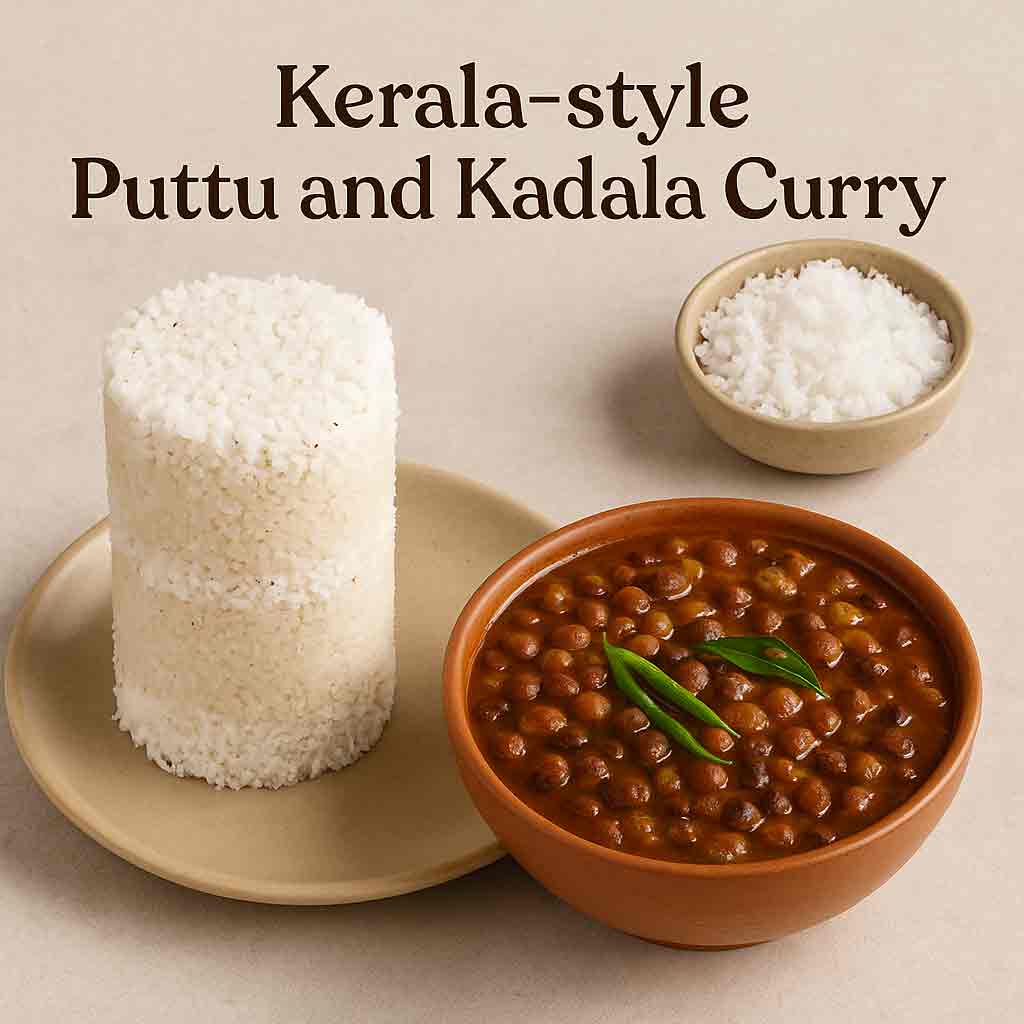
Kerala Puttu and Kadala Curry 🥥 Puttu (Steamed Rice Cake) Ingredients Rice flour – 1 cup (puttu podi – coarsely ground rice flour) Grated coconut – ½ cup Salt – to taste Water – as required Instructions Prepare the rice flourLightly roast the rice flour on low flame for 3–4 minutes until it gives off a nutty aroma. Let it cool. Mix the flourAdd salt to the flour. Sprinkle water little by little and mix using your fingers until the flour becomes moist and crumbly.Tip: When you press the mixture between your fingers, it should hold shape but break apart easily — that’s the right texture. Layer and steamIn the puttu kutti (puttu maker), start by adding 1 tbsp of grated coconut at the bottom, followed by a layer of rice flour, then coconut again. Continue until the cylinder is full, ending with coconut. SteamPlace the puttu maker over the boiling water in the puttu pot and steam for about 5–7 minutes or until you see steam escaping from the top. Serve hotPush the steamed puttu onto a plate and serve hot with kadala curry or banana. 🌿 Kadala Curry (Black Chickpea Curry) Ingredients Black chickpeas (kala chana) – 1 cup Coconut (grated) – ½ cup Onion – 1 large (finely chopped) Tomato – 1 medium (chopped) Garlic – 4 cloves Ginger – 1 inch piece Green chilies – 2 (slit) Mustard seeds – ½ tsp Curry leaves – few Coconut oil – 2 tbsp Water – as required Salt – to taste For Spice Powder Coriander powder – 2 tsp Red chili powder – 1 tsp Turmeric powder – ¼ tsp Garam masala – ½ tsp Fennel seeds – ½ tsp Instructions Soak and cook the chickpeasWash and soak chickpeas overnight. Pressure cook with salt and enough water for 6–7 whistles or until soft. Roast the coconutIn a pan, heat 1 tsp coconut oil. Add grated coconut and roast till golden brown. Add a pinch of turmeric and roast for another minute.Cool and grind to a smooth paste with little water. Make the masala baseIn another pan, heat coconut oil. Splutter mustard seeds. Add curry leaves, chopped onion, green chilies, ginger, and garlic. Sauté till golden. Add spicesAdd coriander powder, chili powder, turmeric powder, fennel seeds, and garam masala. Fry for a few seconds till aromatic. Add tomatoAdd chopped tomato and cook till soft and mushy. Combine everythingAdd cooked chickpeas with the water, the roasted coconut paste, and salt. Simmer for 10–15 minutes until the curry thickens and flavors blend. Finish with coconut oil and curry leavesDrizzle a spoon of coconut oil and toss in a few curry leaves for the authentic Kerala aroma. 🍽️ Serving Suggestion Serve steaming hot puttu with spicy kadala curry — a heavenly combo!You can also serve with ripe banana or papadam for a traditional Kerala breakfast.