
Shab-e-Barat – The Night of Forgiveness
Shab-e-Barat Mubarak – The Night of Forgiveness and Divine Mercy Shab-e-Barat Mubarak: The Night of Forgiveness and Divine Mercy Shab-e-Barat, also known as Laylat al-Bara’ah or The Night of Forgiveness, is one of the most blessed nights in the Islamic calendar. It falls on the 15th night of Sha’ban, the month preceding Ramadan. The term “Shab-e-Barat” originates from Persian and Arabic — “Shab” meaning night and “Barat” meaning deliverance or salvation — symbolizing a night when Allah’s mercy and forgiveness embrace His servants. This sacred night holds immense spiritual significance for Muslims around the world. It is believed to be the night when Allah Almighty decrees the destinies of His creation for the coming year — including matters of life, death, sustenance, and fortune. It is also considered a time when Allah forgives the sins of those who sincerely seek His pardon, opening the doors of mercy wider than ever before. The Spiritual Essence of Shab-e-Barat Shab-e-Barat is not merely a night of ritual; it is a night of reflection, repentance, and renewal of faith. Muslims spend the night in prayer, remembrance (zikr), and supplication, seeking forgiveness for their past deeds and praying for a better, more righteous future. According to Islamic tradition, the Prophet Muhammad (peace be upon him) emphasized the virtue of the 15th night of Sha’ban. It is reported that he would engage in worship and encourage believers to spend the night in prayer and the following day in fasting. The Prophet (PBUH) said: “Allah descends to the lowest heaven on the night of the middle of Sha’ban and forgives more people than the hairs on the sheep of Banu Kalb.”(Hadith – Ibn Majah) This narration beautifully captures the spirit of Shab-e-Barat — a night overflowing with divine compassion and forgiveness. It reminds Muslims that no matter how great their sins, Allah’s mercy is greater still, and sincere repentance can wipe away the darkest of pasts. Practices and Observances Across the world, Muslims observe Shab-e-Barat in diverse yet deeply spiritual ways. Mosques are illuminated, and homes are adorned with gentle lights, symbolizing the hope and purity of the night. Believers perform voluntary prayers (Nafl), recite verses from the Holy Qur’an, and offer dua (supplications) for their families, the deceased, and all of humanity. Many visit graveyards to offer prayers for their departed loved ones, seeking Allah’s mercy for the souls who have passed away. The act of remembrance connects the living with the departed, inspiring humility and reflection on the fleeting nature of life. In several cultures, simple acts of charity mark the observance of the night. Distributing food, helping the needy, and extending goodwill to others embody the essence of Islam’s compassion and community spirit. A Prelude to Ramadan Shab-e-Barat also serves as a spiritual prelude to Ramadan — the holiest month in Islam. It encourages believers to cleanse their hearts and prepare themselves mentally, spiritually, and emotionally for the month of fasting and reflection ahead. By seeking forgiveness and making amends during Shab-e-Barat, one enters Ramadan with renewed sincerity and peace of mind. The night also reminds Muslims to reconcile with one another — to forgive those who have wronged them and to seek forgiveness from those they may have hurt. Such acts of reconciliation amplify the blessings of the night and strengthen the bonds of brotherhood and harmony within the community. The Message of Shab-e-Barat At its core, Shab-e-Barat is about mercy, humility, and transformation. It invites believers to introspect — to look beyond worldly distractions and reconnect with the divine. It teaches that life is fragile, time is fleeting, and every soul has the opportunity to turn back to Allah. The night offers a message of hope: that no one is beyond redemption, and every heart that seeks forgiveness will find Allah waiting with open arms. As the Qur’an beautifully reminds us: “Say: O My servants who have transgressed against themselves, do not despair of the mercy of Allah. Indeed, Allah forgives all sins. Indeed, it is He who is the Forgiving, the Merciful.”(Surah Az-Zumar, 39:53) Shab-e-Barat Mubarak is more than a greeting — it is a heartfelt prayer that Allah blesses every believer with peace, prosperity, and pardon. It is a night that calls for quiet reflection, heartfelt supplication, and renewed commitment to goodness. As the lamps glow and prayers ascend, may every soul find forgiveness, and may Allah’s mercy encompass the world. Shab-e-Barat Mubarak to all — a night of peace, light, and divine forgiveness.
Milad-un-Nabi – The Birth of the Prophet Muhammad
Milad-un-Nabi – The Birth of the Prophet Muhammad Milad-un-Nabi Mubarak: Celebrating the Birth of the Prophet of Mercy Milad-un-Nabi, also known as Mawlid al-Nabi, marks the birth anniversary of Prophet Muhammad (peace be upon him), who is revered as the final messenger of Islam. Observed in the month of Rabi’ al-Awwal — the third month of the Islamic lunar calendar — this day holds immense spiritual, moral, and cultural significance for Muslims around the world. The phrase “Milad-un-Nabi Mubarak” translates to “Blessed Birth of the Prophet”, a greeting that conveys joy, reverence, and gratitude for the Prophet’s life and teachings. Prophet Muhammad (PBUH) was born in 570 CE in Makkah, a city that was at that time divided by tribalism and social inequalities. His birth brought a message of unity, compassion, and justice that would go on to transform not just Arabia but the moral and spiritual fabric of humanity. His life became a shining example of patience, forgiveness, humility, and unwavering faith in God. For Muslims, Milad-un-Nabi is not merely a commemoration of a historical event — it is an opportunity to reflect deeply on the Prophet’s life, values, and message. The Prophet (PBUH) emphasized the importance of honesty, charity, equality, and kindness toward all living beings. His teachings continue to serve as a timeless guide for personal conduct, social harmony, and ethical living. On this sacred occasion, believers renew their commitment to follow his example, striving to embody mercy and compassion in their daily lives. Historical and Cultural Observance The celebration of Milad-un-Nabi varies across regions and cultures, yet the essence remains the same — to honor and remember the life of the Prophet (PBUH). In many countries, streets, mosques, and homes are illuminated with lanterns and lights. Processions, gatherings, and religious discourses are organized, where scholars recite poetry (naats) and narrate episodes from the Prophet’s life. People exchange greetings of “Milad-un-Nabi Mubarak”, offer special prayers, and distribute food and sweets to express gratitude and share blessings with others. In some communities, the day is observed quietly with prayers, fasting, and recitation of the Holy Qur’an. In others, it is marked with public celebrations, charitable activities, and communal meals. The diversity of observance highlights Islam’s rich cultural heritage and the universality of the Prophet’s message of peace and brotherhood. The Message of Peace and Compassion The Prophet Muhammad (PBUH) is often called “Rahmat-ul-lil-Alameen” — “Mercy to all the worlds.” His message transcends time, geography, and faith. He called for respect toward others regardless of race, religion, or status, teaching that the best among people are those who bring benefit to others. His legacy reminds humanity of the need for empathy, justice, and mutual respect — virtues that are especially relevant in today’s world. Milad-un-Nabi serves as a reminder that true devotion to the Prophet lies not only in celebration but in living by his example — through kindness, humility, and service to humanity. It is a time to strengthen one’s faith, seek forgiveness, and commit to spreading goodness and understanding. A Day of Reflection and Renewal As Muslims around the world gather to mark this blessed day, Milad-un-Nabi becomes a moment of reflection — on how far we have come in embodying the values the Prophet (PBUH) stood for. It is also a time to renew our pledge to uphold justice, show compassion, and live with integrity. In essence, Milad-un-Nabi Mubarak is not just a greeting but a heartfelt reminder: that the light of the Prophet’s teachings continues to guide humanity toward peace, tolerance, and unity. His life remains a beacon for all who seek to live with purpose, dignity, and devotion to God.
Muharram: A Month of Reflection, Mourning, and Spiritual Renewal
Muharram – A Month of Reflection, Mourning, and Spiritual Renewal Muharram: A Month of Reflection, Mourning, and Spiritual Renewal Muharram, the first month of the Islamic lunar calendar, holds deep spiritual and historical significance for Muslims around the world. It marks the beginning of the Islamic New Year and is considered one of the four sacred months in which warfare and conflict are prohibited. However, Muharram is not a time of celebration but of remembrance, reflection, and reverence — especially for Shia Muslims, who mourn the martyrdom of Imam Hussain, the grandson of Prophet Muhammad (peace be upon him), at the Battle of Karbala. The word “Muharram” itself means “forbidden” or “sacred,” indicating the month’s sanctity and the importance of observing peace and piety during this period. For Sunni Muslims, it is a time to engage in fasting, prayer, and good deeds, while for Shia Muslims, it is primarily a time of mourning and commemoration of the tragedy of Karbala — an event that changed the course of Islamic history. The Battle of Karbala took place on the 10th day of Muharram, known as Ashura, in the year 680 CE (61 AH). Imam Hussain, the beloved grandson of Prophet Muhammad, along with his family and a small group of followers, stood up against the tyranny of Yazid, the Umayyad caliph. Refusing to pledge allegiance to a ruler he deemed unjust, Imam Hussain chose the path of righteousness and sacrifice. Surrounded by Yazid’s army on the plains of Karbala in present-day Iraq, he and his companions were denied food and water for days before being martyred on the 10th day of Muharram. The martyrdom of Imam Hussain is not merely an event in history; it is a timeless symbol of courage, faith, and resistance against oppression. His stand for truth and justice continues to inspire millions, transcending religious and cultural boundaries. For Shia Muslims, the first ten days of Muharram are observed with mourning processions, recitations, and sermons that recount the events of Karbala. They gather in mosques and community halls to express grief, reflect on the moral lessons of Hussain’s sacrifice, and reaffirm their commitment to justice and humanity. The Majlis (gathering) and Marsiya (elegiac poetry) are integral parts of Muharram observances. Through these, the story of Karbala is retold, keeping alive the values of truth, steadfastness, and compassion. On the 10th day, Ashura, processions are held in many parts of the world, with mourners often dressed in black, symbolizing grief and solidarity. Acts of charity, such as distributing water and food to the poor, are also common, reflecting Imam Hussain’s compassion even in the face of suffering. For Sunni Muslims, the day of Ashura is observed in a different yet equally spiritual way. It is believed that Prophet Musa (Moses) and the Israelites were saved from Pharaoh on this day, and in gratitude, Prophet Muhammad encouraged fasting on Ashura. Thus, many Sunni Muslims fast on the 9th and 10th (or 10th and 11th) days of Muharram to seek blessings and forgiveness. Muharram, therefore, carries a dual essence — it is both a period of mourning and a reminder of faith, endurance, and moral strength. It calls upon believers to uphold justice, truth, and compassion in their lives. Beyond religious divisions, the story of Karbala teaches universal values: that standing for what is right may demand great sacrifice, but such sacrifices echo through time as beacons of integrity and courage. As the Islamic New Year begins with Muharram, it encourages introspection — a time to renew one’s spiritual commitments, seek peace, and strengthen the bonds of humanity. Imam Hussain’s legacy continues to resonate as a powerful message of resilience, faith, and the eternal triumph of truth over falsehood. In essence, Muharram is not merely the first month of the Islamic calendar — it is a spiritual journey through remembrance, reflection, and renewal. It reminds the faithful that faith is not only a belief but a commitment to justice, compassion, and the moral principles that sustain human dignity.
Eid-ul-Adha – The Festival of Sacrifice
Eid-ul-Adha – The Festival of Sacrifice Eid-ul-Adha: The Festival of Sacrifice and Faith Eid-ul-Adha, also known as the Festival of Sacrifice, is one of the two most important Islamic festivals celebrated by Muslims worldwide. It commemorates the profound act of faith and obedience shown by Prophet Ibrahim (Abraham) when he was willing to sacrifice his beloved son, Ismail (Ishmael), as an act of submission to God’s command. Just as he was about to carry out the divine order, God intervened and provided a ram to sacrifice instead. This story, shared in various forms across Abrahamic faiths, symbolizes ultimate devotion, faith, and the willingness to surrender to God’s will. Eid-ul-Adha falls on the 10th day of Dhul-Hijjah, the last month of the Islamic lunar calendar, following the completion of the Hajj pilgrimage in Mecca. The festival lasts for about three days, and its timing varies each year according to the sighting of the moon. For Muslims, Eid-ul-Adha is not only a time of celebration but also a spiritual occasion to reaffirm faith, perform acts of charity, and express gratitude for the blessings of life. The day begins with a special congregational prayer, Salat al-Eid, offered in mosques or open grounds. Before the prayer, Muslims are encouraged to give Zakat al-Fitr or charity to the less fortunate, ensuring that everyone can share in the joy of the festival. The sermon that follows the prayer usually reminds the faithful about the values of compassion, obedience, and sacrifice. The central ritual of Eid-ul-Adha is the Qurbani (sacrifice), which involves the slaughtering of an animal—usually a goat, sheep, cow, or camel—symbolizing the willingness of Prophet Ibrahim to sacrifice his son. The act is performed by those who can afford it, and the meat is divided into three equal parts: one portion for the family, one for relatives and friends, and one for the poor and needy. This sharing embodies the principles of equality, generosity, and social harmony that lie at the heart of Islam. Beyond the ritual sacrifice, Eid-ul-Adha is a time for family gatherings, communal prayers, and festive meals. Homes are cleaned and decorated, new clothes are worn, and delicious dishes such as biryani, kebabs, and sweets are prepared and shared. The spirit of togetherness and gratitude permeates the celebrations, uniting families and communities in joy and devotion. Eid-ul-Adha also coincides with the culmination of the annual Hajj pilgrimage, one of the five pillars of Islam. Every year, millions of Muslims travel to the holy city of Mecca to perform this sacred duty, retracing the steps of Prophet Ibrahim and his family. For those who cannot undertake Hajj, Eid-ul-Adha provides a spiritual connection to the pilgrims and an opportunity to renew their commitment to faith and service. The deeper meaning of Eid-ul-Adha goes beyond the physical act of sacrifice. It is a reminder that true devotion lies in one’s willingness to give up personal desires for the sake of a higher purpose. The festival encourages believers to reflect upon the values of selflessness, empathy, and humility. It urges Muslims to help those in need, to strengthen bonds of kinship, and to live with integrity and compassion. In essence, Eid-ul-Adha celebrates faith, sacrifice, and the spirit of giving. It teaches that devotion to God must manifest through acts of kindness and service to humanity. As families come together and communities reach out to the less fortunate, the festival becomes a powerful reminder of shared humanity and the enduring values that bind people together—faith, love, and compassion. Eid-ul-Adha thus stands not just as a religious observance, but as a timeless lesson in moral and spiritual strength—a celebration of the human spirit’s capacity for faith, gratitude, and generosity.
Eid-ul-Fitr – The Festival of Breaking the Fast
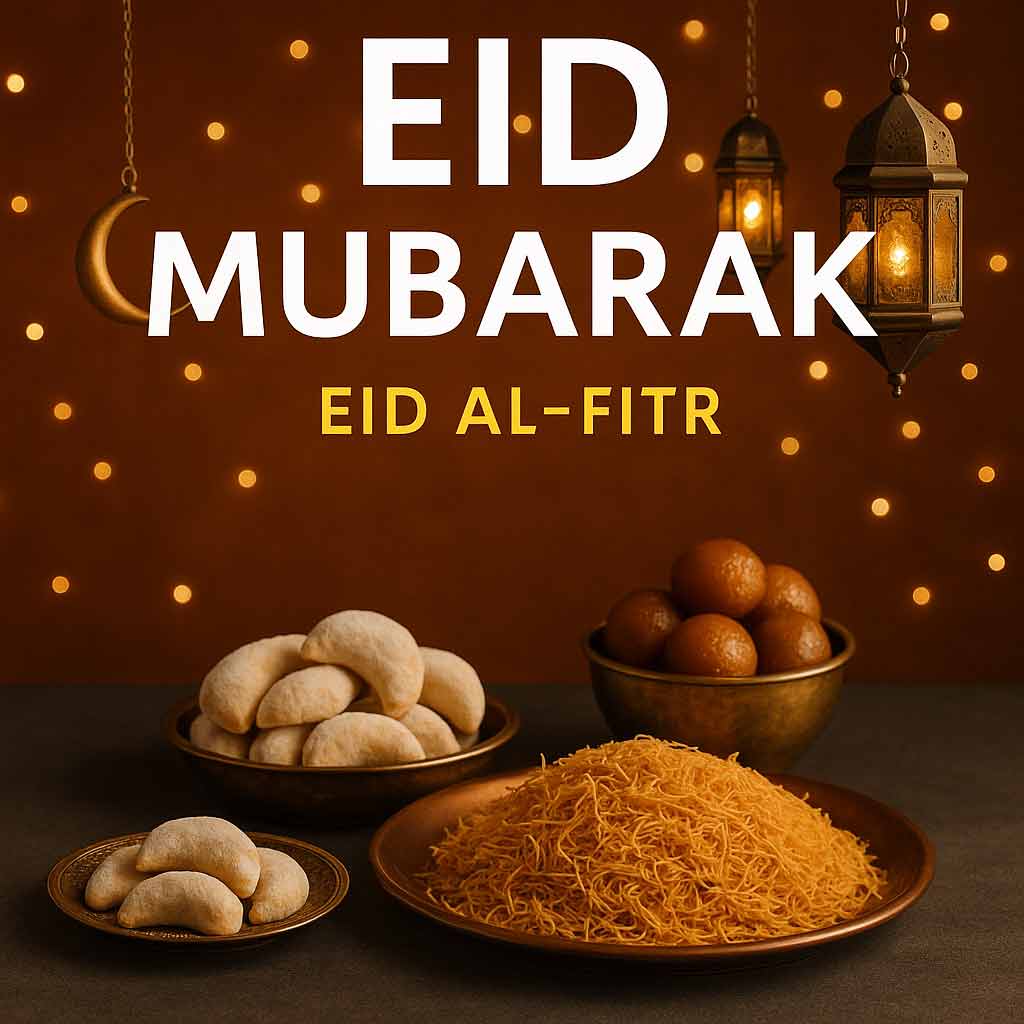
Eid-ul-Fitr – The Festival of Breaking the Fast Eid-ul-Fitr – The Festival of Joy, Gratitude, and Brotherhood Eid-ul-Fitr, often referred to simply as Eid, is one of the most important and joyous festivals in Islam. It marks the end of Ramadan, the holy month of fasting, and the beginning of Shawwal, the tenth month in the Islamic lunar calendar. The term Eid-ul-Fitr translates to “Festival of Breaking the Fast,” and it is a celebration of faith, compassion, gratitude, and community. The Significance of Eid-ul-Fitr Eid-ul-Fitr has deep spiritual and social significance. It celebrates the successful completion of a month-long journey of self-discipline, prayer, charity, and reflection. During Ramadan, Muslims fast from dawn to sunset, refraining from food, drink, and worldly pleasures to purify the soul and develop empathy for those less fortunate. Eid is a reward from Allah for this devotion and self-control. It serves as a reminder to express gratitude for the strength and patience granted during Ramadan and to share blessings with others through acts of charity and kindness. It reinforces the core Islamic values of faith, humility, and brotherhood. The Beginning of Eid The celebration of Eid-ul-Fitr begins with the sighting of the new moon, signaling the end of Ramadan. The announcement is often made by local mosques or Islamic authorities. This sighting varies by geography, which is why Eid may be celebrated on different days across the world. Before attending prayers, Muslims perform an obligatory act of charity known as Zakat al-Fitr (or Fitrana). This small donation ensures that even the poor and needy can participate in the festivities. It is typically given in the form of food or its equivalent monetary value and must be distributed before the Eid prayer. The Eid Morning Rituals The morning of Eid is a time of joy and spiritual fulfillment. The day starts with an early morning bath, wearing new or clean clothes, applying perfume, and eating a few dates — a practice following the Sunnah (tradition) of Prophet Muhammad (peace be upon him). Muslims then gather in mosques or open grounds (Eidgahs) for a special prayer known as Salat al-Eid, usually held shortly after sunrise. The prayer is accompanied by a sermon (khutbah) reminding the congregation of unity, gratitude, and the importance of helping others. The atmosphere is vibrant and filled with greetings of “Eid Mubarak” — meaning “Blessed Eid.” It’s a heartfelt expression of goodwill and happiness shared among family, friends, and even strangers. Feasting and Festivities After a month of fasting, Eid-ul-Fitr is a time to enjoy delicious food and celebrate togetherness. Families prepare traditional dishes and sweets that vary across regions but share a common theme of abundance and joy. In India, popular Eid delicacies include Sheer Khurma, a sweet vermicelli pudding cooked with milk, dates, and dry fruits; Biryani, Kebabs, and Haleem. Homes are decorated, and tables overflow with treats for guests. The sharing of food symbolizes love, unity, and the spreading of joy among communities. Children eagerly anticipate Eidi — small gifts or money given by elders — which adds a special charm to the day. People visit relatives and friends, exchange gifts, and extend kindness to all, embodying the true spirit of Eid. The Message of Eid Beyond the celebrations, Eid-ul-Fitr carries a profound message of peace, forgiveness, and gratitude. It reminds Muslims to continue the virtues practiced during Ramadan — compassion, honesty, patience, and generosity — throughout their lives. Eid also strengthens social bonds. By giving charity, sharing meals, and visiting loved ones, it fosters a sense of unity and equality. In Islam, all are equal before Allah, and Eid serves as a day when barriers of wealth, status, and background are forgotten. Eid-ul-Fitr in India and Around the World In India, Eid-ul-Fitr is celebrated with great enthusiasm. Streets and bazaars come alive with lights, food stalls, and the aroma of festive dishes. Mosques like Jama Masjid in Delhi or Mecca Masjid in Hyderabad witness thousands of worshippers offering prayers in unison. The sense of community and joy transcends religion — people from all backgrounds exchange greetings and join in the celebrations. Around the world, Eid is observed with similar devotion but unique cultural touches. In the Middle East, grand feasts and community gatherings dominate. In Indonesia and Malaysia, it’s marked by family reunions and traditional attire, while in Western countries, Muslims gather in parks or community centers to celebrate their faith and identity. Eid-ul-Fitr is more than just a festival — it is a celebration of life, faith, and unity. It marks the culmination of spiritual renewal and the triumph of self-discipline and compassion. The joy of Eid lies not only in the feasts and festivities but also in its message — to live with kindness, share blessings with others, and express gratitude for the countless gifts of life. As the crescent moon shines bright, the words “Eid Mubarak” echo across the world, carrying with them the universal hope for peace, happiness, and togetherness.